Back to Articles Space Mission

Mars Rings in a New Year on September 30, 2026!

📖 3 min read 📊 beginner 🏷️ ESA

In Brief

Mark your calendars for September 30, 2026, because that's when Mars officially celebrates its 'New Year'! At exactly 10:16 CEST (8:16 UTC), the Red Planet will complete another full trip around our Sun, beginning its next grand journey.
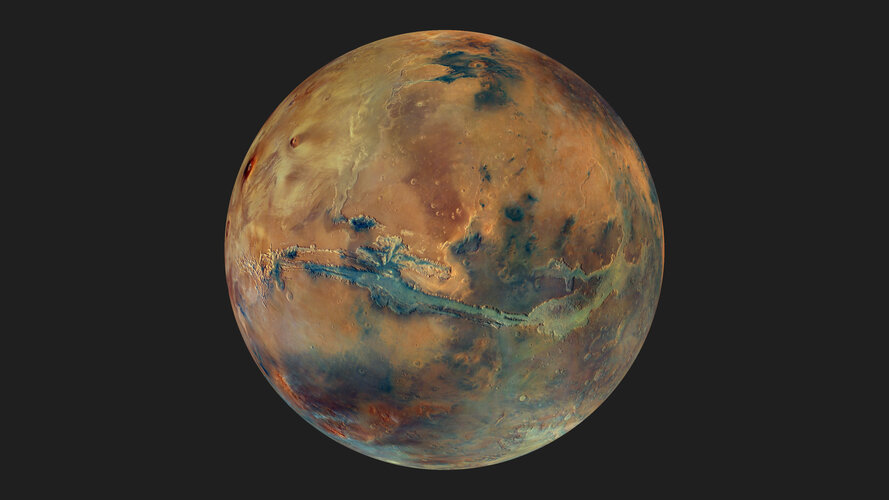
Mars Rings in a New Year on September 30, 2026!

The Full Story

Every planet in our solar system follows its own unique calendar, determined by how long it takes to orbit the Sun. For us on Earth, a year is about 365 days. But for Mars, our dusty red neighbor, things operate on a different cosmic timescale. On September 30, 2026, at precisely 10:16 CEST, Mars will cross a significant celestial milestone – it will complete another full journey around the Sun, marking the beginning of its 'New Year'. This isn't just a symbolic date; it's a precise astronomical event. So, why is Mars's New Year so different from ours? The simple answer lies in distance and orbital speed. Mars is further away from the Sun than Earth is. This means it has a much larger path to travel to complete one full orbit. Think of it like running laps on a track: if you're on the outer lane, you have to run a greater distance than someone on the inner lane to complete one 'lap'. As a result, a Martian year lasts approximately 687 Earth days – nearly twice as long as our own year! This longer orbital period also dictates Mars's seasons, which are much more extended than Earth's. Knowing exactly when Mars starts a new year is incredibly important for scientists and space agencies like ESA (European Space Agency). It helps them track the Martian seasons, which influence everything from dust storms that can obscure solar panels on rovers to changes in the polar ice caps. Understanding these cycles is crucial for successful mission planning, ensuring spacecraft operate efficiently and collect valuable data. This celebration of a Martian New Year is a reminder of the dynamic nature of our solar system and how different each planet's experience of time truly is. While we might celebrate with fireworks and countdowns, Mars quietly embarks on its new orbital journey, continuing its endless dance around our star.

Key Takeaways

  • 1 Mars's New Year is on Sep 30, 2026, marking a complete orbit around the Sun.
  • 2 A Martian year is nearly twice as long as an Earth year (approximately 687 Earth days).
  • 3 Understanding Martian time and seasons is vital for successful space missions and future human exploration.

💡 Think of it this way:

Imagine a giant, cosmic clock where each 'tick' for Earth is 365 days, but for Mars, each 'tick' takes almost twice as long!

How We Know This

Scientists and astronomers don't just guess when Mars starts a new year. They use sophisticated mathematical models based on decades of observations of Mars's precise movement and gravitational interactions in space. It's like having a super-accurate celestial stopwatch that tracks planets as they circle the Sun, allowing them to predict these cosmic 'calendar' events with incredible precision down to the minute.

What This Means

Knowing Mars's annual cycle is far more than an interesting tidbit. It helps mission planners decide the best windows for launching spacecraft, predicting solar power availability for rovers, and understanding seasonal dust storms. For future human explorers, this detailed understanding of Martian time and climate will be absolutely critical for survival, farming, and long-term habitation on the Red Planet, ensuring we're prepared for whatever a Martian year might bring.

Why It Matters

Understanding Mars's calendar isn't just a fun fact; it's crucial for planning future missions, predicting its seasons, and preparing for eventual human exploration. It helps us truly understand our planetary neighbor.

Related Topics

#Mars #Martian Year #Space Exploration #ESA #Astronomy