Back to Articles Image Of The Day

Shrimp Nebula's Cosmic Swirl: A Runaway Star Story

📖 3 min read 📊 beginner 🏷️ NASA APOD

In Brief

The beautiful Shrimp Nebula, spanning half the Moon's size in our sky, gets its unique swirling shape from a surprising source: its central star, a white dwarf, zipping through space at an unusually high speed. This speedy stellar remnant creates a visible 'bow shock' as it plows through interstellar gas, much like a boat cutting through water.
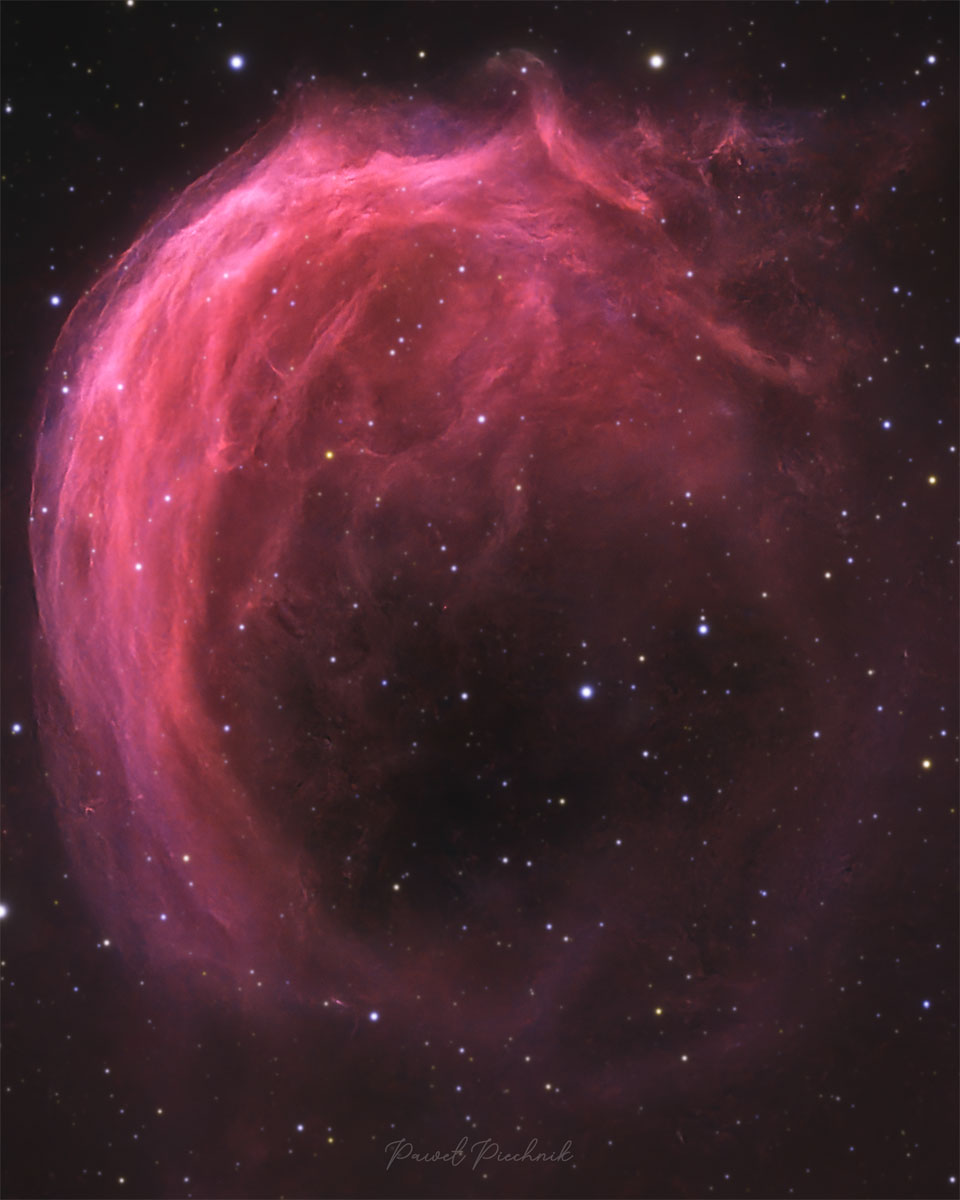
Shrimp Nebula's Cosmic Swirl: A Runaway Star Story

The Full Story

The celestial object known as Sh2-188, affectionately nicknamed the Shrimp Nebula, is a true marvel in our night sky. What makes this particular nebula so fascinating isn't just its ethereal beauty, but the dynamic forces at play shaping its distinctive swirling appearance. This expansive nebula, which appears about half the width of the Moon, offers a spectacular view of stellar evolution in action. At the heart of the Shrimp Nebula lies a clue to its swirling mystery: a white dwarf star. This white dwarf is the dense, leftover core of a star similar to our Sun, which shed its outer layers as it reached the end of its life. But what's truly remarkable is that this stellar remnant isn't just sitting still; it's moving incredibly fast through the interstellar medium – the gas and dust filling the space between stars. This high-speed journey creates a prominent 'bow shock' on its leading edge, most visible on the upper left side of images, strikingly similar to the ripple effect a boat makes as it pushes through water. This bow shock isn't just a visual effect; it's also how a significant part of the Shrimp Nebula glows. As the fast-moving white dwarf plows through space, it compresses and heats the gas in its path. This compressed gas then brightens, contributing to the nebula's overall luminosity. So, the nebula isn't just glowing from the light emitted by its central star, but also from the friction and compression caused by the star's rapid movement through the cosmic ocean. Capturing such a faint yet detailed object requires dedication and specialized equipment. The featured image was taken by an amateur astronomer using a backyard telescope in Krakow, Poland. To reveal the nebula's intricate structures and true colors, the astronomer used special filters to isolate light from specific elements – hydrogen, sulfur, and oxygen – which are common components of such cosmic clouds. These filtered images were then digitally combined and adjusted to approximate the nebula's natural appearance, bringing this distant cosmic dance closer to us. Studying planetary nebulae like the Shrimp Nebula, especially one with a fast-moving central star, provides invaluable insights into the final stages of stellar life. It helps astronomers understand the complex physics governing how stars die, how they shed their atmospheres, and how these remnants interact with the surrounding interstellar environment. Discoveries like Sh2-188 serve as natural laboratories, offering clues not only about the fate of Sun-like stars but also about the dispersal of elements that eventually form new stars, planets, and even life.

Key Takeaways

  • 1 The Shrimp Nebula's swirling shape is caused by its central white dwarf star moving at high speed.
  • 2 This fast-moving star creates a 'bow shock' in space, similar to a boat's wake.
  • 3 The nebula glows from both the central star's light and compressed gas at its leading edge.
  • 4 The image was captured by an amateur astronomer using specific light filters for hydrogen, sulfur, and oxygen.
  • 5 Studying such nebulae helps us understand star life cycles and the recycling of matter in the universe.

💡 Think of it this way:

Imagine a tiny speedboat carving waves through a calm lake – that's similar to how this runaway star creates its visible 'bow shock' in space, leaving a turbulent wake behind it.

How We Know This

This stunning image was captured by an amateur astronomer using a backyard telescope located in Krakow, Poland. To capture the nebula's subtle details and true colors, specialized filters were used. These filters isolated the light emitted by specific elements found in the nebula: hydrogen, sulfur, and oxygen. By combining these filtered images, and then digitally adjusting the colors, the final image approximates the nebula's natural appearance, allowing us to see its intricate structures.

What This Means

The unique behavior of the Shrimp Nebula provides a natural laboratory for astronomers to study the complex processes that occur during the final stages of a star's life. Understanding how a white dwarf can achieve such high speeds and how it interacts with the interstellar medium gives us crucial data for refining models of stellar evolution and galactic dynamics. These insights contribute to our broader understanding of how elements are distributed throughout the cosmos and the eventual fate of stars like our own Sun.

Why It Matters

This cosmic spectacle helps scientists understand how Sun-like stars end their lives and interact with the vastness of space. Observing such dynamic events gives us crucial clues about the life cycle of stars, including our own Sun's distant future, and how matter is recycled in the universe.

Related Topics

#Planetary Nebula #White Dwarf #Bow Shock #Star Evolution #Astrophotography