Back to Articles Image Of The Day

Andromeda Unfiltered: Seeing Our Neighbor Galaxy for Real

📖 4 min read 📊 beginner 🏷️ NASA APOD

In Brief

A unique image reveals the Andromeda galaxy (M31) not as a pristine ideal, but as it truly appears through Earth's active skies. Captured from a garden observatory, this composite image embraces the subtle 'imperfections' that are part of real deep-sky observation. It offers a rare, honest look at our incredible cosmic neighbor.
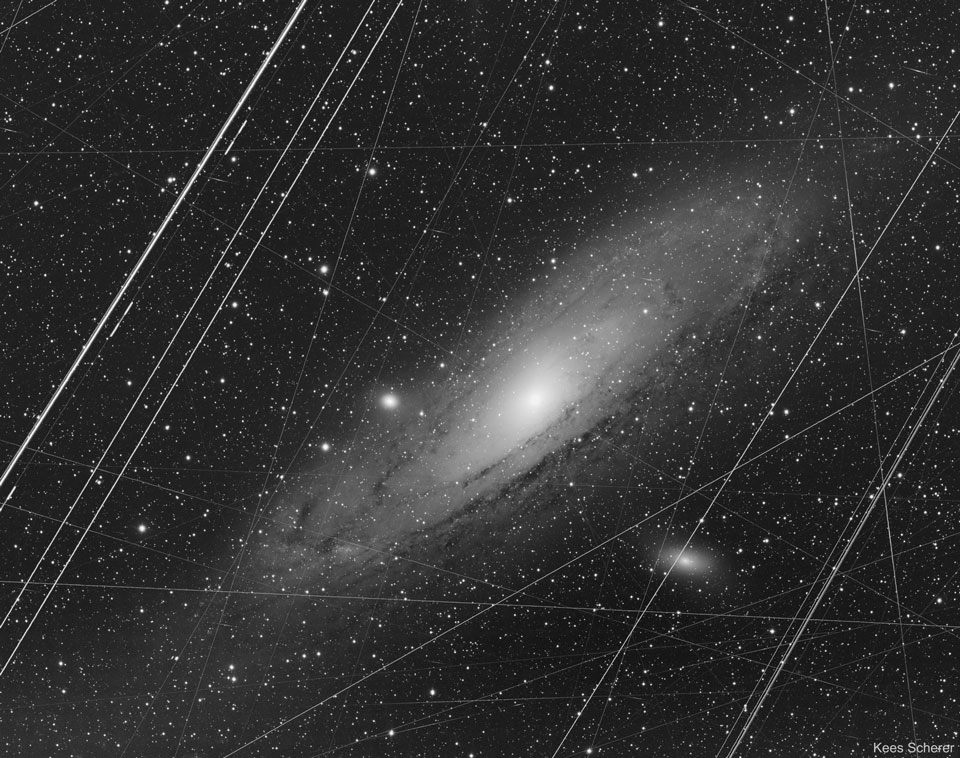
Andromeda Unfiltered: Seeing Our Neighbor Galaxy for Real

The Full Story

When we gaze upon stunning images of distant galaxies like Andromeda (M31), our closest major galactic neighbor, we often see them depicted in breathtaking, flawless detail. But what does the Andromeda galaxy *really* look like when captured from Earth, through our planet's busy atmosphere and with human technology? This featured image offers a rare, unfiltered answer, providing a window into the authentic experience of deep-sky astrophotography. This isn't your typical 'perfect' cosmic portrait. Instead, it deliberately showcases the subtle traces of our own planet that inevitably sneak into long-exposure photographs. You'll notice bright parallel lines from airplanes, long streaks left by orbiting satellites, tiny zips from cosmic rays hitting the camera sensor, and even small 'bad pixels.' These aren't flaws of the galaxy itself, but rather a testament to the fact that even when looking millions of light-years away, we're still observing from a lively, active Earth. Capturing such a faint and distant object requires immense dedication and ingenuity. This particular image is the result of 'stacking' 223 individual photographs, each exposed for a remarkable 300 seconds (5 minutes!). This extensive process, undertaken from a garden observatory in Portugal back in 2019, allows the camera to collect enough light from the faint galaxy to make it visible, much like letting a bucket slowly fill with rainwater, drop by drop, over time. The title 'Andromeda before Photoshop' hints at a common misconception. While digital tools were indeed used, it wasn't to create an artificial, idealized image. Instead, specialized software packages like Astro Pixel Processor, DeepSkyStacker, and PixInsight were employed to *reduce* unwanted 'Earthly artifacts' – things like light pollution, sensor noise, and some of the trails mentioned earlier – that obscure the galaxy. The crucial distinction is that these tools were used to reveal the galaxy's true appearance more clearly, not to invent a fantasy. This unique approach serves a powerful purpose: to minimize what *isn't* the galaxy and better recreate what M31 truly does look like through our observational lens. It's a testament to the scientific integrity and artistic honesty within astrophotography. By embracing the reality of observation, including its challenges, we gain a deeper appreciation for the incredible dedication of those who capture these distant wonders and the profound beauty that persists, even when viewed through the hustle and bustle of our home planet.

Key Takeaways

  • 1 Andromeda (M31) shown in its authentic, unfiltered appearance from Earth.
  • 2 Image includes visible 'imperfections' like airplane and satellite trails, reflecting real-world observation challenges.
  • 3 Created by stacking hundreds of long-exposure images from a backyard observatory.
  • 4 Specialized software was used to *reduce* artifacts and reveal the galaxy's true likeness, not to create a fantasy.
  • 5 Promotes a more honest and deeper appreciation for deep-sky astrophotography.

💡 Think of it this way:

It's like seeing a magnificent mountain peak not just in a flawless postcard, but with a glimpse of the clouds, a passing bird, and the gentle haze of the atmosphere – still breathtaking, but profoundly real.

How We Know This

Astronomers captured 223 long-exposure images (300 seconds each) of the Andromeda galaxy from a backyard observatory. These images were then 'stacked' together using specialized computer software (like Astro Pixel Processor, DeepSkyStacker, PixInsight) to combine the faint light from the galaxy and reduce noise and unwanted artifacts like light pollution, revealing a clearer, more authentic view of M31.

What This Means

This approach encourages a more transparent and authentic presentation of astronomical images, reminding viewers of the real challenges and environmental factors involved in observing the cosmos from Earth. It can foster a deeper understanding and appreciation for the scientific process and the dedicated work of astrophotographers, both amateur and professional, while also highlighting the inherent beauty even in imperfect observations.

Why It Matters

This unvarnished look helps us appreciate the genuine beauty and challenges of astrophotography, offering a more honest and relatable view of our incredible cosmic neighborhood and the dedicated effort it takes to see it.

Related Topics

#Andromeda Galaxy #Astrophotography #M31 #Deep Sky #Authenticity