Back to Articles Space Mission

ESA Advances Three New Missions to Unravel Earth's Mysteries

πŸ“– 3 min read πŸ“Š beginner 🏷️ ESA

In Brief

The European Space Agency (ESA) has selected three innovative mission concepts to proceed to the next stage of development. These 'Earth Explorer' satellites aim to tackle some of Earth's biggest environmental questions, from monitoring ocean health to tracking melting ice.
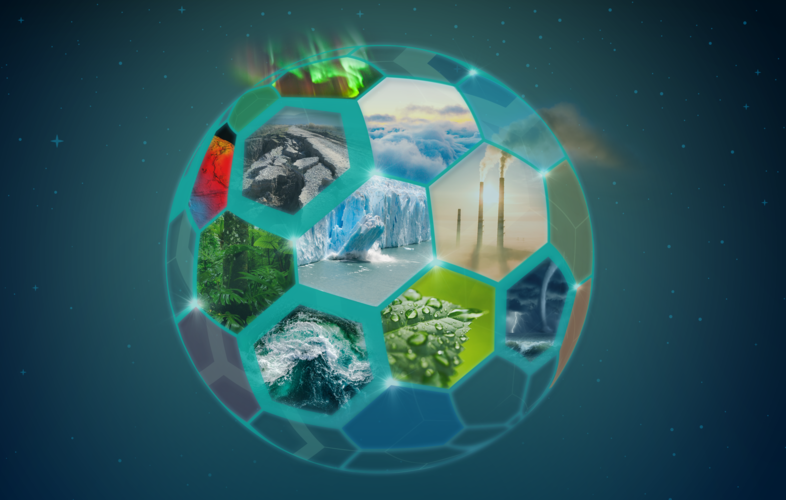
ESA Advances Three New Missions to Unravel Earth's Mysteries

The Full Story

The European Space Agency (ESA) recently announced an exciting step forward for Earth science: three ambitious mission concepts, known as 'Earth Explorer' candidates, have been selected to advance to the next crucial phase of development. This means these innovative ideas, designed to tackle some of the most pressing mysteries about our home planet, are one step closer to becoming real satellites orbiting Earth. It’s a significant moment for understanding our world better, especially in an era of rapid environmental change. The 'Earth Explorer' program is ESA's flagship initiative dedicated to cutting-edge research into our planet. Unlike operational weather or navigation satellites, these missions are purely scientific, focused on pushing the boundaries of our knowledge about Earth's intricate systems. Think of them as specialized scientific instruments in space, each designed to answer very specific, fundamental questions – from the subtle changes in ocean currents and vast ice sheets to the complex dance of gases in our atmosphere and the health of our forests. They provide the highly precise data that helps scientists build a clearer picture of how our planet functions and responds to change. While the specific names of these three candidates haven't been widely disclosed yet, we can infer their focus aligns with the broad goals of the Earth Explorer program. Historically, these missions have aimed to measure things like the height of sea levels with millimeter precision, track the melting rates of glaciers, map forest biomass, or monitor critical atmospheric components like greenhouse gases. These new candidates likely propose novel ways to collect such data or target previously under-explored aspects of Earth’s environment, promising breakthroughs in fields like oceanography, cryosphere science, atmospheric chemistry, or hydrology. For a mission concept to "go forward" at ESA is no small feat. It involves a highly competitive and rigorous selection process where scientists and engineers propose their best ideas, which are then evaluated for their scientific merit, technical feasibility, and cost-effectiveness. The selection of these three candidates means they have proven their potential to deliver groundbreaking science. Their next stage involves more detailed feasibility studies and design work, sometimes called "Phase A" or "Phase B1," where teams will refine their concepts and prove they can be built and operated successfully. You might wonder why satellite missions studying distant ice sheets or invisible atmospheric gases matter to your daily life. The truth is, they are incredibly important. The data collected by Earth Explorers directly informs our understanding of climate change, helping us predict future weather patterns, manage water resources, prepare for natural disasters like floods and droughts, and protect vulnerable ecosystems. These missions essentially act as our planet's health monitors, providing vital information that helps policymakers make informed decisions for a sustainable future for everyone on Earth. This announcement marks a significant milestone, but it's just the beginning of a long journey. Over the next few years, these three candidates will undergo intensive studies, competing to prove their worth. Eventually, only one or two of them will likely be selected for full development and construction, aiming for a launch sometime in the late 2020s or early 2030s. The insights gained from these future missions will undoubtedly reshape our understanding of Earth and provide invaluable tools to address the environmental challenges of our time.

Key Takeaways

  • 1 ESA has advanced three new 'Earth Explorer' mission concepts.
  • 2 These missions are designed to answer fundamental questions about Earth's environment and climate.
  • 3 The selection process is rigorous, ensuring scientific merit and technical feasibility.
  • 4 Data from these missions is vital for understanding climate change and managing Earth's resources.

πŸ’‘ Think of it this way:

It's like choosing the top three detective teams to investigate Earth's biggest environmental mysteries.

How We Know This

The selected missions will involve designing and launching advanced satellites equipped with specialized sensors. These sensors will collect precise data from space about various Earth systems, such as oceans, ice, atmosphere, and land surfaces. Scientists will then analyze this data to gain new insights and improve our understanding of our planet.

What This Means

Advancing these missions will lead to an improved understanding of climate change, better predictions of natural disasters, and more effective management of global resources. The data collected will help inform policy-making for a sustainable future, potentially leading to new scientific breakthroughs and technological advancements in Earth observation.

Why It Matters

These missions are crucial for providing the data scientists need to understand and predict climate change, prepare for natural disasters, and manage our planet's resources more effectively, directly impacting our daily lives and future.

Related Topics

#ESA #Earth Science #Climate Change #Satellites #Space Missions