Spot the Cosmic Giraffe: How Your Brain Sees Animals in Space Clouds
In Brief
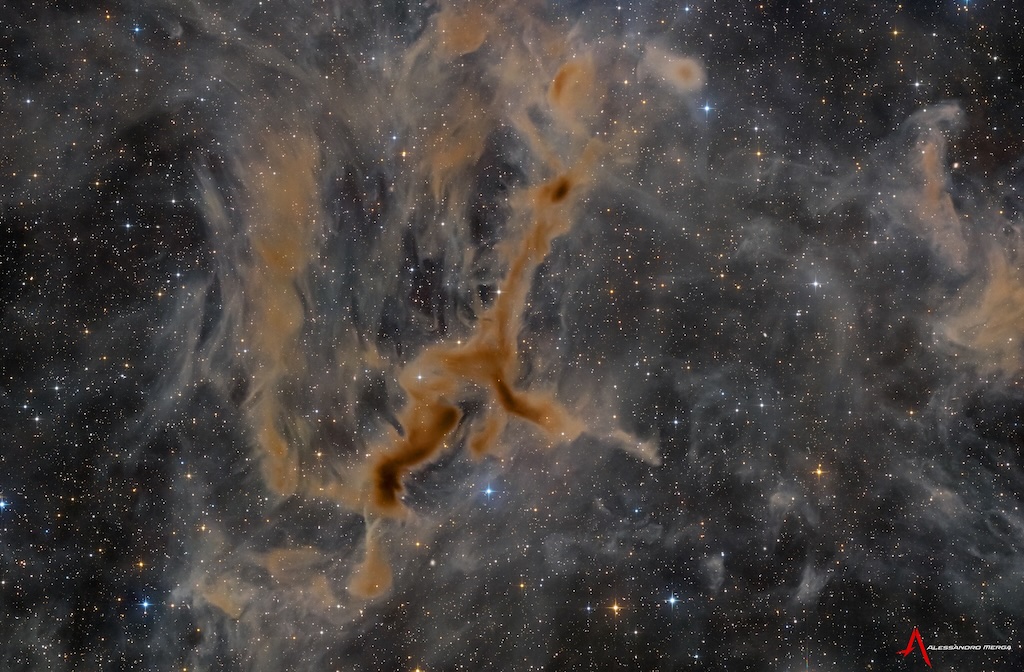
A stunning new image reveals the 'Giraffe Nebula,' a dark cloud of dust and gas in space that blocks starlight, making it appear as a majestic animal. This cosmic spectacle isn't just a beautiful sight; it highlights a fascinating trick of our brains called pareidolia, where we find familiar patterns in random shapes.
The Full Story
Key Takeaways
- 1 The 'Giraffe Nebula' (LDN 1295) is a dark nebula that appears like an animal due to human perception.
- 2 Dark nebulae are dense clouds of dust and gas that block starlight, creating dark silhouettes against the starry background.
- 3 Pareidolia, our brain's tendency to see familiar patterns, explains why we perceive animal shapes in cosmic objects and everyday clouds.
- 4 Beverly Lynds, a pioneer for women in astronomy, cataloged these dark nebulae in her influential 1962 catalogue.
💡 Think of it this way:
Imagine looking up at fluffy clouds on a sunny day and instantly seeing a dragon, a dog, or a sheep. That's exactly what's happening when we spot a giraffe in this distant nebula – our brains are simply connecting the cosmic dots!
How We Know This
The image of the Giraffe Nebula was captured through astrophotography. Dark nebulae are challenging to observe because they don't emit their own light. Astrophotographers use sensitive cameras and long exposure times to gather enough light (or, in this case, the absence of light) to reveal the nebula's faint outlines and contrast it against the background stars, allowing us to 'see' its distinctive shape.
What This Means
This observation not only enhances our visual catalog of the cosmos but also highlights the fascinating interplay between human psychology and astronomical observation. By making celestial objects relatable through pareidolia, it makes the universe more accessible and engaging for the public. Scientifically, dark nebulae like LDN 1295 are crucial as they are often the birthplaces of stars, even if they currently obscure them. Continuing to study these regions helps scientists understand the early stages of star formation and the intricate processes shaping our galaxy.
Why It Matters
This isn't just a captivating space picture; it's a window into how our brains work, revealing our innate tendency to find patterns, even in the vastness of space. Understanding pareidolia helps us appreciate both the wonders of the universe and the intriguing ways our own perception shapes our reality.