Back to Articles Image Of The Day

Cosmic Makeover: The Pelican Nebula's Grand Transformation Revealed

📖 3 min read 📊 beginner 🏷️ NASA APOD

In Brief

The beautiful Pelican Nebula, a vast cosmic cloud, is currently undergoing a dramatic transformation as new stars are born within it. Their intense energy is slowly reshaping the nebula's gas and dust, creating a dynamic stellar nursery that will look completely different in the distant future.
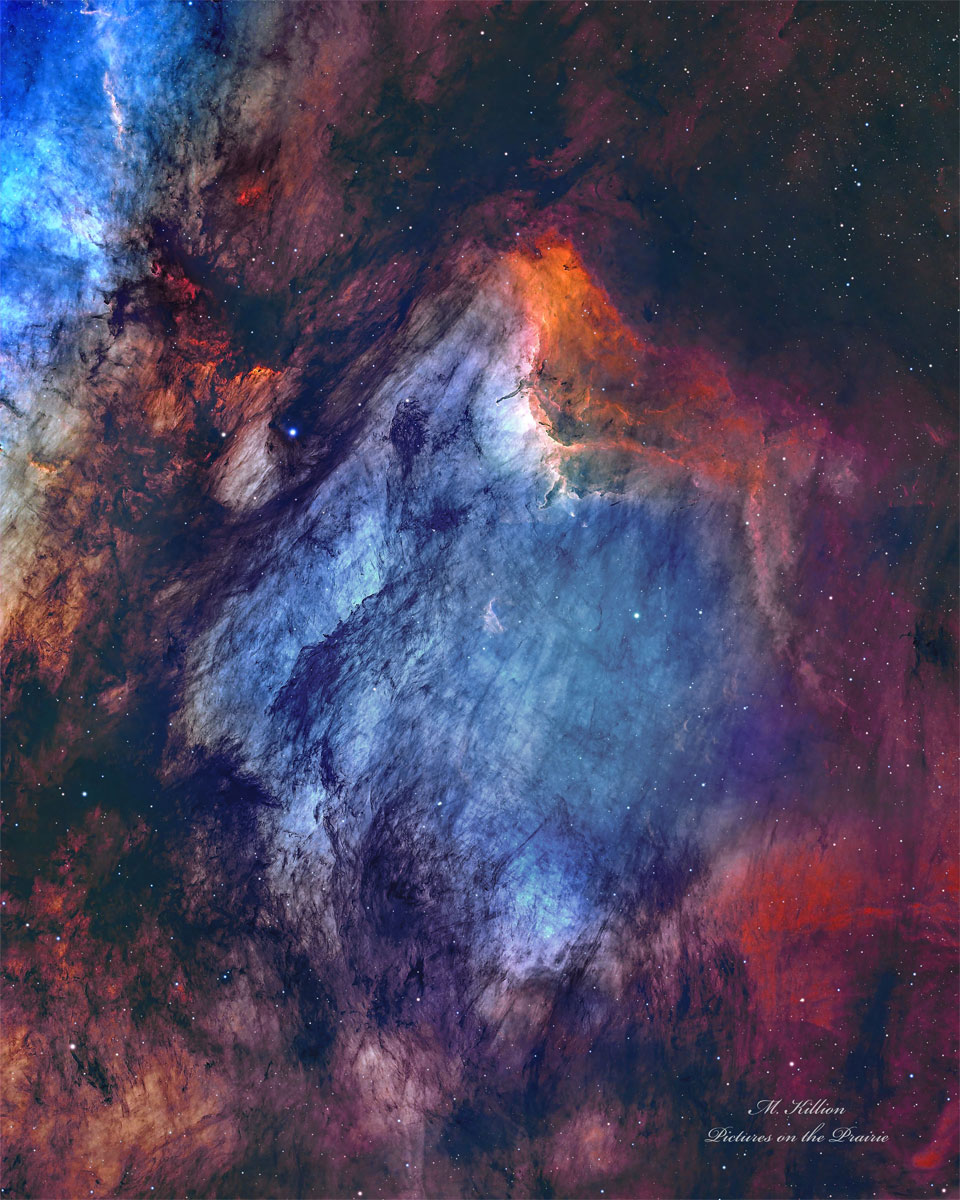
Cosmic Makeover: The Pelican Nebula's Grand Transformation Revealed

The Full Story

Meet the Pelican Nebula, officially known as IC 5070, a stunning celestial cloud located next to the larger North America Nebula. Though they appear distinct, a thick veil of dark dust separates these cosmic neighbors, hinting at the hidden wonders within. This particular region of space is a bustling cosmic construction zone, undergoing a profound transformation that scientists are eager to understand. A recently released deep-field image, captured with an incredible 25 hours of exposure from Utah, USA, offers an unprecedented look into this ongoing stellar makeover. The Pelican Nebula is a hotbed of activity, where new stars are constantly being forged from collapsing pockets of gas and dust. These energetic young stars are like powerful light bulbs, beaming out intense radiation that profoundly affects their surroundings. Their light acts as a cosmic oven, slowly heating and transforming the cold, dense gas clouds into much hotter, ionized gas. This dramatic boundary where cold gas gives way to hot, glowing gas is called an 'ionization front,' and you can see it vividly in bright orange hues, especially towards the upper right of the image, marking the front lines of this celestial battle. The long exposure time of the featured photograph beautifully highlights the intricate details of this transformation. You can see delicate, filamentary structures of dark dust stretching across the nebula, giving it its characteristic shape. Even amidst the powerful onslaught of stellar radiation, some particularly dense 'tentacles' of cold gas manage to hold their ground, resisting the ionizing light for longer. These colder pockets are like resilient islands in a sea of warming gas, perhaps destined to form new stars themselves in the distant future. This cosmic evolution is not a quick event; it unfolds over truly astronomical timescales. Millions of years from now, the Pelican Nebula will likely bear little resemblance to its current bird-like form. As the balance of stars and gas shifts, and the powerful light from new stars continues its relentless work, the entire structure will be reshaped and dispersed. Bounded by a dark cloud known as LDN 935, the Pelican Nebula is a testament to the dynamic and ever-changing nature of our universe, constantly being sculpted and reborn in a grand cosmic ballet.

Key Takeaways

  • 1 The Pelican Nebula (IC 5070) is an active stellar nursery, constantly forming new stars.
  • 2 Powerful radiation from young stars is dramatically reshaping the nebula's gas and dust.
  • 3 An 'ionization front' (visible in orange) marks where cold gas is being heated and transformed into hot gas.
  • 4 Over millions of years, the nebula's appearance will change drastically, perhaps losing its iconic 'Pelican' shape.

💡 Think of it this way:

Imagine a giant, slow-motion sculptor at work, where the intense light from newborn stars acts like a cosmic laser cutter, gradually reshaping immense clouds of gas and dust over millions of years.

How We Know This

Scientists captured this incredible view using advanced astronomical cameras and telescopes, gathering light for an astonishing 25 hours. This 'long exposure' technique allows them to collect even the faintest whispers of light from distant cosmic objects, revealing hidden structures and the subtle processes occurring within them that would otherwise be invisible to the human eye or even shorter exposures.

What This Means

Studying regions like the Pelican Nebula helps us unlock fundamental secrets of the universe. It provides crucial insights into how stars, including our own Sun, are born, how nebulae evolve and disperse over eons, and ultimately, how galaxies like the Milky Way are constantly recycling matter to create new generations of stars and planets. By observing these cosmic nurseries, we better understand the grand lifecycle of the universe and our place within it.

Why It Matters

This cosmic drama gives us a breathtaking window into how stars are born and how their powerful energy sculpts the universe, revealing the active, ever-changing nature of space around us. It's a fundamental process that built our own solar system!

Related Topics

#Pelican Nebula #Star Formation #Nebulae #Cosmic Evolution #Astrophotography