NASA Plane Chases Solar Eclipse from High Above the Clouds!
In Brief
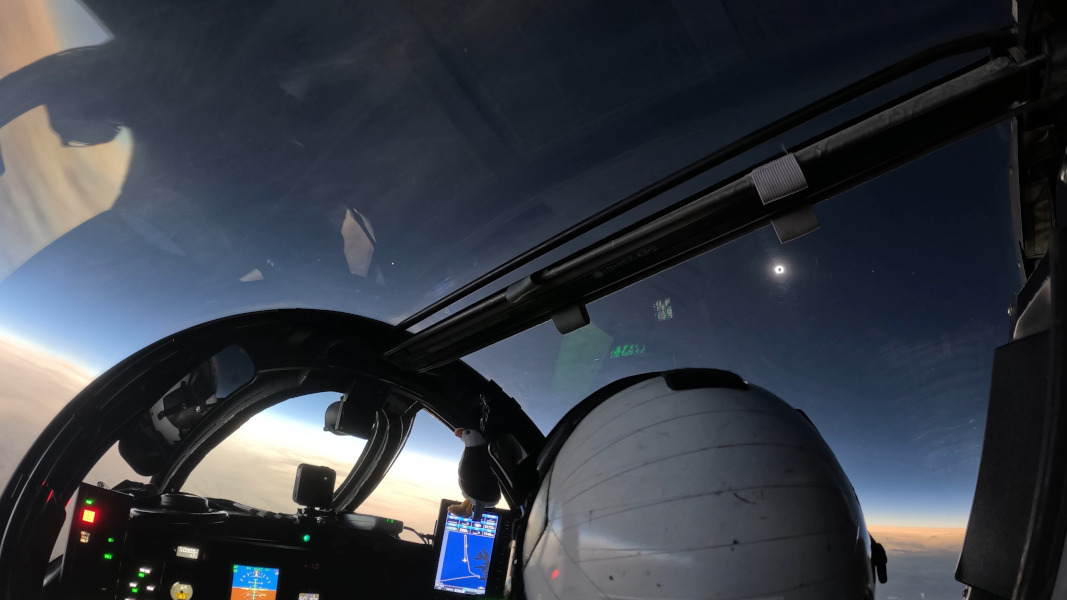
On August 12, a NASA research plane soared 50,000 feet above the coast of Iceland to get a unique view of a total solar eclipse. By flying along the Moon's shadow, scientists captured stunning, unobstructed data of the Sun's delicate atmosphere and nearby planets, free from Earth's atmospheric haze.
The Full Story
Key Takeaways
- 1 NASA used a high-altitude plane (WB-57F) to observe a total solar eclipse.
- 2 The aircraft flew at 50,000 feet to get above clouds and atmospheric interference.
- 3 Scientists maximized observation time by flying along the Moon's shadow (path of totality).
- 4 The mission captured clear images of the Sun's corona and nearby planets like Venus, Jupiter, and Mercury.
- 5 Studying the corona helps understand space weather and its impact on Earth.
💡 Think of it this way:
Imagine trying to watch a rare, fleeting fireworks display from the ground, only for clouds to get in the way. Now picture watching it from a high-flying drone, getting a crystal-clear, extended view of every spark and flash – that's what NASA did for the solar eclipse!
How We Know This
NASA used a WB-57F high-altitude research aircraft to fly at 50,000 feet above the Earth. The plane followed the exact path where the Moon completely blocked the Sun (the 'path of totality') off the coast of Iceland. This allowed special high-resolution cameras onboard to record the eclipse from above clouds, dust, and water vapor, capturing exceptionally clear data of the Sun's outer atmosphere.
What This Means
The detailed data gathered from this high-altitude perspective will significantly advance our understanding of the Sun's corona, which is crucial for predicting space weather. Improved predictions mean better protection for our satellites, communication networks, and power infrastructure on Earth from solar storms. This method also demonstrates a powerful way to observe other difficult-to-see celestial events or atmospheric phenomena in the future.
Why It Matters
This extraordinary aerial perspective allows scientists to study the Sun's mysterious outer layer, the corona, in unprecedented detail. Understanding the corona is crucial for predicting space weather events that can impact our technology, from satellites to power grids on Earth.