Rare Celestial Double Feature: Two Eclipses in One Month!
In Brief
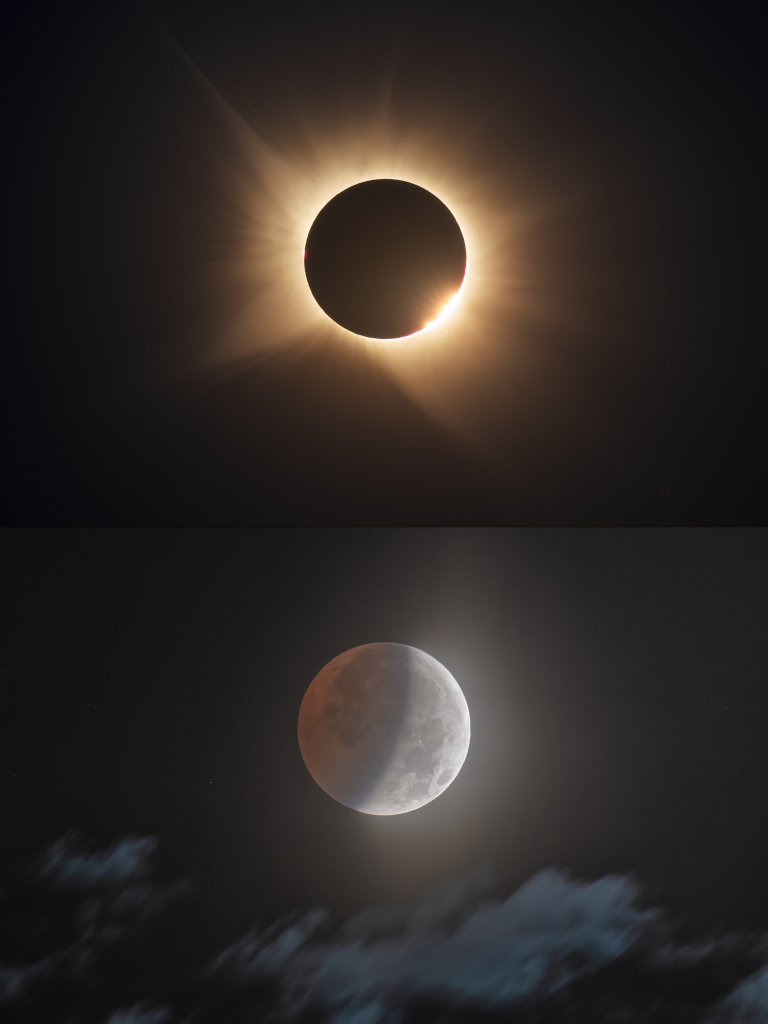
The year 2026 treated skywatchers to a rare celestial event: a magnificent total solar eclipse followed by an almost total lunar eclipse, all within the span of a single month! This cosmic pairing, captured by photographers in Spain and France, showcases how the Sun, Moon, and Earth align during special 'eclipse seasons'.
The Full Story
Key Takeaways
- 1 Eclipses occur during specific 'eclipse seasons' when the Sun, Moon, and Earth nearly align.
- 2 The 2026 eclipse season featured a rare pairing: a total solar eclipse and a deep partial lunar eclipse within two weeks.
- 3 Astrophotographers captured stunning details, like the Sun's glowing corona and the reddened, shadow-covered Moon.
💡 Think of it this way:
Think of it like getting two blockbuster movies released by the same studio, one right after the other, during a special 'movie season' when all the big stars align perfectly!
How We Know This
Astrophotographers captured these stunning events using specialized cameras and techniques. They created 'HDR composite images,' which combine multiple photos taken at different exposures. This method helps to capture both the very bright and very dim parts of the eclipse in a single, detailed picture – much like how your smartphone takes better photos in tricky lighting by combining several shots.
What This Means
These regular eclipse predictions are a testament to our precise understanding of celestial mechanics. By tracking these events, scientists can continue to refine our models of the solar system and even prepare future missions that might observe eclipses from space. For us back on Earth, knowing when and where the next eclipse season will bring a show means we can plan to be amazed by the universe's natural spectacles.
Why It Matters
Understanding these eclipse pairings helps us appreciate the intricate dance of our solar system and gives us a heads-up on when and where to catch these breathtaking sky shows in the future.