Dancing Lights Over Iceland: A Cosmic Art Show at Skógafoss
In Brief
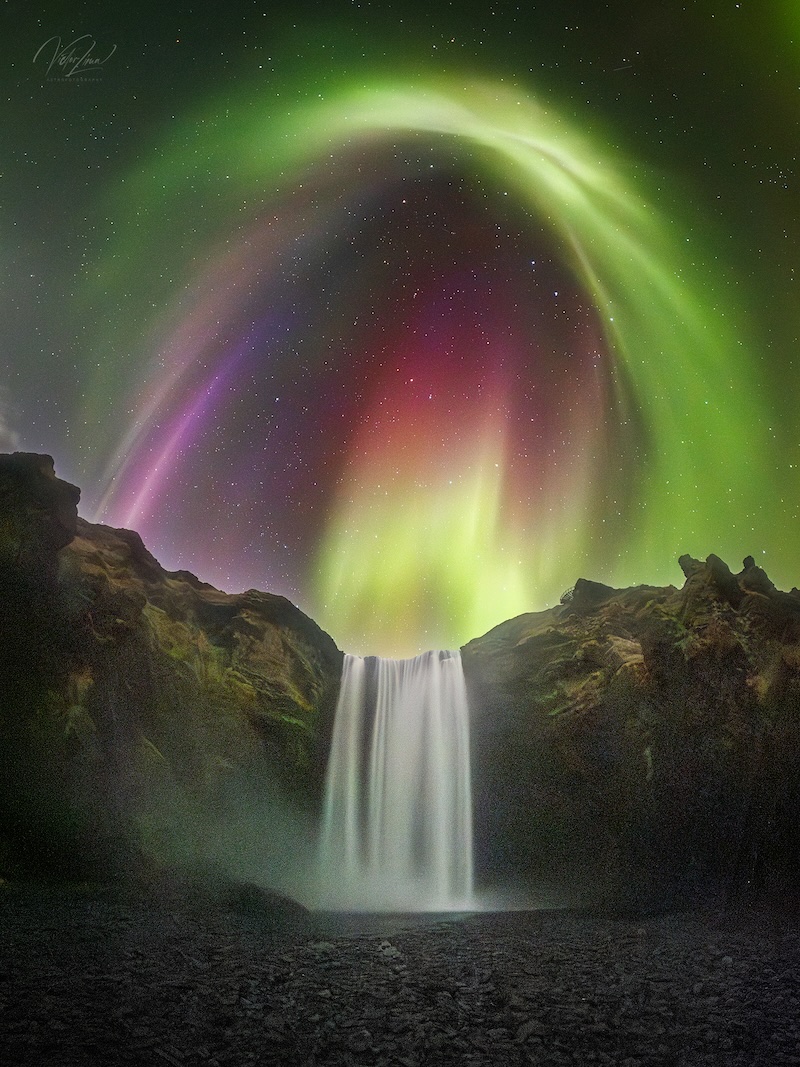
A breathtaking photograph captures the aurora borealis, or Northern Lights, illuminating the sky above Iceland's iconic Skógafoss waterfall with vibrant colors. This stunning display, captured in a single, short exposure, transforms the night into a canvas of celestial artistry.
The Full Story
Key Takeaways
- 1 Auroras are stunning natural light displays caused by charged particles from the Sun interacting with Earth's atmosphere.
- 2 The different colors in an aurora, like green, red, and blue, tell us which gases (oxygen, nitrogen) are being excited and at what altitudes.
- 3 Viewing auroras requires strong solar activity, dark skies, and a location close to Earth's magnetic poles, making them a unique sight for high-latitude regions.
💡 Think of it this way:
Imagine our Earth wearing a magnificent, invisible magnetic shield that catches tiny, energetic particles from the Sun, turning them into a spectacular, colorful light show in the polar skies, much like a giant, natural neon sign.
How We Know This
This spectacular view was captured by a photographer using a camera with a single, 5-second long exposure. This technique allows the camera to gather more light over time, making the faint auroral glows visible and vibrant in the final image, effectively 'freezing' the motion of the lights.
What This Means
Understanding auroras provides valuable insights into space weather, helping scientists predict and mitigate potential impacts on our technology, such as satellites, GPS, and electrical grids. It also deepens our appreciation for the complex and beautiful dynamics of our planet's interaction with the Sun, fostering a greater connection to the cosmic forces around us.
Why It Matters
This image isn't just beautiful; it's a powerful reminder of the dynamic interplay between our Sun and Earth, showcasing a natural phenomenon that offers insights into space weather and our planet's protective magnetic shield.