Back to Articles Image Of The Day

Webb Telescope Sees Our Sun's Future in the Majestic Lion's Head Nebula

πŸ“– 3 min read πŸ“Š beginner 🏷️ NASA APOD

In Brief

The James Webb Space Telescope has captured a stunning new view of the Lion's Head Nebula, the dramatic remains of a star much like our own Sun. This cosmic cloud, known as a planetary nebula, showcases what happens when a star runs out of fuel and sheds its outer layers into space. It offers a sneak peek into the ultimate fate awaiting our own solar system billions of years from now.
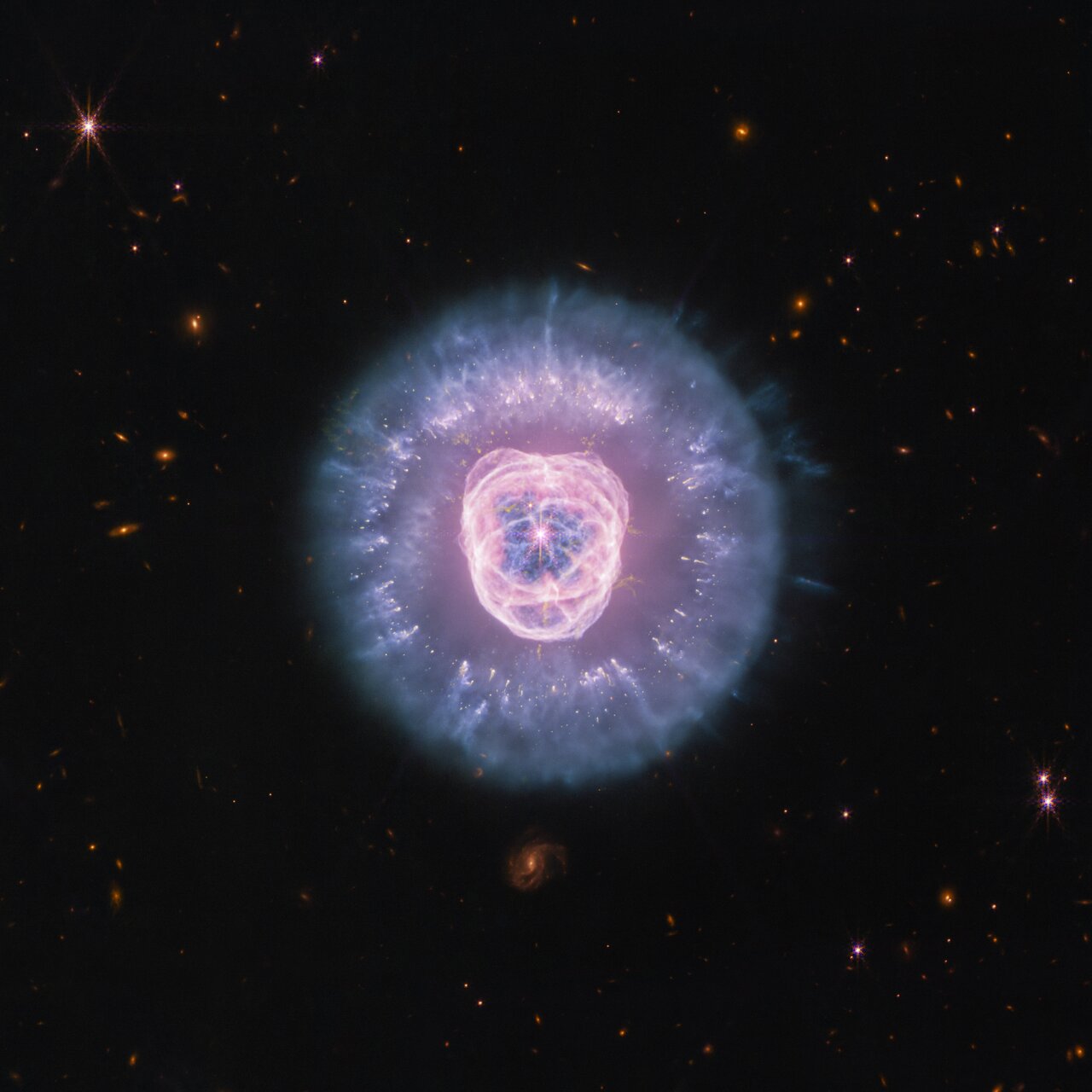
Webb Telescope Sees Our Sun's Future in the Majestic Lion's Head Nebula

The Full Story

The universe is full of wonders, and among the most beautiful are the glowing remnants of dying stars. The James Webb Space Telescope (JWST) has turned its powerful eyes towards one such spectacle: the Lion's Head Nebula, officially known as NGC 2392. This isn't just a pretty picture; it's a cosmic crystal ball showing us the likely future of our very own Sun. At the heart of this majestic 'lion' lies the dramatic story of a star's final act. Stars like our Sun spend billions of years in a stable phase, burning hydrogen into helium in their cores through a process called nuclear fusion – essentially a giant, controlled atomic furnace. But eventually, this fuel runs out. When that happens, the star can no longer support itself against its own gravity. It swells into a red giant, then gently puffs off its outer layers of gas and dust into space. These shed layers form a beautiful, expanding cloud around the dying star, which astronomers call a 'planetary nebula.' Don't let the name fool you – it has nothing to do with planets, but early telescopes made them look like planet-shaped disks. In the case of the Lion's Head, the star's hot, exposed core, now a tiny but incredibly dense object called a white dwarf, is left behind. This white dwarf, shining intensely from the 'lion's nose,' emits powerful radiation. This intense radiation is what brings the nebula to life, causing the expelled gas to glow. As the radiation blasts outwards, it strips electrons from the gas atoms, a process called ionization. This glowing, ionized gas creates the irregular, bubbly shape that forms the 'lion's face.' Meanwhile, clumps of dust that have surprisingly survived this energetic onslaught, along with other clouds of ionized gas, swirl together to create the magnificent 'mane' around the central star. JWST's incredible infrared vision, using its NIRCam and MIRI instruments, allows us to see this nebula in unprecedented detail. Unlike visible light telescopes, Webb can peer through obscuring dust and see the cooler gas and warmer dust that reveal the intricate structures and complex interactions within the nebula. This new, clearer view helps scientists understand exactly how the white dwarf's radiation shapes the expanding gas and dust, and how these materials evolve over time. By studying nebulae like the Lion's Head, we gain critical insights into the entire stellar life cycle. These dying stars are not just beautiful cosmic ghosts; they are vital cosmic recyclers. The gas and dust they shed are enriched with heavier elements created during their lives, which then get scattered into space. These elements become the building blocks for future generations of stars, planets, and even life itself. So, in this dying star, we see not only our Sun's fate but also the genesis of future worlds.

Key Takeaways

  • 1 The James Webb Space Telescope captured a detailed new image of the Lion's Head Nebula.
  • 2 This nebula is a 'planetary nebula,' representing the colorful death throes of a star similar to our Sun.
  • 3 It gives us a crucial look into what will happen to our own Sun billions of years from now, showing how it will eventually shed its outer layers and leave behind a white dwarf.

πŸ’‘ Think of it this way:

Think of it like watching a giant, ancient firework displayβ€”the final, dazzling explosion of a star as it slowly fades away, leaving behind a glowing, artistic puff of gas and dust.

How We Know This

The discovery was made using the cutting-edge James Webb Space Telescope (JWST). JWST's unique ability to see in infrared light, specifically with its NIRCam (Near-Infrared Camera) and MIRI (Mid-Infrared Instrument), was key. These instruments can penetrate through thick clouds of dust and gas that block visible light, revealing hidden structures and providing detailed information about the temperature and composition of the material in the nebula. By combining images from different infrared 'colors,' scientists get a full, composite picture.

What This Means

This detailed view helps scientists understand how the gas and dust shed by dying stars interact with intense radiation from the leftover white dwarf. This process is crucial for enriching the galaxy with elements (like carbon and oxygen) that are needed for new stars and planets, and eventually, for life itself. Future studies will use these insights to refine models of stellar evolution, predict the long-term behavior of stars, and understand how these cosmic remnants contribute to the universe's ongoing story, ensuring that the elements for future worlds are continuously recycled.

Why It Matters

This cosmic picture is a fascinating glimpse into our own Sun's distant future, helping us understand how stars like ours live, die, and enrich the universe with new elements. It connects us directly to the grand cycle of life and death playing out across the cosmos, a cycle our own star will one day join.

Related Topics

#JWST #Nebula #Stellar Evolution #White Dwarf #Planetary Nebula