Arctic Adventure Captures Breathtaking Solar Eclipse from Greenland
In Brief
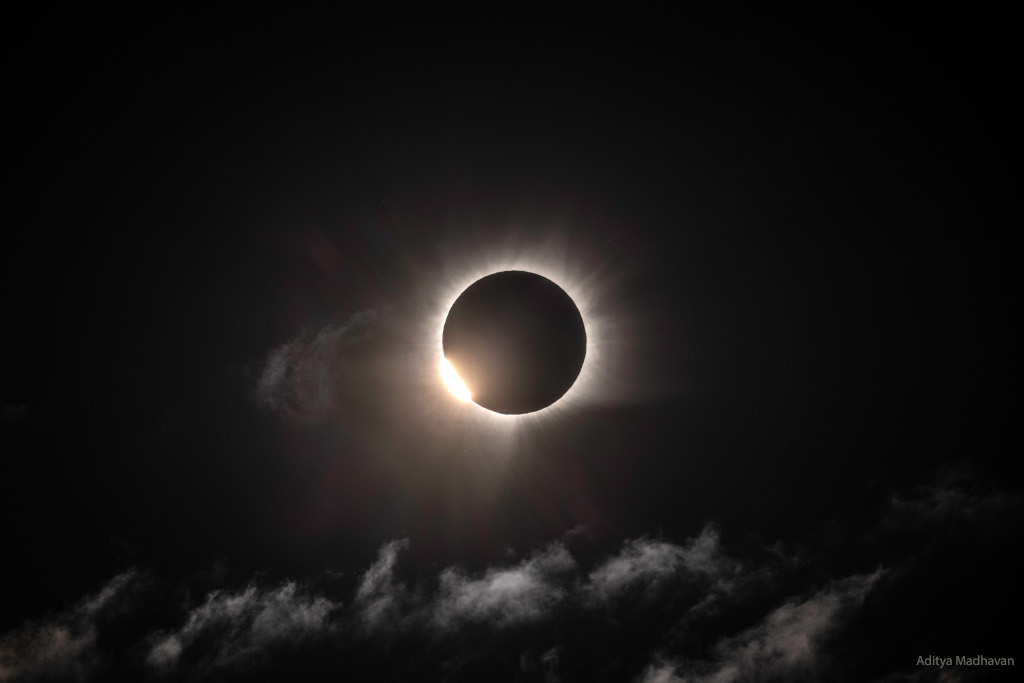
On August 12, a total solar eclipse swept across the Arctic, offering a rare spectacle over Greenland's icy landscape. Despite challenging weather, a dedicated team managed to capture one of the first clear views of the Sun's dazzling 'diamond ring' and magnificent outer atmosphere, known as the corona. This hard-won photograph reveals the awe-inspiring beauty of our cosmos in a truly unique setting.
The Full Story
Key Takeaways
- 1 A total solar eclipse occurred on August 12, with its path crossing Greenland.
- 2 A rare, 'hard-won' photo was captured from Rype Fjord, likely one of the first clear views of totality.
- 3 The image beautifully showcases the 'diamond ring' effect and the Sun's mysterious solar corona.
- 4 Total eclipses provide unique, fleeting chances to study the Sun's outer atmosphere (corona).
- 5 This observation inspires public wonder and contributes to scientific understanding of our star.
💡 Think of it this way:
Imagine a tiny pebble perfectly blocking a distant streetlight, plunging a small spot into momentary darkness. That's essentially what our Moon does to the Sun during a total solar eclipse, creating a fleeting shadow on Earth that reveals the Sun's normally invisible crown.
How We Know This
The discovery involved a dedicated team chasing the eclipse by sea to a remote location off Greenland's east coast. By carefully tracking the weather and navigating to a specific point along the eclipse path, they were able to position themselves for a brief moment of clear skies. Using specialized photographic equipment, they captured the eclipse's intricate details the moment totality began, turning a challenging expedition into a scientific and artistic triumph.
What This Means
These rare observations during total solar eclipses are vital for understanding the Sun's corona, a region that remains one of the greatest puzzles in solar physics. Future eclipses will continue to offer 'natural laboratories' to study its magnetic fields, temperature, and how it accelerates the solar wind. This knowledge is crucial for predicting space weather, which can impact satellites, power grids, and astronaut safety. Moreover, stunning images like this continue to fuel public interest in astronomy, inspiring future scientists and space explorers.
Why It Matters
Total solar eclipses are among nature's most spectacular events, reminding us of the incredible cosmic dance between our Moon and Sun. Witnessing one fosters a sense of wonder, connects us to the universe, and offers scientists unique, fleeting opportunities to study our Sun's mysterious outer layers that are usually hidden.