Back to Articles Image Of The Day

Rare Photo Captures Double Eclipse & Hints at Upcoming Solar Show!

📖 3 min read 📊 beginner 🏷️ NASA APOD

In Brief

A stunning 2012 photo shows the Sun partially hidden by the Moon, and also by people watching the rare celestial event. This unique image reminds us of the magic of solar eclipses, just as a new one is set to grace skies across parts of the Northern Hemisphere this week.
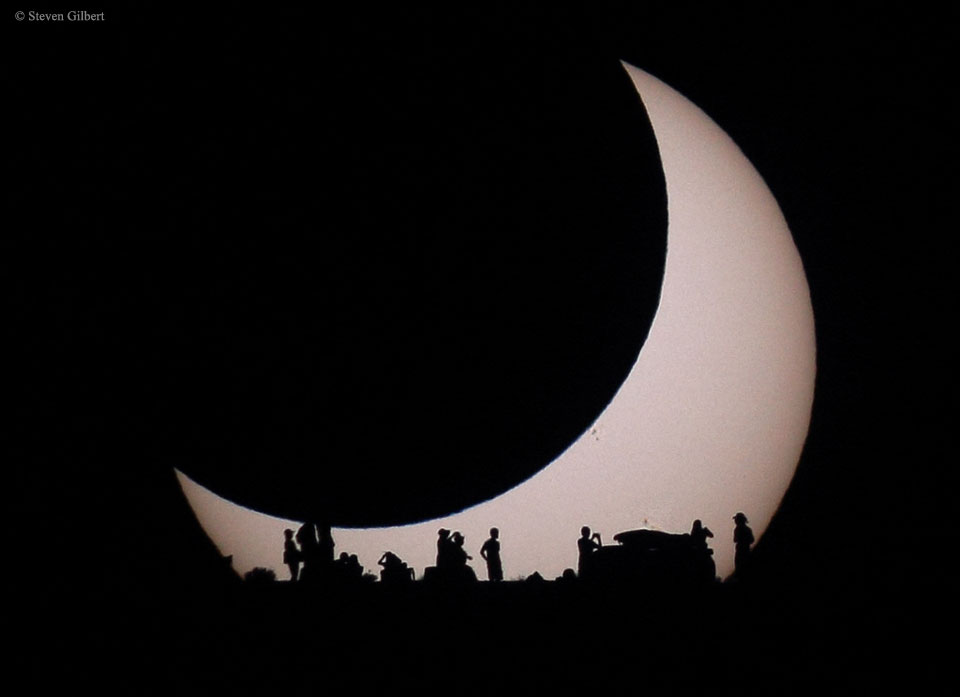
Rare Photo Captures Double Eclipse & Hints at Upcoming Solar Show!

The Full Story

Imagine looking at a photograph of the Sun, partially obscured by the Moon, but *also* seeing the tiny silhouettes of people on Earth, gazing up at that very same spectacle! That's exactly what a captivating image from 2012 offers. Taken from the stunning Glen Canyon National Recreation Area in Arizona, this picture is a masterful blend of celestial mechanics and human wonder. It captures not just the Moon eclipsing our home star, but also 'earthlings' — the human observers — appearing to 'eclipse' the Sun from the camera's perspective below. So, what exactly is happening here? A solar eclipse occurs when the Moon passes directly between the Sun and Earth, casting a shadow on our planet. From our vantage point, the Moon appears to block out part or all of the Sun. In the 2012 photo, it was a partial eclipse, meaning the Moon only covered a portion of the Sun's disk. These events are not only beautiful but also a powerful reminder of the precise cosmic ballet happening constantly in our solar system. The good news is, if you missed that 2012 show, another solar eclipse is just around the corner! This week, millions across Northern North America, Europe, and northwestern Africa will have a chance to witness a partial solar eclipse, where the Moon takes a 'bite' out of the Sun. But for a lucky few, a thin path stretching from Greenland all the way to Portugal, a truly rare total solar eclipse will unfold. During totality, the Moon completely blocks the Sun, briefly turning day into twilight and revealing the Sun's ethereal outer atmosphere, the corona. Peering closely at the 2012 image, just below the Moon's dark silhouette, you might even spot a faint cluster of sunspots. These cooler, darker areas on the Sun's surface are signs of intense magnetic activity. As for the upcoming total eclipse, astronomers are pondering an exciting question: will we be able to see any shooting stars from the Perseid meteor shower, which is peaking around the same time? During the brief twilight of a total eclipse, the sky gets dark enough for brighter meteors to potentially become visible, offering a truly unique cosmic conjunction. These celestial alignments, whether partial or total, have captivated humanity for millennia. They are not just astronomical events; they are shared experiences that bring us together, sparking curiosity and a profound connection to the universe. Watching an eclipse, like those park rangers and gatherers did in 2012, or as many will do this week, is a powerful moment of contemplating our incredible home star and our place in the vast cosmic tapestry.

Key Takeaways

  • 1 A 2012 photo captured a unique 'double eclipse': the Moon partially blocking the Sun, and people watching the event from Earth.
  • 2 Another solar eclipse is happening this week, visible as partial for many in Northern North America, Europe, and northwestern Africa.
  • 3 A thin path stretching from Greenland to Portugal will experience a total solar eclipse, where the Sun is completely covered.
  • 4 Scientists are intrigued by the rare possibility of seeing Perseid meteors during the brief darkness of the upcoming total eclipse.

💡 Think of it this way:

Imagine taking a picture of the Moon blocking the Sun, while *also* capturing a picture of your friends watching the Moon block the Sun – it's like a cosmic 'photoception'!

How We Know This

This remarkable photograph was taken in 2012 by a skilled photographer during a public eclipse viewing event. It wasn't just about pointing a camera at the sky; it involved careful planning and composition to frame both the celestial event and the human reaction below, creating a unique perspective of the eclipse from Earth.

What This Means

Solar eclipses will continue to be awe-inspiring events that bring people together and spark scientific curiosity. The upcoming eclipse, with its potential for Perseid meteor sightings during totality, offers a unique research opportunity. Each eclipse reminds us of the dynamic dance of our solar system and inspires new generations to gaze upwards and explore the wonders of the cosmos.

Why It Matters

Solar eclipses are among nature's most breathtaking shows, offering a chance for millions to witness our solar system in action. This phenomenon brings communities together and inspires wonder about our place in the universe, providing a direct connection to cosmic events.

Related Topics

#Solar Eclipse #Astronomy #Space Photography #Perseid Meteors #Celestial Event