Back to Articles Image Of The Day

Cosmic Photobomb: A Meteor's Fiery Farewell Near a Distant Nebula

📖 3 min read 📊 beginner 🏷️ NASA APOD

In Brief

During a long-exposure photograph of the faint Lacerta Nebula, a small space rock unexpectedly streaked across the sky, creating a brilliant, fleeting meteor. This 'cosmic photobomb' briefly stole the spotlight as the meteor vaporized in Earth's atmosphere, leaving behind colorful clues about its makeup.
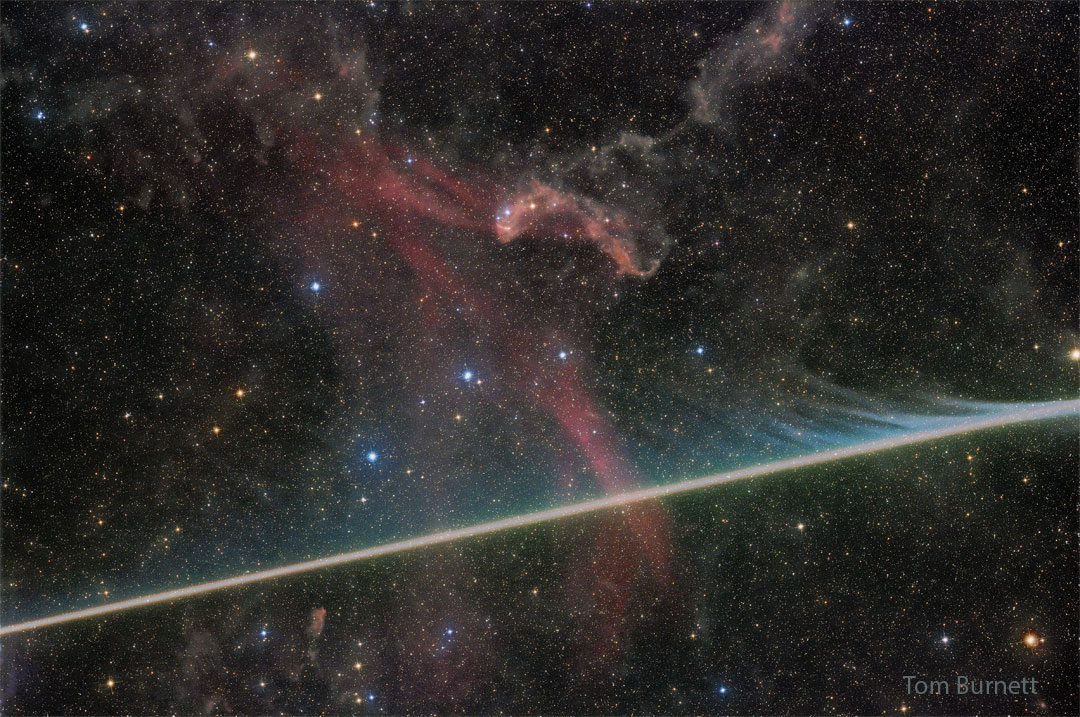
Cosmic Photobomb: A Meteor's Fiery Farewell Near a Distant Nebula

The Full Story

Our vast universe is full of surprises, and sometimes, those surprises happen incredibly close to home – or at least, in our own atmosphere! A recent long-exposure photograph, aiming to capture the ethereal glow of the Great Lacerta Nebula (a faint, reddish cloud of gas and dust far beyond our solar system), got an unexpected visitor. A small meteoroid, likely no bigger than a pebble, decided to make a dramatic entrance, streaking brilliantly across the frame before vanishing just as quickly as it appeared. So, what exactly creates this spectacular light show? When these tiny space rocks, called meteoroids, encounter Earth's atmosphere, they're traveling at incredible speeds – tens of thousands of miles per hour. The intense friction generated by plowing through the air causes the air molecules around the meteoroid to heat up dramatically, reaching super-hot temperatures. This extreme heat doesn't just warm the meteoroid; it excites the surrounding air, making it glow brightly. Simultaneously, the meteoroid itself begins to vaporize, shedding its material in a fiery, luminous trail. The colors we see in a meteor's streak aren't just pretty; they're like a cosmic fingerprint. As the meteoroid vaporizes, the elements it's made of (like iron, magnesium, or calcium) emit light at specific wavelengths, creating distinct hues. These colors, along with the lingering, wind-blown gas and dust, offer scientists valuable clues about the meteoroid's composition. It's like getting a tiny, free sample from space, giving us insights into the raw materials floating around our solar system and even the early days of planet formation. This particular cosmic visitor was captured from Death Valley Observatories in Nevada, USA, a location known for its dark skies. While that specific meteor was a lucky shot, this month is actually a fantastic time for everyone to try and spot meteors! We're currently experiencing three ongoing meteor showers, though the bright glow of a gibbous Moon is making them a bit harder to see. But don't worry, the best is yet to come. The most anticipated of these, the famous Perseids meteor shower, is gearing up for its busiest night in about ten days. Even better news? The Perseids peak this year will almost perfectly coincide with a new Moon, meaning the sky will be much darker and provide an even more spectacular backdrop for these natural fireworks. From some lucky locations, this new Moon will even totally eclipse the Sun, adding another layer of cosmic wonder to the celestial calendar.

Key Takeaways

  • 1 A small meteor 'photobombed' a long-exposure image of the distant Lacerta Nebula.
  • 2 Meteors glow intensely by superheating the surrounding air and vaporizing themselves as they enter Earth's atmosphere.
  • 3 The colors in a meteor's trail act as a 'fingerprint,' revealing the chemical composition of the space rock.
  • 4 August is prime meteor-viewing season, with the Perseids shower peaking soon under ideal dark sky conditions (a new Moon).

💡 Think of it this way:

Imagine trying to take a picture of a faraway mountain at dusk, and just as the shutter opens for a long exposure, a tiny, glowing pebble unexpectedly streaks right across your camera lens, leaving a bright trail before it vanishes.

How We Know This

This image was captured using long-exposure photography, a technique where a camera's shutter is left open for an extended period, allowing it to collect faint light from distant objects like nebulae. While the camera was diligently gathering light from the Great Lacerta Nebula, a fast-moving meteoroid happened to zip through Earth's atmosphere, leaving its bright, fiery trail momentarily imprinted on the same photograph.

What This Means

Understanding the composition of meteoroids helps scientists piece together the puzzle of our solar system's formation and the materials that make up planets. Every bright streak in our sky provides a tiny, free sample from space, offering clues about the raw ingredients floating around us. Furthermore, images like this remind us of the continuous cosmic bombardment our planet experiences and inspire us to look up, encouraging public interest and participation in the wonders of astronomy, especially during peak meteor shower events.

Why It Matters

This captivating image reminds us of the constant, dynamic activity happening above our heads, from tiny space pebbles entering our atmosphere to distant cosmic wonders. It also highlights the best time to look up and catch your own natural fireworks show with upcoming meteor showers!

Related Topics

#Meteor #Astronomy #Nebula #Perseids #Space Photography