Europe's GPS Gets a Big Boost: Two New Satellites Join Galileo!
In Brief
Europe's very own satellite navigation system, Galileo, just got stronger with two brand new satellites officially joining its fleet. These additions boost its power, make it more robust, and enhance its independence. There are still four more first-generation satellites waiting in the wings, with the next two set to launch by year-end.
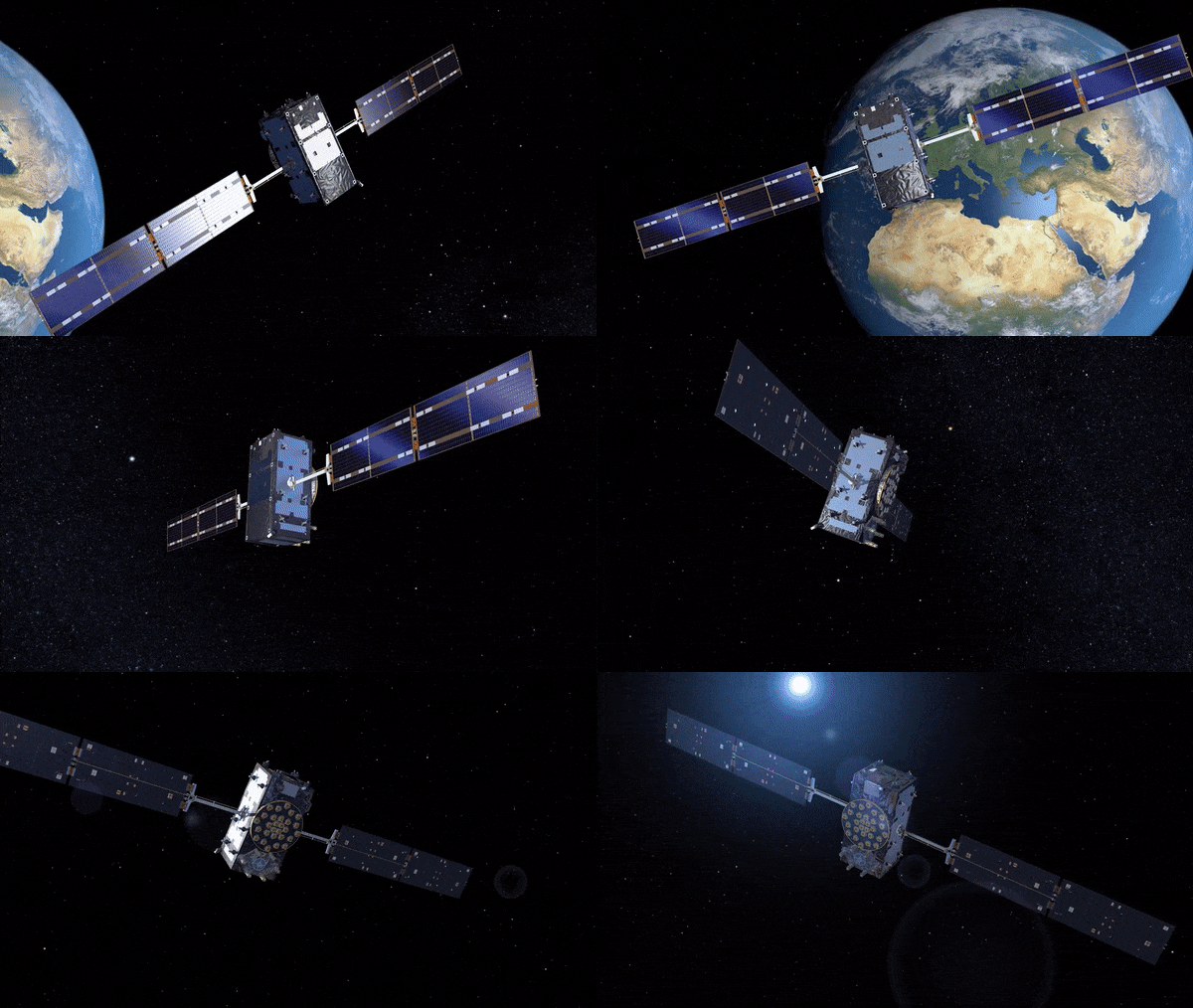
The Full Story
Key Takeaways
- 1 Two new Galileo satellites have officially joined Europe's navigation system.
- 2 These additions enhance Galileo's power, reliability, and independence.
- 3 Improved capabilities mean more accurate and dependable navigation for everyday users.
- 4 Increased resilience ensures the system remains robust even if individual satellites face issues.
- 5 Four more 'First Generation' Galileo satellites are planned for launch, with the next pair expected by year-end, leading to an even more advanced 'Second Generation'.
💡 Think of it this way:
Think of it like adding more lanes to a super-highway, making traffic flow smoother and providing more backup routes if one gets congested. Or, imagine your favorite map app suddenly becoming even more precise and less likely to lose signal!
How We Know This
These sophisticated satellites are launched into orbit aboard powerful rockets from Earth. Once safely in space, they are carefully maneuvered into their precise positions, joining the existing network of Galileo satellites. From their orbital vantage point, they continuously transmit highly accurate timing signals down to Earth. These signals are then picked up by receivers in devices like your smartphone, car's GPS, or specialized equipment, which use the information from multiple satellites to calculate your exact location.
What This Means
The ongoing expansion of the Galileo constellation means a future with even more precise and reliable navigation for everyone. This will impact everything from getting directions and tracking deliveries to critical infrastructure management and search-and-rescue operations. It also cements Europe's continued leadership in space technology and strengthens its independence in providing essential services. As the system continues to grow and evolve towards its 'Second Generation,' we can anticipate even greater accuracy, new innovative services, and a more robust foundation for the technologies that shape our daily lives.
Why It Matters
This upgrade means more reliable navigation on your phone, better accuracy for things like ride-sharing and emergency services, and greater independence for European technology. It's about making your daily life smoother and more secure, from finding your way to getting help when you need it.