Back to Articles Space Mission

Hera Spacecraft Gets a Vital Software Update on its Way to Asteroids!

πŸ“– 3 min read πŸ“Š beginner 🏷️ ESA

In Brief

ESA's Hera mission team has successfully updated its spacecraft's software from an incredible distance of 140 million kilometers away. This crucial 'brain boost' ensures Hera is fully prepared for its upcoming rendezvous with the Dimorphos and Didymos asteroids later this year. It's like updating your phone's operating system, but from Earth to a device incredibly far out in space.
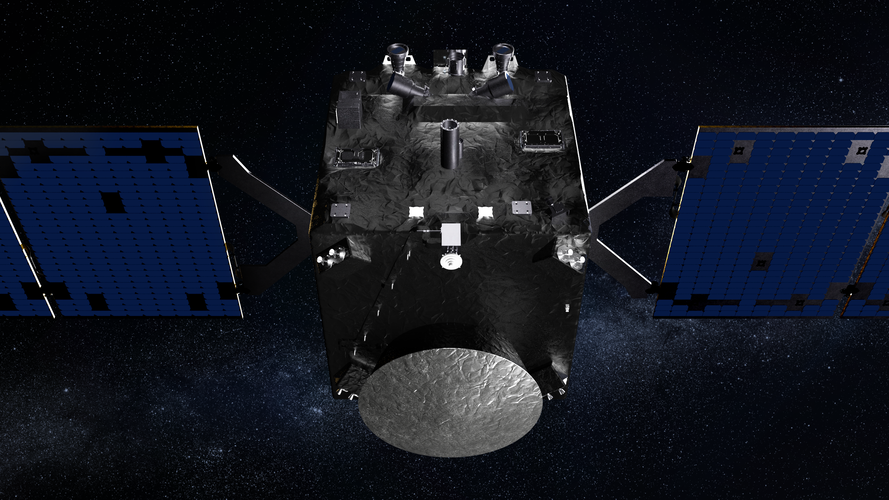
Hera Spacecraft Gets a Vital Software Update on its Way to Asteroids!

The Full Story

Deep in space, the European Space Agency's (ESA) Hera spacecraft has just received a vital upgrade, not for its hardware, but for its software – its digital 'brain.' From a staggering distance of 140 million kilometers away, roughly 360 times the distance from Earth to the Moon, engineers successfully sent new code to Hera, preparing it for one of humanity's most ambitious missions: inspecting the aftermath of an asteroid impact. This remote update is a testament to incredible engineering and communication. Like our smartphones and computers, spacecraft benefit immensely from software updates. These aren't just about fixing bugs; they can introduce new features, improve navigation precision, optimize scientific instrument performance, or even adapt to unexpected conditions. For Hera, this specific upgrade ensures it's perfectly tuned for its complex task: arriving at the binary asteroid system of Dimorphos and Didymos this autumn. Hera's mission is to meticulously study Dimorphos, the smaller asteroid that NASA’s DART mission intentionally crashed into in 2022, to understand exactly how the impact changed its orbit and physical characteristics. The challenge of performing such an update across 140 million kilometers cannot be overstated. Sending commands from Earth to Hera, and receiving confirmation back, involves signals traveling at the speed of light, but even light takes several minutes to cover such vast distances. This means engineers can't simply interact with the spacecraft in real-time. Every command, every sequence of instructions, had to be meticulously planned, tested, and sent with utmost precision, anticipating every possible scenario before the signal even left Earth. It's a high-stakes operation with no room for error. The success of this deep-space software upgrade is critical for Hera's mission. When it arrives at Dimorphos and Didymos, Hera will perform detailed mapping, measure the asteroid's mass, and analyze the crater left by DART. The new software will enable its cameras and scientific instruments to collect the most accurate data possible, providing invaluable insights into planetary defense strategies. This information is vital for us to understand how we could potentially deflect a dangerous asteroid heading for Earth in the future. Beyond Hera's immediate goals, this achievement has profound implications for the future of space exploration. It demonstrates our growing capability to maintain, adapt, and even enhance spacecraft far from home. This skill will be absolutely essential for future long-duration missions to Mars, the outer solar system, and beyond, where human intervention is impossible and onboard systems must remain flexible and robust. It marks another step forward in humanity's ability to operate effectively in the vastness of space.

πŸ’‘ Think of it this way:

Imagine trying to update your computer's software while it's sitting on the moon, or even further out in the solar system! That's essentially what engineers just accomplished for the Hera spacecraft.

How We Know This

The ESA control team meticulously prepared the new software on Earth. They then transmitted these digital instructions as radio signals across 140 million kilometers of space to the Hera spacecraft. Traveling at the speed of light, these signals took several minutes to reach Hera. Once received, the spacecraft's onboard computer autonomously installed the new software, much like your phone performs an update. After a successful installation, Hera sent confirmation signals back to Earth, reassuring the mission control team that its 'brain' had been successfully upgraded and was ready for its crucial asteroid mission.

What This Means

This successful deep-space software upgrade has several key implications: * It ensures Hera can fully execute its mission to study the DART impact aftermath, providing crucial data for planetary defense and our understanding of asteroid deflection. * It demonstrates an advanced capability to perform complex maintenance and upgrades on spacecraft operating millions of kilometers from Earth, significantly extending their operational lifespan and adaptability. * It paves the way for more ambitious, long-duration human and robotic missions to distant targets, where on-the-fly adjustments and system enhancements will be indispensable. * It highlights the extraordinary ingenuity and precision of space engineering and mission control, pushing the boundaries of what's possible in deep space.

Why It Matters

This achievement is a major step for planetary defense, as Hera will investigate an asteroid system that was intentionally impacted by another mission to test asteroid deflection. Successfully performing deep-space software upgrades also proves our ability to maintain and adapt complex technology far from home, which is crucial for future long-duration missions to Mars and beyond.

Related Topics

#Hera Mission #Asteroid Defense #Spacecraft Software #ESA #Deep Space Exploration