Cosmic Dragons Emerge from Stellar Nursery in the Southern Sky
In Brief
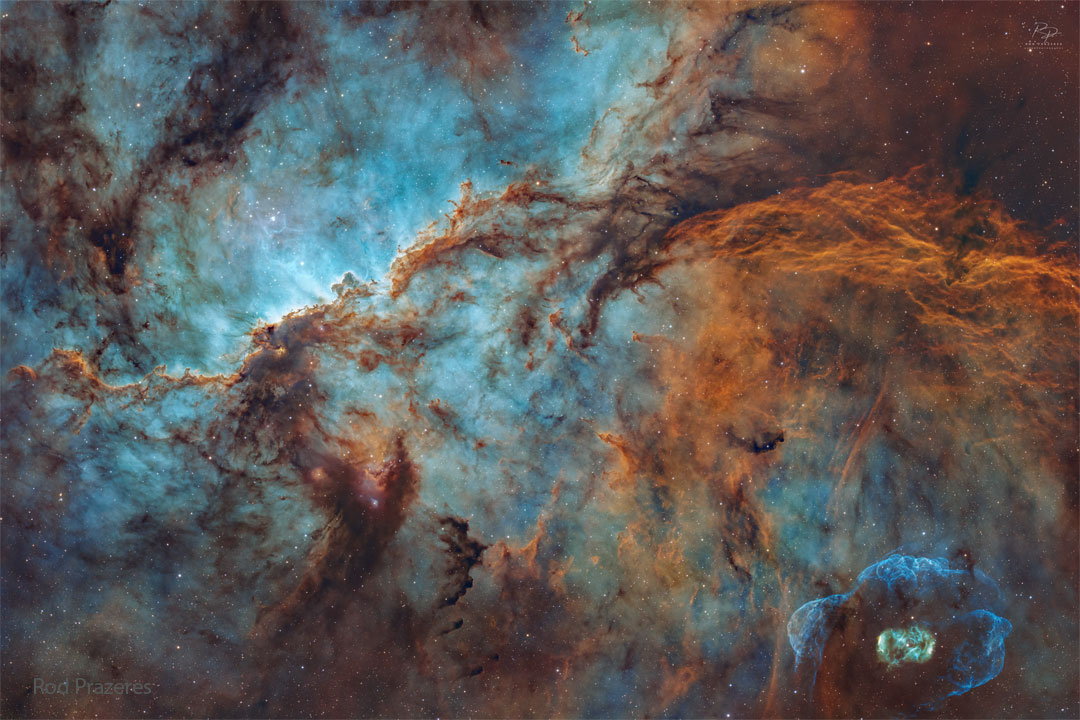
Astronomers have captured a stunning image of a celestial region resembling battling dragons, known as NGC 6188. This dramatic cloud of gas and dust is sculpted by powerful winds and radiation from massive young stars, actively forming new stars in the constellation Ara. It's a cosmic dance of creation and destruction, revealing the dynamic beauty of our universe.
The Full Story
Key Takeaways
- 1 NGC 6188 is a stunning cloud of gas and dust in space, resembling dragons.
- 2 These 'dragon' shapes are sculpted by powerful winds and radiation from massive young stars.
- 3 The region is an active stellar nursery, where new stars are forming.
- 4 Another nebula, NGC 6164, is also visible, highlighting the energetic nature of the area.
- 5 The wide-field image covers a huge portion of the sky, revealing cosmic processes in action.
💡 Think of it this way:
Like watching ocean waves carve intricate shapes into a sand dune, massive stars in space sculpt the surrounding gas and dust, creating these stunning cosmic formations.
How We Know This
This discovery was made possible by capturing a wide-field image using specialized ground-based telescopes. These instruments are designed to collect light from vast areas of the sky, often requiring long exposure times to gather enough faint light from distant objects like nebulae. The image was taken from Queensland, Australia, highlighting the importance of observatories in the Southern Hemisphere for viewing specific constellations like Ara.
What This Means
Understanding regions like NGC 6188 is crucial for astronomers. They serve as natural laboratories for studying the birth and early lives of massive stars, which play a vital role in the chemical enrichment of galaxies. These powerful stars produce heavy elements that are later recycled into new stars and planets, potentially even life itself. By observing these cosmic 'dragons,' we gain deeper insights into the fundamental processes that shape our universe and reveal the origins of everything we see around us, including our own Sun and Earth.
Why It Matters
This image offers a breathtaking look into how stars are born and how their immense power shapes the very fabric of space, creating incredible cosmic art that reminds us of the universe's grandeur and our place within its ongoing story.