Back to Articles Image Of The Day

Monster Sunspot AR 4478 Unleashes Solar Storms & Aurora Spectacles

📖 4 min read 📊 beginner 🏷️ NASA APOD

In Brief

A colossal sunspot group, AR 4478, is currently making its dramatic journey across the Sun, spewing powerful bursts of particles into space. These 'solar storms' could potentially affect our technology here on Earth, but also promise a stunning display of northern and southern lights. Scientists are actively monitoring its intense activity.
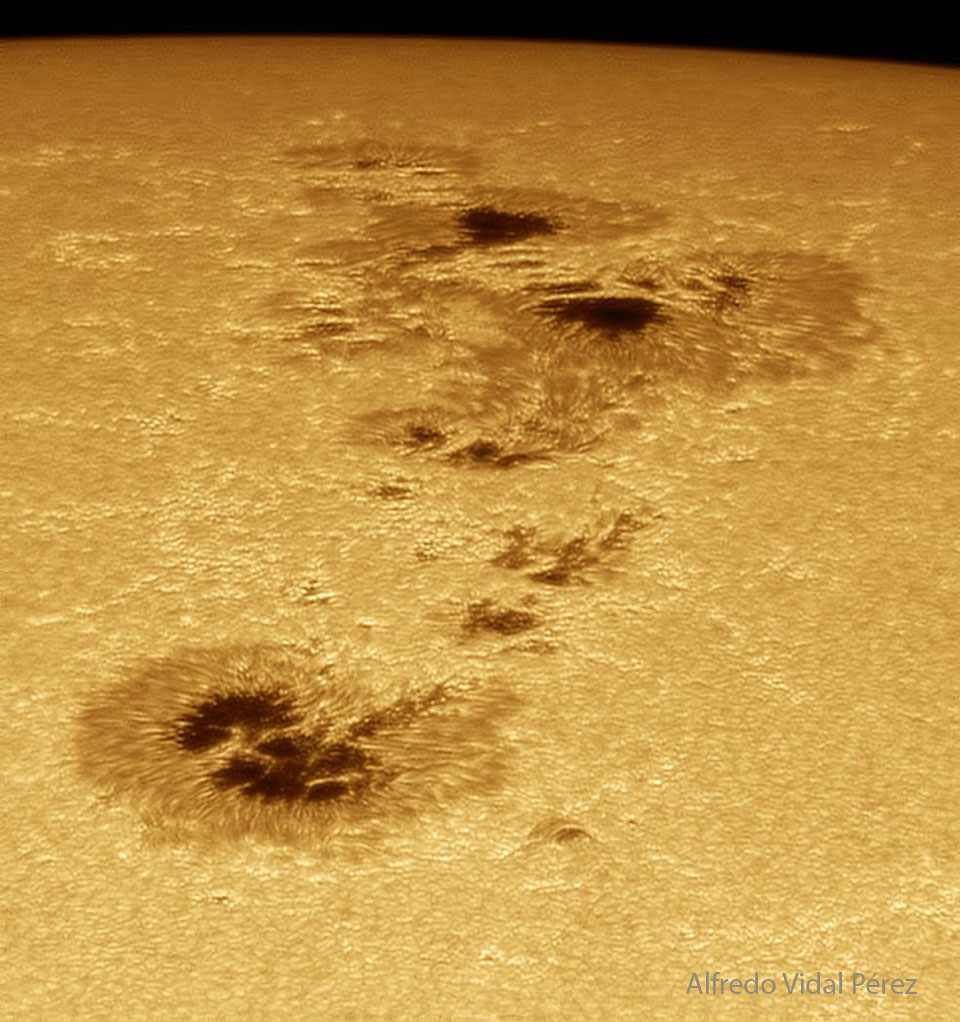
Monster Sunspot AR 4478 Unleashes Solar Storms & Aurora Spectacles

The Full Story

Currently gracing the face of our Sun is AR 4478, a colossal sunspot group that's making headlines for its sheer size and volatile activity. This monster sunspot isn't just big – it's one of the largest we've seen in recent history, nearly rivaling the famous AR 3664 from earlier in 2024. As it slowly makes its journey across our star, it's putting on a spectacular, albeit powerful, show, drawing attention from scientists and skygazers alike. So, what exactly is AR 4478? Sunspots are cooler, darker regions on the Sun's surface where incredibly strong magnetic fields poke through. These fields can become extremely twisted and tangled, much like rubber bands stretched to their breaking point. When these 'rubber bands' snap, they can trigger powerful eruptions known as Coronal Mass Ejections, or CMEs. Think of a CME as the Sun letting out a huge, energetic 'burp' of superheated gas and magnetic fields, blasting billions of tons of material into space. While these solar events sound dramatic, they often bring a spectacular gift to Earth: the aurora borealis (Northern Lights) and aurora australis (Southern Lights). When the charged particles from a CME eventually collide with Earth's magnetic field and upper atmosphere, they excite gases like oxygen and nitrogen. This excitement causes the gases to glow, painting the night sky with mesmerizing ribbons of green, pink, and purple light – a truly breathtaking cosmic ballet that people all over the globe eagerly hope to witness. However, at their most intense, these solar storms can pose challenges. A direct and powerful hit from a CME could potentially disrupt Earth-orbiting satellites, leading to issues with GPS navigation, communication networks, and even weather forecasting. There's also a slight risk of our planet's atmosphere expanding a little, creating more drag for satellites, and in extreme cases, causing surges in electrical power grids on the ground. Scientists are constantly monitoring these events to provide early warnings and minimize potential impacts. AR 4478 is so large that, with proper eye protection (like specialized solar eclipse glasses), you can actually spot its dark blemishes on the Sun's surface with your own eyes – a rare treat for skygazers! Astronomers worldwide, from observatories like the one that captured its image in Barcelona, are diligently tracking its progress. Its size and intensity make it a crucial subject for studying space weather, helping us better understand our dynamic star and how its activity influences our home planet. This week, enthusiasts will be glued to their telescopes during the day and eagerly scanning the night skies for those elusive, vibrant auroras.

Key Takeaways

  • 1 AR 4478 is one of the largest sunspot groups seen recently, visible even with eclipse glasses.
  • 2 It's highly active, releasing powerful solar storms called Coronal Mass Ejections (CMEs) that travel through space.
  • 3 These CMEs can cause beautiful auroras on Earth, but extreme events could potentially disrupt satellites and power grids.

💡 Think of it this way:

Imagine the Sun as a gigantic, fiery ball, and this sunspot is like an exceptionally large, super-active volcanic region on its surface. Instead of lava, it erupts massive clouds of charged particles – like the Sun letting out a huge, energetic 'burp' into space.

How We Know This

This giant sunspot group was discovered and is being tracked using visible light telescopes equipped with special filters, much like those used to observe solar eclipses safely. Its immense size means that with certified solar eclipse glasses, it's even visible to the naked eye from Earth, allowing for widespread public observation.

What This Means

Understanding AR 4478 helps scientists improve their predictions for space weather, allowing us to better prepare for potential impacts on our technology, from satellites to power grids. For the general public, it means a unique opportunity to witness the power of our Sun, with the exciting prospect of stunning aurora displays gracing the night skies in the coming days.

Why It Matters

This active sunspot reminds us of the Sun's dynamic power, influencing everything from our satellite communications and power grids to creating breathtaking aurora shows in our night skies. It's a key part of 'space weather' that directly affects Earth and our technology.

Related Topics

#Solar Storm #Sunspot #Aurora #Space Weather #CME