Back to Articles Image Of The Day

The Hamster Wheel Nebula: A Cosmic Clue from a Dying Star

📖 3 min read 📊 beginner 🏷️ NASA APOD

In Brief

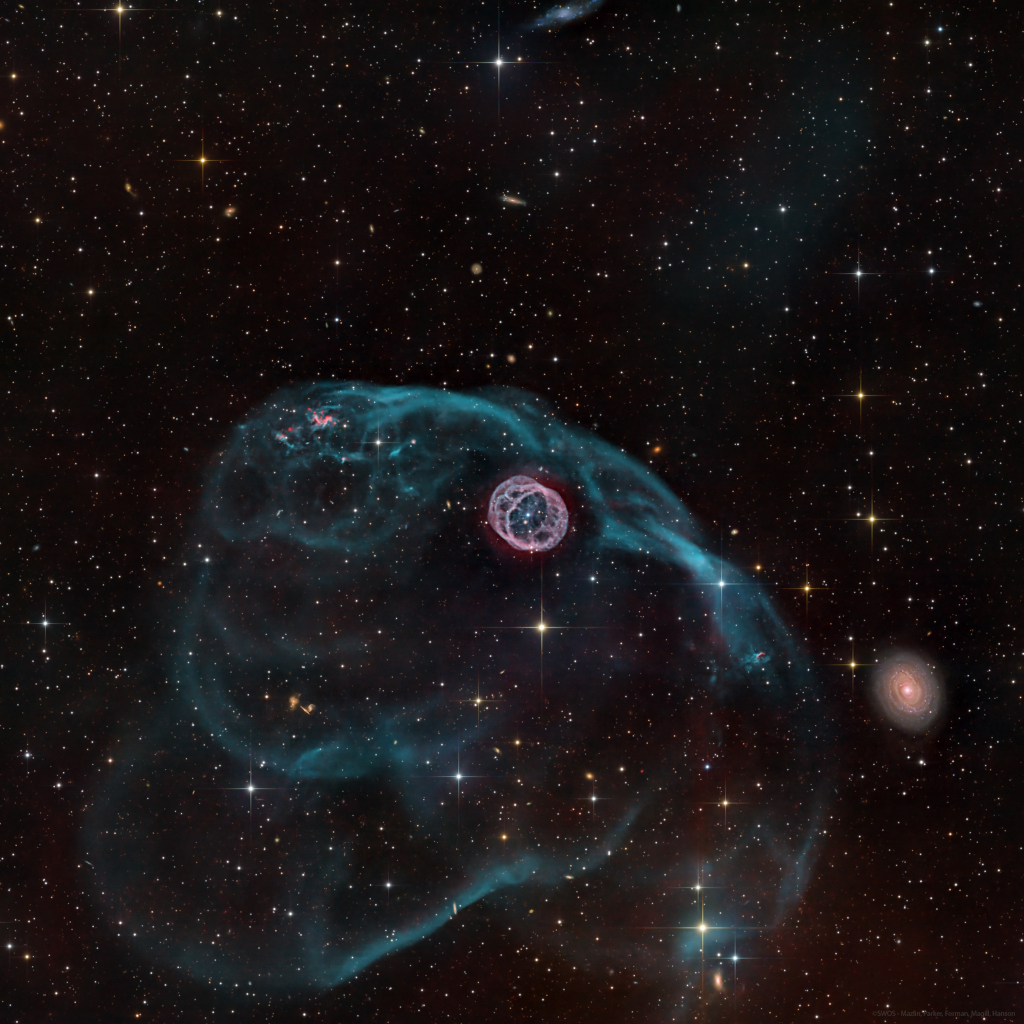
Imagine a giant hamster wheel spinning in space! This stunning nebula, named Longmore 8, was first glimpsed decades ago but today's powerful telescopes reveal its incredible detail. It's the luminous farewell of a dying star, hinting at a secret companion influencing its unique shape.
The Hamster Wheel Nebula: A Cosmic Clue from a Dying Star

Disclosure: This post contains affiliate links. As an Amazon Associate, I earn from qualifying purchases.

The Full Story

Deep in the southern sky, there's a celestial marvel known as Longmore 8, but it's more famously (and fittingly) called the Hamster Wheel Nebula. This intricate structure of glowing gas was first discovered by astronomer Andrew Longmore back in 1976. At the time, with the technology available, it was just a faint smudge on photographic plates – a mere whisper of the grandeur we can see today. Fast forward to now, and modern telescopes equipped with highly sensitive cameras allow us to peer into its heart and unravel its cosmic story. So, what exactly are we seeing? The Hamster Wheel Nebula is what astronomers call a 'planetary nebula' – although it has nothing to do with planets. It's actually the beautiful, final breath of a star similar to our Sun. As these stars run out of fuel, they swell up, shed their outer layers into space, and then slowly collapse into a dense, hot core called a 'white dwarf.' The intense ultraviolet light from this leftover white dwarf then illuminates the expelled gas, causing it to glow in vibrant colors across vast stretches of space. The featured image of the Hamster Wheel Nebula truly highlights its namesake. We see a striking, wheel-like pattern of hydrogen gas, pushed out into the cosmos by the dying star. This intricate structure is not just a random puff of gas; it's a testament to the complex processes at play. The vibrant reds in the image show hydrogen gas, while the delicate blue veil surrounding it hints at ionized oxygen – each color telling us about the different elements present and how they've been energized by the white dwarf. But the Hamster Wheel Nebula holds an even deeper secret. Within the intricate wheel, astronomers have spotted two opposing clumps of red hydrogen gas, tucked inside the blue oxygen. This isn't just a pretty detail; it's a strong clue that the bright white dwarf at the center isn't alone. These clumps suggest the presence of a companion star, perhaps a smaller, dimmer star that has been gravitationally interacting with the dying giant. This interaction could be responsible for sculpting the nebula into its unique, lopsided wheel shape, making it a cosmic dance of two stars rather than just one. The stark difference between Longmore's original faint glimpse and today's breathtaking images underscores the incredible advancements in astronomical technology. What was once barely perceptible is now a vibrant, detailed canvas of stellar evolution. This evolution in our observational power allows astronomers to dig deeper into the mysteries of star death, stellar interactions, and ultimately, the future of stars like our own Sun.

Key Takeaways

  • 1 The Hamster Wheel Nebula is a beautiful cloud of gas ejected by a dying star.
  • 2 Modern telescopes reveal intricate details of the nebula, which was barely visible in its initial discovery.
  • 3 The unique shape and specific gas clumps within the nebula suggest the presence of a hidden companion star.
  • 4 This nebula helps us understand the end-stages of stellar life and how stars interact in binary systems.
Hubble Space Telescope Deep Field Poster

Hubble Space Telescope Deep Field Poster

Stunning poster featuring iconic Hubble Space Telescope imagery. Perfect for space enthusiasts.

Check Price on Amazon
*As an Amazon Associate, we earn from qualifying purchases.

💡 Think of it this way:

Think of it like watching a giant, glowing firework display that a star put on as its final act. The 'hamster wheel' shape is the explosive debris, beautifully lit up, showing us the star's last hurrah.

How We Know This

Back in 1976, astronomer Andrew Longmore made his discovery using what was then advanced photographic technology. He employed highly sensitive film to capture faint objects across the southern sky, then meticulously examined these large photographic plates by eye to catalogue new celestial wonders. Today, the featured image of the Hamster Wheel Nebula was captured using powerful modern telescopes equipped with incredibly sensitive digital cameras, allowing us to gather far more light and reveal details that were previously impossible to see.

What This Means

Studying nebulae like the Hamster Wheel continues to help astronomers piece together the complex life cycles of stars, especially how they interact in binary or multi-star systems. Future observations with even more advanced telescopes, perhaps even the James Webb Space Telescope, could pinpoint the companion star, allowing us to precisely model how its presence sculpted this unique cosmic artwork and provide deeper insights into stellar evolution.

Why It Matters

Understanding nebulae like the Hamster Wheel helps us piece together the dramatic end-stages of stars, including what might happen to our own Sun billions of years from now. It also provides crucial clues about how stars interact in multi-star systems, which are more common than we might think!

Related Topics

#Nebula #Star Death #Astronomy #White Dwarf #Binary Stars