Back to Articles Image Of The Day

Venus and Jupiter: Our Sky's Brightest Duo in a Dazzling Dance

📖 3 min read 📊 beginner 🏷️ NASA APOD

In Brief

The two brightest planets, Venus and Jupiter, recently treated sky-watchers to a spectacular celestial show. For over a week, they appeared incredibly close together in our evening sky, creating a breathtaking display visible right after sunset. This cosmic 'dance' was a beautiful reminder of the dynamic universe we live in.
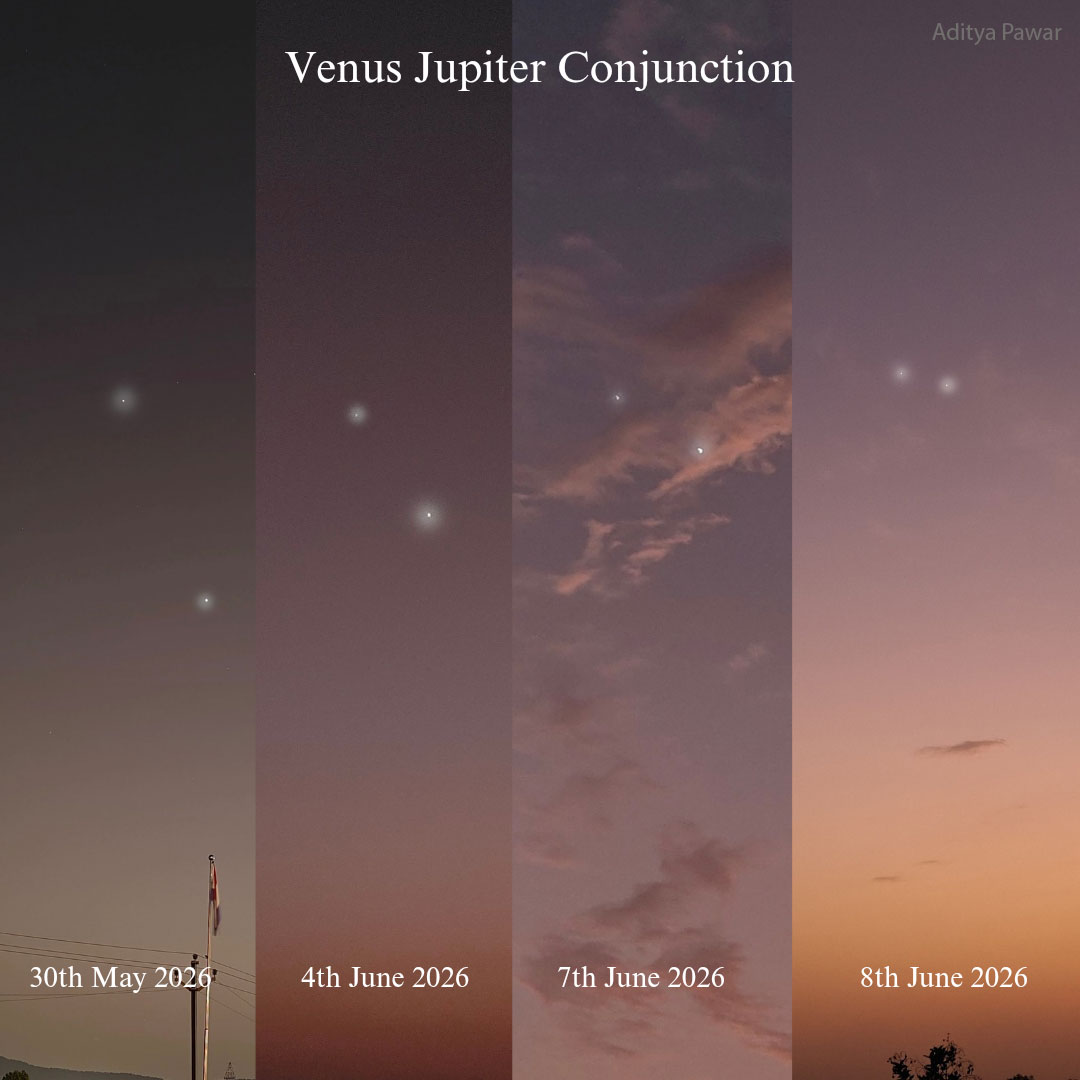
Venus and Jupiter: Our Sky's Brightest Duo in a Dazzling Dance

Disclosure: This post contains affiliate links. As an Amazon Associate, I earn from qualifying purchases.

The Full Story

For over ten days in late May and early June, anyone glancing towards the western horizon after sunset was likely treated to an unmissable spectacle: the dazzling duo of Venus and Jupiter. These two giants of our solar system, the brightest planets visible from Earth, embarked on a mesmerizing celestial 'dance' that captivated sky-watchers around the globe. This rare alignment, known as a conjunction (when celestial bodies appear close together from our vantage point), made them seem incredibly intimate, marking it as one of the most talked-about astronomical events of the season. This particular conjunction unfolded as a continuous visual story, chronicled daily through photographs from May 30 to June 8. Observers, such as those in Maharashtra, India, captured the planets' steady approach, with Jupiter initially positioned above Venus. Each evening offered a unique snapshot, with the vibrant colors of the twilight sky and the atmospheric conditions near sunset adding a distinct flair to every panel. It was a beautiful testament to how local conditions can paint the backdrop for universal cosmic events. While the planets appeared to be intimately close, reaching their peak proximity on June 9 when they were separated by just three times the width of a full moon, this was a magnificent cosmic illusion. In reality, Venus and Jupiter were still enormous distances apart in their respective orbits around the Sun. On that very day, a staggering 600 million kilometers separated them! This striking difference highlights a fundamental principle in astronomy: what we see from Earth is often a matter of perspective, much like two distant cars on a highway appearing to travel side-by-side even though there are vast fields between them. The celestial show doesn't end there, though the performers will soon part ways. In the coming days, Jupiter, the larger of the two, will gradually descend closer to the Sun and become lost in the bright sunset glare. Venus, however, will continue its graceful journey, moving further away from the Sun in the western sky. This allows it to truly excel in its ongoing role as the brilliant 'evening star,' continuing to dazzle us for weeks to come. Planetary conjunctions like this are more than just pretty sights; they are captivating reminders of the intricate and predictable ballet of our solar system. They offer a moment for us to pause, look up, and feel a connection to the vastness of space. Observing such events helps demystify celestial mechanics and encourages a deeper appreciation for the wonders that unfold nightly above us, often without the need for any special equipment, just a clear sky and an eager eye.

Key Takeaways

  • 1 Venus and Jupiter performed a spectacular 'conjunction' in the evening sky, appearing incredibly close.
  • 2 This was a visual alignment; the planets were actually separated by over 600 million kilometers.
  • 3 The event was easily visible to the naked eye and captured daily by sky-watchers.
  • 4 Jupiter is now fading into the sunset, while Venus continues to shine brightly as the 'evening star'.
National Geographic Planisphere Star Finder

National Geographic Planisphere Star Finder

Essential tool for identifying constellations and stars. Perfect for beginners learning the night sky.

Check Price on Amazon
*As an Amazon Associate, we earn from qualifying purchases.

💡 Think of it this way:

Imagine two airplanes flying at different altitudes and distances, but from your perspective on the ground, they appear to be flying right next to each other. That's similar to how Venus and Jupiter looked during their close encounter!

How We Know This

This amazing celestial event was primarily observed and documented by sky-watchers and amateur astronomers using everyday cameras. By taking daily photographs from the same location, they created a visual chronicle of the planets' apparent movement and close approach in the evening sky, capturing the beautiful dance for everyone to see.

What This Means

While this specific alignment is temporary, it serves as a wonderful public engagement tool for astronomy, reminding us of the dynamic nature of our solar system. It encourages people to look up and fosters a sense of wonder and curiosity about space, paving the way for future sky-watching opportunities and greater public interest in astronomy.

Why It Matters

These easily observed events are a wonderful way for everyone to connect with the cosmos, sparking curiosity about our solar system and showing the beauty of the universe without needing special equipment. They're a reminder of the constant, fascinating motion happening above us.

Related Topics

#VenusJupiter #PlanetaryConjunction #Skywatching #Astronomy #NightSky