Back to Articles Image Of The Day

The Mermaid Nebula: A Stellar Explosion's Underwater Ballet in Space

📖 3 min read 📊 beginner 🏷️ NASA APOD

In Brief

Imagine a beautiful celestial 'mermaid' formed from the dramatic death of a massive star! This stunning cosmic cloud, known as the Mermaid Nebula, is the colorful aftermath of a supernova explosion thousands of years ago. Deep within its shimmering gas, a mysterious, rapidly spinning star called a pulsar lies hidden, a relic of the star's fiery demise.
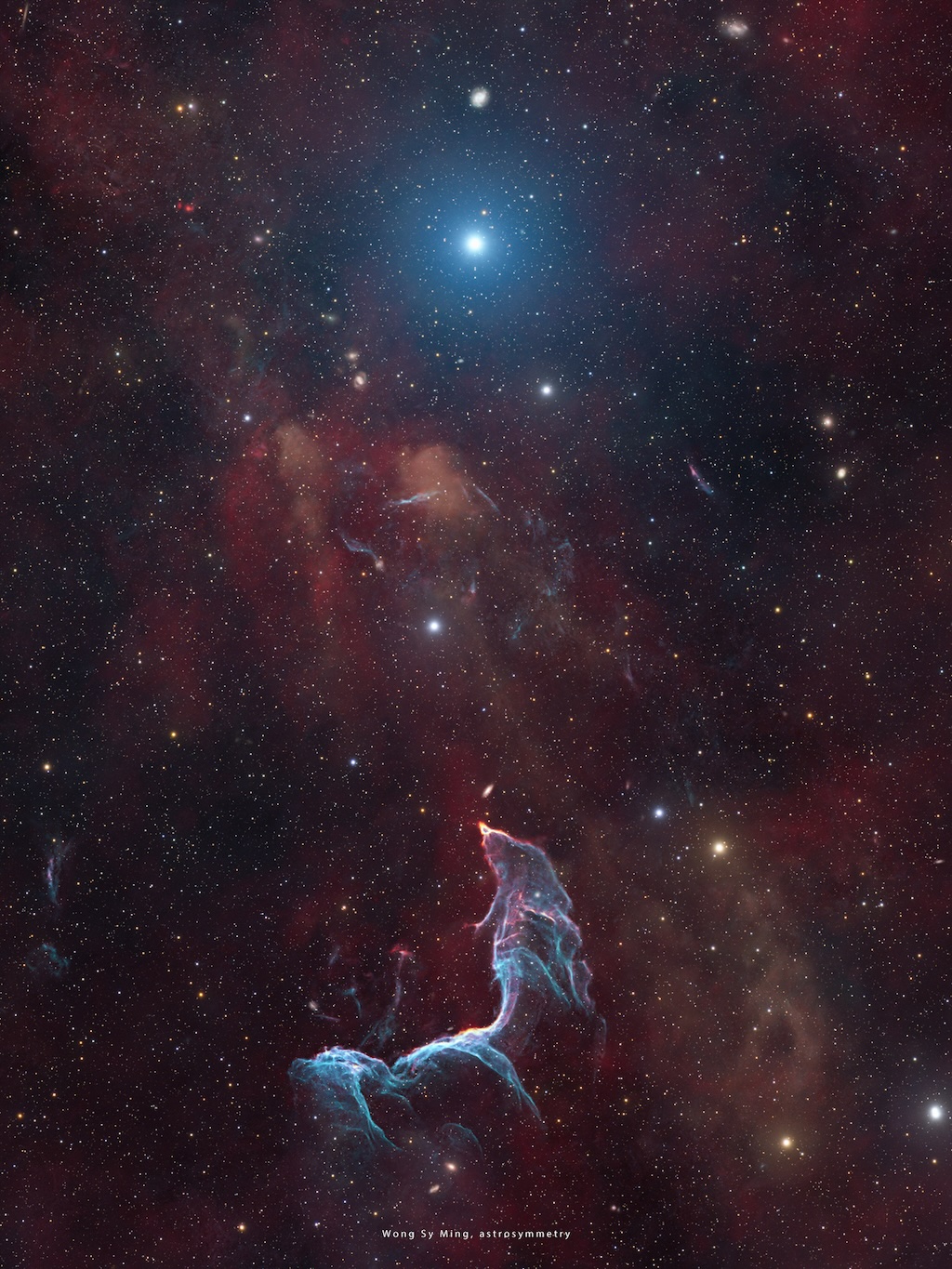
The Mermaid Nebula: A Stellar Explosion's Underwater Ballet in Space

Disclosure: This post contains affiliate links. As an Amazon Associate, I earn from qualifying purchases.

The Full Story

Dive into a cosmic ocean, not of water, but of gas and stardust, where a celestial 'mermaid' seems to swim! This breathtaking sight is the Mermaid Nebula, also known as the Betta Fish Nebula due to its flowing, fin-like appearance. It's not just a pretty picture; it's a dramatic crime scene from space, marking the location of an ancient star's fiery end. Located thousands of light-years away and about 10,000 years old, this nebula is a testament to the universe's raw power and artistry. The nebula's vibrant colors tell a story written in light. The striking blue hues, reminiscent of deep ocean waters, come from doubly ionized oxygen gas – that's oxygen atoms that have lost two of their electrons, causing them to glow with a specific blue light when excited by energy. Meanwhile, the rich, deep reds are emitted by glowing hydrogen gas, the most abundant element in the universe. These brilliant gases are not just lingering remnants; they're expanding shockwaves, heated and illuminated by the catastrophic event that birthed them: a supernova explosion. At the very heart of this cosmic splendor lies a secret – a peculiar pulsar. This isn't just any star; it's a neutron star, the super-dense, collapsed core of the massive star that exploded. Imagine squeezing an entire star heavier than our Sun into a sphere just the size of a city! This particular pulsar is a young, 'radio-quiet' neutron star, meaning it doesn't loudly announce its presence in radio waves like many of its cousins. Instead, it spins around an incredible two times every second, creating a powerful magnetic field and emitting beams of X-rays. While the nebula itself is a feast for the eyes in visible light, the pulsar remains a ghostly presence in this image. Though its X-ray emissions are clearly detectable by specialized telescopes, astronomers haven't yet confirmed its presence in optical (visible) light. This makes it a fascinating puzzle, a hidden cosmic engine still at work, pushing out energy from its incredible rotation. The bright, sparkling stars you see scattered across the image are merely background stars, passing through our line of sight and not physically associated with the nebula or its mysterious core. Studying supernova remnants like the Mermaid Nebula and the pulsars they leave behind is crucial for understanding the universe. These events are not just cosmic spectacles; they are the universe's way of recycling matter. Supernovas blast heavy elements, forged within the massive stars, out into space, seeding new generations of stars, planets, and eventually, even life itself. Every atom heavier than hydrogen and helium in your body, from the iron in your blood to the calcium in your bones, was once forged in the heart of a star and scattered by a supernova.

Key Takeaways

  • 1 The Mermaid Nebula is a beautiful cloud of gas and dust formed from a massive star's explosion (a supernova) about 10,000 years ago.
  • 2 Its vibrant blue colors come from glowing oxygen, and the deep reds from hydrogen gas, acting like cosmic neon signs.
  • 3 At the heart of the nebula lies a hidden, rapidly spinning neutron star called a pulsar, the incredibly dense remnant of the exploded star, detected mainly by its X-ray emissions.
National Geographic Planisphere Star Finder

National Geographic Planisphere Star Finder

Essential tool for identifying constellations and stars. Perfect for beginners learning the night sky.

Check Price on Amazon
*As an Amazon Associate, we earn from qualifying purchases.

💡 Think of it this way:

Think of it like a cosmic fireworks display where the dazzling explosion leaves behind a beautiful, glowing smoke cloud and a tiny, incredibly dense firecracker spinning rapidly at its core.

How We Know This

Astronomers captured this stunning image by observing the nebula's glowing gases across different wavelengths of light, much like using special filters to see different colors. The blue light, for example, comes from oxygen, and the red from hydrogen. While the nebula itself shines brightly in visible light, the elusive pulsar at its core was primarily detected through X-ray telescopes, which can spot its high-energy emissions even when it's invisible to our eyes.

What This Means

Future observations will likely focus on further unraveling the mysteries of this particular pulsar, perhaps even confirming its elusive optical detection. By studying remnants like the Mermaid Nebula, scientists gain crucial insights into the life cycles of massive stars, the birth of exotic objects like neutron stars, and how these powerful cosmic events enrich the universe with the building blocks for new stars, planets, and even life itself. Each new detail helps us piece together the grand tapestry of cosmic evolution.

Why It Matters

Understanding supernovas like the one that created the Mermaid Nebula helps us unlock the secrets of the universe's most powerful events. These explosions forge the very elements essential for life, including those found in our own bodies and on Earth. Studying their remnants, like the hidden pulsar, provides clues about extreme cosmic physics and the destiny of massive stars.

Related Topics

#Supernova #Nebula #Pulsar #Astronomy #Star Death