Back to Articles Image Of The Day

Jupiter and Venus Embrace: Don't Miss This Week's Celestial Show!

📖 3 min read 📊 beginner 🏷️ NASA APOD

In Brief

Look up after sunset this week to catch a breathtaking celestial event! Our solar system's two brightest planets, Jupiter and Venus, are appearing incredibly close together, putting on a spectacular show that's easy to spot with the naked eye.
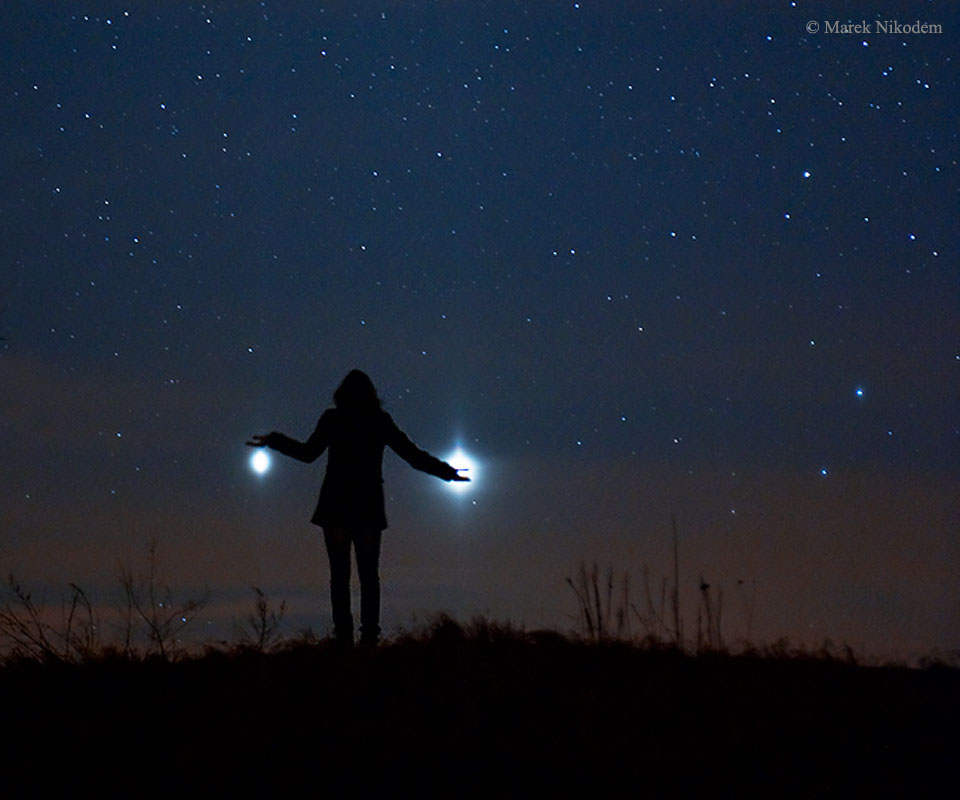
Jupiter and Venus Embrace: Don't Miss This Week's Celestial Show!

Disclosure: This post contains affiliate links. As an Amazon Associate, I earn from qualifying purchases.

The Full Story

Get ready for a spectacular cosmic show happening right above your head this week! Our solar system's two brightest planets, Jupiter and Venus, are putting on an incredibly close dance in the twilight sky. If you have a clear view of the western horizon after sunset, you'll be able to spot them appearing side-by-side, a truly breathtaking sight for anyone on Earth. This celestial "meeting" is what astronomers call a conjunction. It doesn't mean Jupiter and Venus are actually bumping into each other – they are still millions of miles apart in space. Instead, it's all about our perspective from Earth. From our vantage point, their orbital paths align in such a way that they appear to draw incredibly close, almost touching, even though one is much further away than the other. We've seen similar beautiful alignments before. Back in 2012, for instance, photographers around the world captured stunning images of these two planets appearing just three degrees apart – about the width of three fingers held at arm's length. One creative photographer in Poland even had his daughter pose humorously with the bright pair. This week, they'll be even closer, passing within a single degree of each other, making for an even more dramatic visual treat. You might wonder why these two planets stand out so much. Venus, often called the "Evening Star," is incredibly bright because its thick, reflective clouds bounce sunlight back towards us. Jupiter, the solar system's largest planet, shines brightly due to its sheer size and reflective atmosphere, even though it's much further away than Venus. Their combined brilliance makes them impossible to miss, even from light-polluted areas, provided you have a clear western horizon. To catch this dazzling duo, simply look west shortly after the sun dips below the horizon. They will be the two brightest "stars" you see. This event is more than just a pretty sight; it's a wonderful reminder of the intricate and predictable ballet of our solar system, offering a moment to pause, look up, and connect with the vastness of space without needing any special equipment. Don't miss this easy-to-spot cosmic rendezvous!

Key Takeaways

  • 1 Jupiter and Venus will appear incredibly close together in the sky this week.
  • 2 This 'conjunction' is visible to the naked eye after sunset in the western sky.
  • 3 The planets are only *appearing* close due to our perspective, not physically colliding.
  • 4 This week's alignment will be even closer than a similar famous event in 2012.
National Geographic Planisphere Star Finder

National Geographic Planisphere Star Finder

Essential tool for identifying constellations and stars. Perfect for beginners learning the night sky.

Check Price on Amazon
*As an Amazon Associate, we earn from qualifying purchases.

💡 Think of it this way:

Imagine two friends on a vast playground, usually far apart, suddenly walking side-by-side for a brief moment – that's what Jupiter and Venus are doing in our sky.

How We Know This

This stunning celestial alignment is primarily observed by simply looking up at the western horizon after sunset. Modern astronomers, however, use precise orbital calculations to predict such conjunctions years in advance, giving us the heads-up to enjoy these spectacular events.

What This Means

Events like the Jupiter-Venus conjunction inspire widespread public interest in astronomy and encourage people to explore the night sky. They offer fantastic opportunities for budding astrophotographers and serve as a beautiful, accessible demonstration of orbital mechanics, reminding us of the dynamic and predictable universe we live in.

Why It Matters

This rare and beautiful alignment is a perfect opportunity for anyone, anywhere, to connect with the wonders of our universe without any special equipment. It's a reminder of the dynamic dance happening right above us every night!

Related Topics

#Jupiter #Venus #Conjunction #Astronomy #Night Sky