Back to Articles Image Of The Day

Hubble Unveils Star Birth in the Eagle Nebula's Iconic 'Pillars of Creation'

📖 3 min read 📊 beginner 🏷️ NASA APOD

In Brief

Deep within the majestic Eagle Nebula, new stars are being born inside colossal cosmic pillars of gas and dust. The Hubble Space Telescope, using infrared light, has peered through these dense structures, revealing the hidden stellar nurseries and the dramatic ways young stars sculpt their surroundings. These magnificent 'Pillars of Creation' offer a breathtaking look into the very beginning of star life.
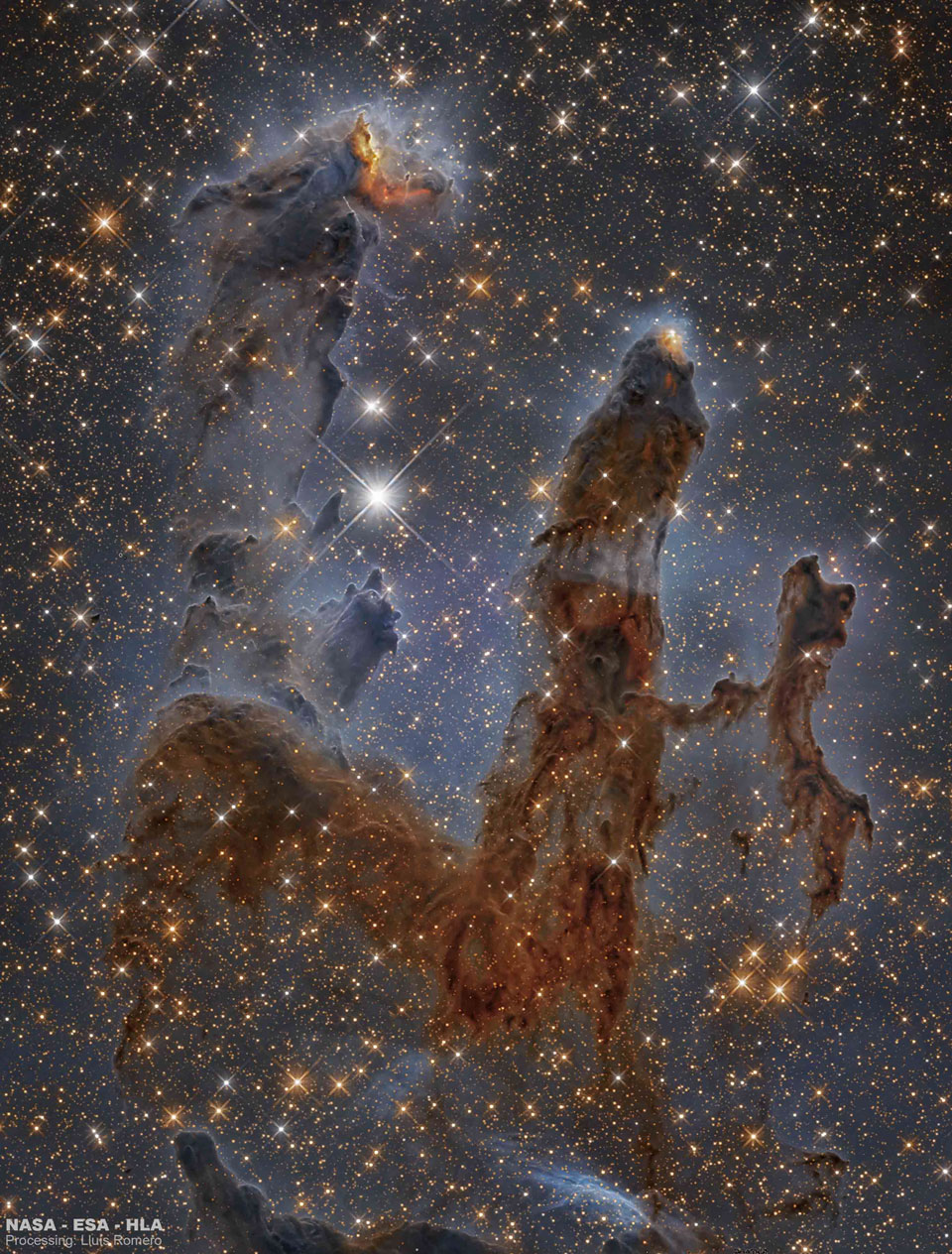
Hubble Unveils Star Birth in the Eagle Nebula's Iconic 'Pillars of Creation'

Disclosure: This post contains affiliate links. As an Amazon Associate, I earn from qualifying purchases.

The Full Story

The Eagle Nebula's 'Pillars of Creation' are one of the most iconic images in astronomy, appearing like towering cosmic fingers reaching into space. These giant structures are not solid rock, but incredibly dense clouds of gas and dust, stretching for light-years across the cosmos. They are, in essence, enormous stellar nurseries – the birthplaces of brand-new stars, actively being built even as we gaze upon them. Within the thick embrace of these pillars, gravity is hard at work. It slowly pulls together more and more of the surrounding gas and dust, causing these cosmic clumps to become denser and hotter. Over millions of years, if enough material accumulates, the pressure and temperature at the core become so extreme that nuclear fusion ignites – and a new star is born. This fundamental process of stellar birth is happening right now, hidden deep within these very pillars. As these infant stars come to life, they begin to shine with immense brilliance and emit powerful, high-energy radiation. This intense light and stellar wind act like a cosmic sandblaster, eroding and 'boiling away' the less dense material around the pillars. This constant sculpting is what gives the Pillars of Creation their distinctive, dramatic shapes, a testament to the powerful interplay between creation and destruction in the universe. Observing such a dusty, active region presents a challenge for astronomers. In visible light, the kind our eyes can see, these pillars are largely opaque, obscuring the new stars forming within. This is where the Hubble Space Telescope's infrared vision comes in. Infrared light has longer wavelengths, allowing it to penetrate through much of the thick dust, much like how specialized goggles can help you see through fog. This capability allows us to peer inside these dusty cocoons and witness the stars being born. Located about 6,500 light-years away from Earth, in a nebula-rich part of the sky towards the constellation Serpens Cauda (the tail of the snake), the Eagle Nebula (also known as M16) is a captivating target for even small telescopes. These breathtaking observations by Hubble not only enhance our appreciation for the sheer beauty of the cosmos but also provide invaluable data that helps scientists understand the fundamental processes of star formation that ultimately led to the existence of our own Sun and Earth.

Key Takeaways

  • 1 Pillars of Creation are colossal cosmic nurseries where new stars are actively forming.
  • 2 Hubble's infrared vision allows astronomers to see through dense dust, revealing hidden star birth.
  • 3 Intense radiation from newborn stars actively sculpts and erodes the surrounding cosmic pillars.
  • 4 These majestic structures are light-years in length and located 6,500 light-years away in the Eagle Nebula.
Hubble Space Telescope Deep Field Poster

Hubble Space Telescope Deep Field Poster

Stunning poster featuring iconic Hubble Space Telescope imagery. Perfect for space enthusiasts.

Check Price on Amazon
*As an Amazon Associate, we earn from qualifying purchases.

💡 Think of it this way:

Imagine a giant, cosmic construction site where gravity is the architect, slowly pulling together gas and dust to build new stars. But as these stellar 'buildings' light up, their intense radiation acts like a powerful hairdryer, gently sculpting and eroding the remaining misty material around them.

How We Know This

The Hubble Space Telescope was used to capture images of the Eagle Nebula. Crucially, it observed in near-infrared light, which has a longer wavelength than visible light. This unique ability allows infrared to pass *through* the dense clouds of gas and dust that would normally block our view, much like how specialized cameras can see heat signatures through smoke. By collecting infrared data, Hubble essentially gave us X-ray vision into these stellar cocoons.

What This Means

Studying the Pillars of Creation in detail provides critical insights into how stars, like our Sun, are born and how planetary systems might form around them. These observations help us refine our models of stellar evolution and the dynamic processes that shape galaxies. Future telescopes, such as the James Webb Space Telescope, will delve even deeper into the infrared spectrum, promising even more spectacular and detailed views into these cosmic nurseries, potentially uncovering even younger stars and proto-planetary disks.

Why It Matters

Understanding how stars form helps us unravel the origins of our own Sun and the potential for new planetary systems, offering profound insights into our place in the universe. It showcases the dynamic, ever-changing nature of the cosmos and the powerful forces that shape galaxies.

Related Topics

#Star Formation #Eagle Nebula #Pillars of Creation #Hubble Space Telescope #Infrared Astronomy