Back to Articles Image Of The Day

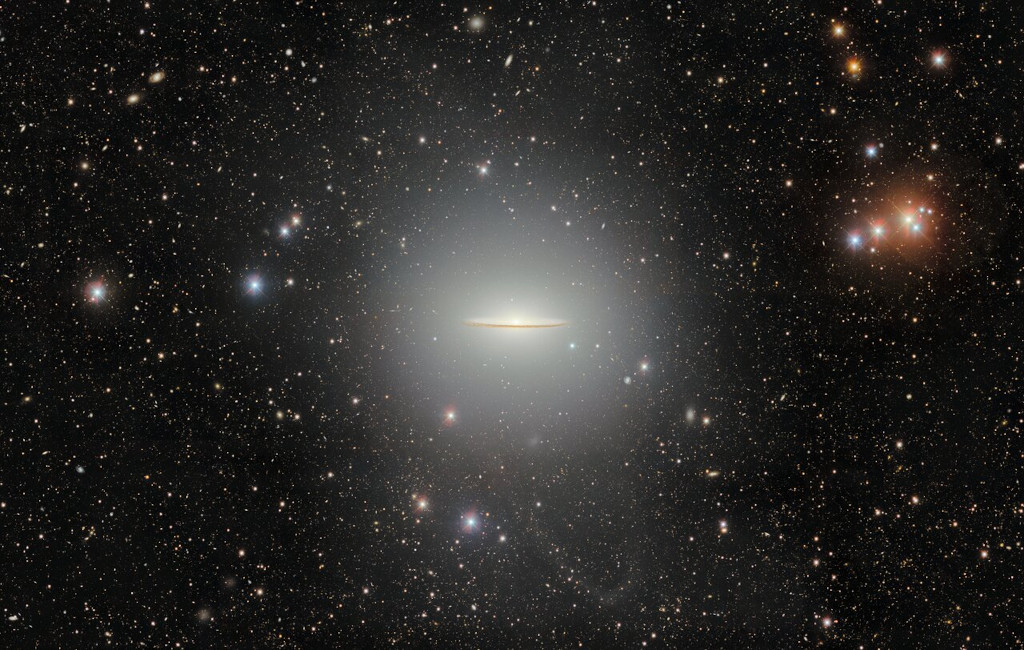
The Sombrero Galaxy: A Cosmic Hat with Hidden Secrets Revealed

πŸ“– 3 min read πŸ“Š beginner 🏷️ NASA APOD

In Brief

Astronomers have released a stunning new image of the Sombrero Galaxy (M104), famous for its striking dark dust lane that makes it look like a wide-brimmed hat. This detailed view not only captures its beautiful profile but also reveals faint, previously unseen structures around the galaxy, offering clues to its turbulent past.
The Sombrero Galaxy: A Cosmic Hat with Hidden Secrets Revealed

Disclosure: This post contains affiliate links. As an Amazon Associate, I earn from qualifying purchases.

The Full Story

Messier 104, better known as the Sombrero Galaxy, is one of the universe's most iconic and beautiful spiral galaxies. Located about 28 million light-years away from Earth and spanning roughly 50,000 light-years across, it’s a true cosmic giant nestled at the southern edge of the Virgo Galaxy Cluster. What makes the Sombrero Galaxy so famous is its unique appearance: we see it nearly edge-on, showcasing a thick, dark lane of dust that cuts dramatically across its bright central bulge of stars. This prominent dust ring gives the galaxy its popular moniker, resembling a broad-brimmed sombrero hat floating in space. Beyond its stunning good looks, the Sombrero Galaxy is also home to a supermassive black hole at its very heart, an immense gravitational monster millions of times the mass of our Sun. This black hole, while not directly visible, influences the stars and gas around it, playing a crucial role in the galaxy's dynamics. The dark dust lane itself is more than just a visual treat; it's a bustling region of gas, dust, and newborn stars, all seen in silhouette against the brilliant stellar light from the galaxy's core. Thanks to advanced imaging and processing, astronomers have now unveiled even more of the Sombrero Galaxy's hidden details. This new, broad view reveals a faint, extended halo of stars stretching far beyond the galaxy's main body. Even more exciting is the discovery of a 'tidal stellar stream' – a ghostly trail of stars pulled away from a smaller galaxy that was likely absorbed by the Sombrero Galaxy in the distant past. Imagine finding a faint breadcrumb trail leading away from a magnificent cake; these streams are cosmic breadcrumbs, hinting at past galactic meals. These newly observed features are incredibly important for understanding how galaxies evolve. Galaxies aren't static islands; they grow and change over billions of years, often through dramatic collisions and mergers with other galaxies. The extended halo and the tidal stellar stream act like cosmic fossils, providing direct evidence of these past interactions. By studying these faint structures, scientists can piece together the Sombrero's history, learning how it grew to its impressive size and perhaps even how our own Milky Way might interact with its neighbors in the future. While the Sombrero Galaxy is far away, the bright, spiky stars seen in the foreground of this image are much closer to home. These are individual stars located right here within our own Milky Way galaxy, offering a sense of perspective on the vast distances involved. This multi-layered view, from our local stars to a distant galaxy and its ancient stellar streams, truly reminds us of the incredible depth and dynamic nature of our universe.

Key Takeaways

  • 1 The Sombrero Galaxy (M104) is a prominent spiral galaxy, famous for its distinctive dark dust lane, giving it a 'hat-like' appearance.
  • 2 New observations reveal a faint, extended halo of stars and a 'tidal stellar stream' around the galaxy.
  • 3 These newly discovered features are remnants of past galactic mergers, offering clues about the Sombrero's evolutionary history.
  • 4 The galaxy hosts a central supermassive black hole and is located 28 million light-years away.
  • 5 The study helps us understand how galaxies form, grow, and interact over cosmic timescales.
Hubble Space Telescope Deep Field Poster

Hubble Space Telescope Deep Field Poster

Stunning poster featuring iconic Hubble Space Telescope imagery. Perfect for space enthusiasts.

Check Price on Amazon
*As an Amazon Associate, we earn from qualifying purchases.

πŸ’‘ Think of it this way:

Picture a distant, brightly lit city seen from the side, but with a thick band of dark, smoky clouds perfectly bisecting it, creating a distinctive 'hat' silhouette. Now imagine those clouds stretching out faintly, like whispers of past events.

How We Know This

The breathtaking new image of the Sombrero Galaxy was captured by the Dark Energy Camera (DECam), a powerful instrument mounted on the Blanco 4-meter telescope in Chile. DECam is specifically designed to observe vast stretches of the sky, helping scientists understand the mysterious 'dark energy' that accelerates the expansion of the universe. For this observation, astronomers used sophisticated image processing techniques. These methods carefully enhanced the faintest light signals, allowing them to reveal the galaxy's hidden outer regions and subtle stellar streams that were previously too dim to be seen.

What This Means

These new observations offer valuable insights into how galaxies interact and grow over cosmic timescales. By studying the Sombrero Galaxy's halo and tidal streams, astronomers can build more accurate models of galaxy evolution, dark matter distribution, and the role of mergers in shaping the universe we see today. It also sets the stage for future, even more detailed observations with next-generation telescopes like the James Webb Space Telescope, which could further unravel the secrets held within these faint cosmic structures.

Why It Matters

Understanding galaxies like the Sombrero helps us piece together the grand story of the universe, from how galaxies form and evolve to the mysteries of dark matter and supermassive black holes. It's a window into the vast cosmic neighborhood beyond our own Milky Way, sparking curiosity about our place in the universe.

Related Topics

#Sombrero Galaxy #Galaxy Evolution #Astronomy #Supermassive Black Hole #DECam