The Cosmic Crystal Ball: How Two Stars Sculpt a Dazzling Nebula
In Brief
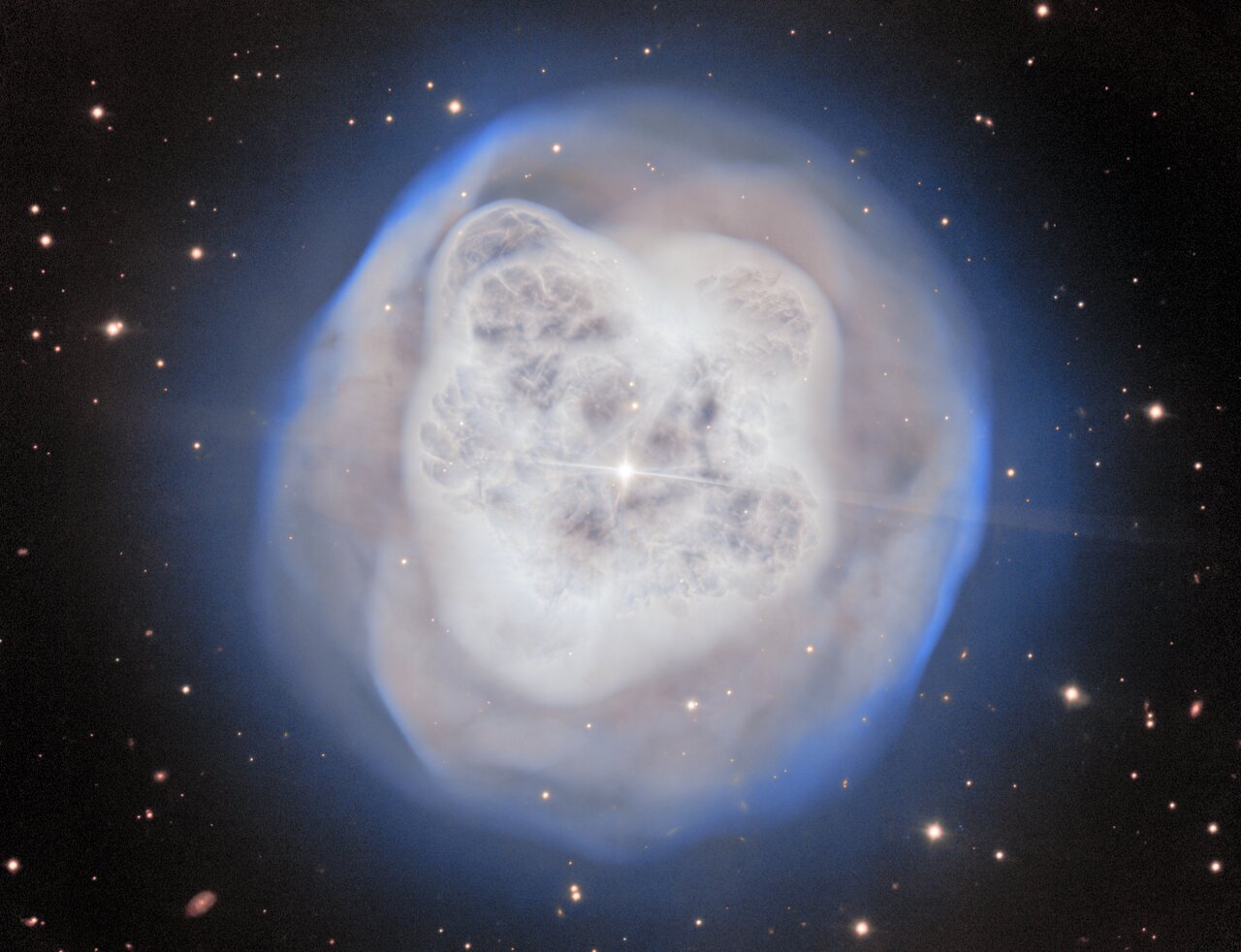
Gaze into the stunning Crystal Ball Nebula, a cosmic masterpiece shaped by the dramatic death of a star and the hidden dance of a stellar duo. This beautiful cloud of glowing gas, captured by the Gemini North telescope, reveals how two stars orbiting each other sculpt the universe around them.
The Full Story
Key Takeaways
- 1 The Crystal Ball Nebula is a planetary nebula formed from the dying breath of a star.
- 2 Its unique, asymmetrical shape is sculpted by the gravitational dance of a hidden companion star.
- 3 This phenomenon provides insights into stellar evolution and the common role of binary star systems in shaping cosmic landscapes.
💡 Think of it this way:
Imagine two invisible dancers spinning on a stage, twirling a cloud of glitter around them – that's a bit like how two stars are sculpturing this magnificent nebula in space.
How We Know This
Astronomers used the powerful Gemini North telescope, perched atop Maunakea in Hawai'i, to capture this stunning image. Telescopes like Gemini act like giant cosmic eyes, gathering faint light from distant objects to reveal their intricate structures and secrets, allowing us to 'see' the glowing gas and deduce the presence of the hidden companion star through its gravitational influence on the nebula's shape.
What This Means
Studying nebulae like the Crystal Ball helps us better understand the final stages of a star's life – a fate that awaits our own Sun billions of years from now. It also provides crucial insights into how binary star systems, which are very common in the universe, interact with and shape their environments, leaving behind spectacular cosmic legacies and informing our models of stellar evolution.
Why It Matters
This cosmic 'crystal ball' offers a mesmerizing peek into the future of stars like our own Sun, showing us the dramatic ways stars end their lives and how celestial partners can profoundly shape their surroundings, creating breathtaking art across the cosmos.