Cosmic Headphones: Discovering a Nebula Shaped Like Your Earbuds!
In Brief
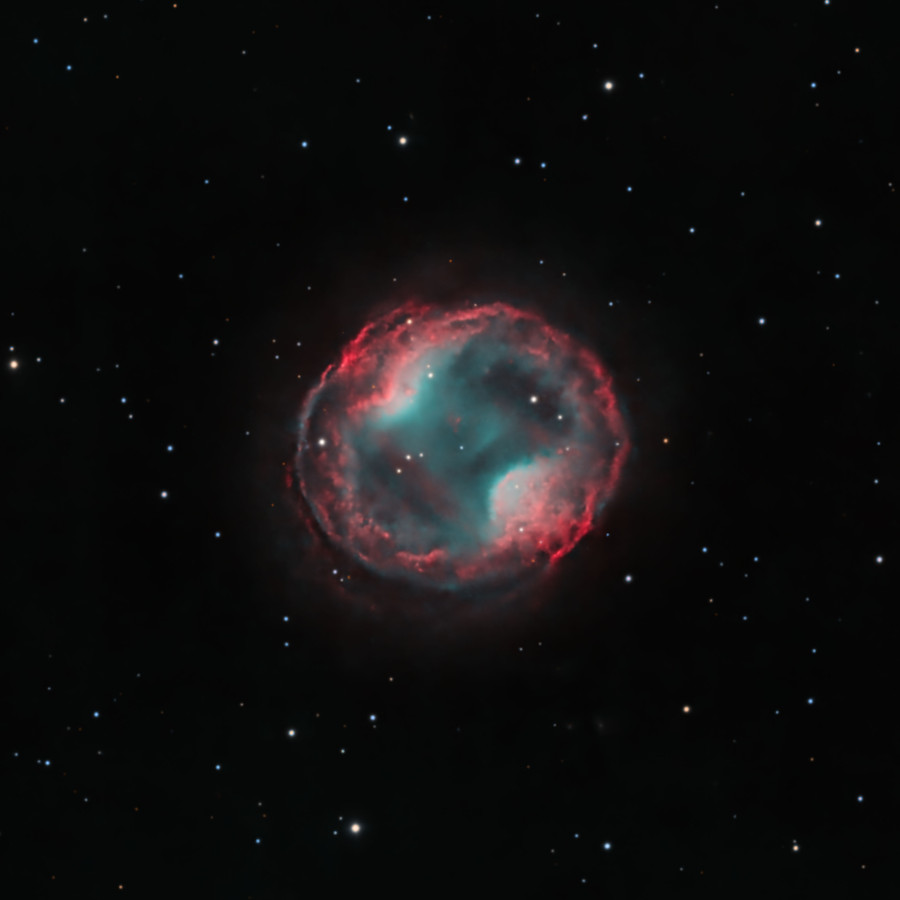
Astronomers have spotted a stunning celestial object nicknamed the Headphone Nebula, a glowing cloud of gas shaped uncannily like a pair of over-ear headphones. This beautiful cosmic remnant is the final breath of a dying star similar to our Sun, shedding its outer layers into space.
The Full Story
Key Takeaways
- 1 The Headphone Nebula is a planetary nebula, a glowing shell of gas expelled by a dying star similar to our Sun.
- 2 Its unique 'headphone' shape comes from hydrogen (red) and oxygen (blue-green) gases glowing as they are energized by the nebula's central white dwarf star.
- 3 The distinctive, symmetrical shape of the nebula hints at the presence of an unseen stellar or planetary companion that 'sculpts' the outgoing gas.
💡 Think of it this way:
Imagine blowing a smoke ring, but then something invisible inside the ring starts stirring it, twisting and shaping it into something truly unique. That's a bit like how a hidden companion might be sculpting the Headphone Nebula!
How We Know This
Astronomers observe these spectacular nebulae using powerful telescopes, which capture the light emitted by the glowing gases. By analyzing the different colors and their distribution, scientists can identify the elements present (like hydrogen and oxygen). The intricate details of these cosmic shapes then provide crucial clues about the forces at play, allowing scientists to infer the presence of unseen objects, such as companion stars or planets, that are sculpting these wondrous cosmic artworks.
What This Means
This discovery deepens our understanding of how stars, particularly those with companion objects, evolve and eventually die. Learning how these companions sculpt the surrounding gas helps astronomers refine models of stellar evolution for binary star systems or stars with exoplanets. It also provides an indirect but powerful method for identifying hidden objects in space that might otherwise be invisible, offering new insights into the diversity and dynamics of cosmic systems.
Why It Matters
Understanding nebulae like this helps us learn about the life cycle of stars, including what will eventually happen to our own Sun. The peculiar 'headphone' shape also offers clues about hidden companions, like unseen stars or even planets, that might be sculpting these incredible cosmic artworks.