Cosmic Neighbors: A Spiral Galaxy, a Supernova, and a Double Ring Mystery
In Brief
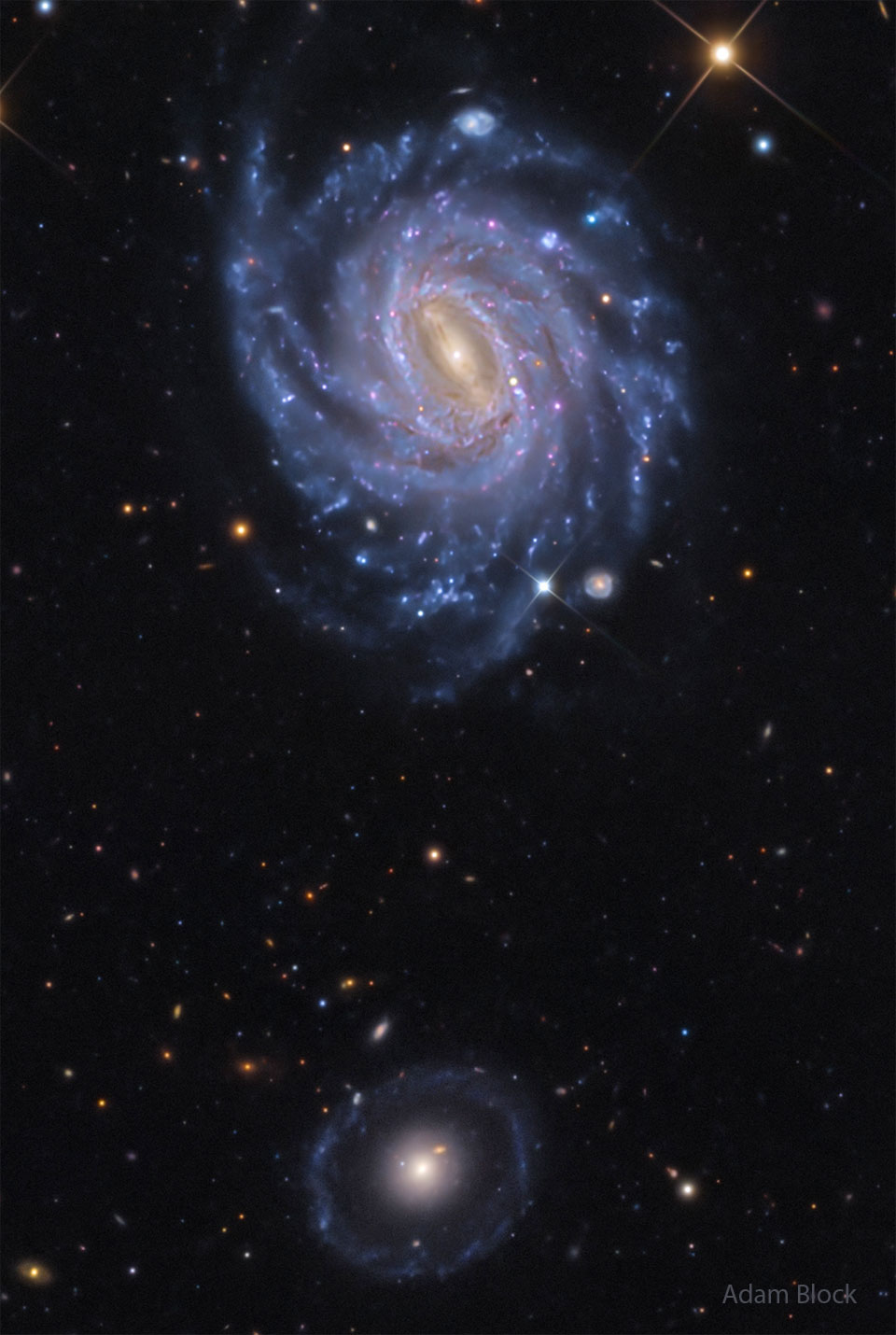
Astronomers have captured a breathtaking image featuring two distant galaxies and a surprise supernova. While one galaxy, NGC 3660, is a familiar spiral like our Milky Way, the other, known as Burçin's galaxy, puzzles scientists with its unusual double ring of stars. This cosmic snapshot offers valuable clues into the universe's grand evolution.
The Full Story
Key Takeaways
- 1 A stunning image captured two distinct galaxies: a familiar spiral (NGC 3660) and a mysterious, rare double-ringed galaxy (Burçin's galaxy).
- 2 A supernova (SN 2026cff), the dramatic explosion of a star, was serendipitously caught in the spiral galaxy.
- 3 Burçin's galaxy has an ancient elliptical core surrounded by two concentric rings of stars, a formation that puzzles scientists.
- 4 The unusual structure of Burçin's galaxy likely formed from the 'accretion' or absorption of smaller galaxies.
- 5 Observations like these provide crucial insights into galaxy evolution, stellar lifecycles, and the dynamic nature of the universe.
💡 Think of it this way:
Imagine discovering a bustling, familiar city (NGC 3660) in deep space, and suddenly a massive fireworks display (the supernova) erupts within it. Next to it, you find an ancient, mysterious fortress (Burçin's galaxy) with not one, but two concentric walls, whose builders and purpose are still a complete enigma. This cosmic scene is like stumbling upon a hidden chapter in the universe's history book!
How We Know This
This captivating image was captured using a powerful telescope during a 'deep exposure,' meaning the telescope collected light for an extended period. This method allows it to gather faint light from extremely distant objects, revealing incredible detail and color that would be invisible to the naked eye. The image essentially acts as a cosmic time machine, bringing light from billions of years ago to our instruments.
What This Means
The ongoing study of Burçin's galaxy is crucial for understanding the rarer and more complex paths of galaxy evolution. Future research will likely involve advanced computer simulations to model how such double-ringed structures could form through galactic mergers or accretion events. Discoveries like this help scientists refine our overall models of how galaxies grow, interact, and change over cosmic history, giving us a more complete picture of the universe's past, present, and future.
Why It Matters
Understanding these rare galactic structures and explosive star deaths helps us piece together the universe's incredible story. It provides insights into how galaxies, including our own Milky Way, form and change over billions of years, and reminds us of the dynamic, ever-changing nature of the cosmos far beyond our home.