Cosmic Collision: Galaxies Unraveling in a Galactic Tug-of-War
In Brief
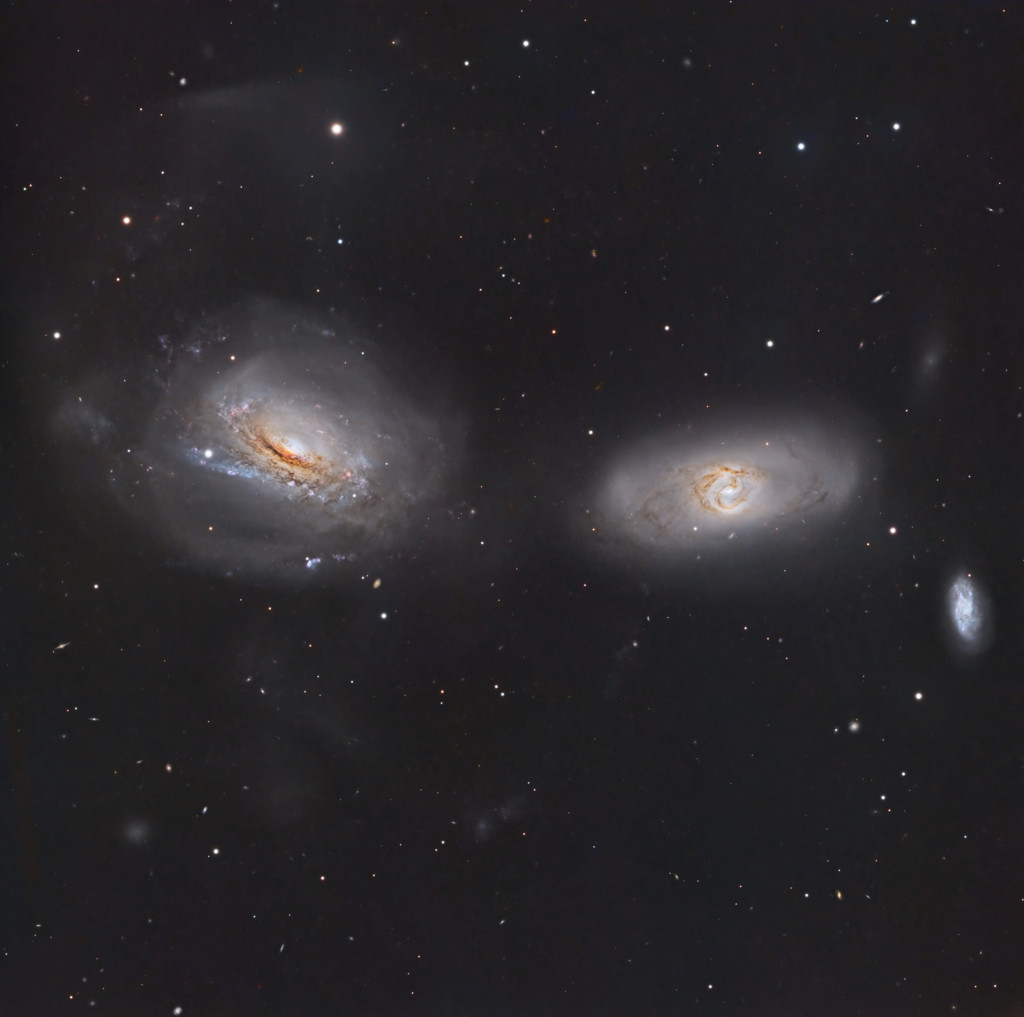
Two magnificent galaxies, NGC 3169 and NGC 3166, are locked in a slow, gravitational dance, pulling each other's stellar material into dramatic streamers. This cosmic interaction is a preview of an eventual merger, a common fate for galaxies across the universe. It offers a stunning glimpse into how galaxies evolve and grow over billions of years.
The Full Story
Key Takeaways
- 1 Spiral galaxy NGC 3169 is actively interacting with its neighbor NGC 3166, causing its arms to stretch into long tidal tails due to strong gravitational forces.
- 2 This cosmic dance is a common prelude to a galactic merger, a fundamental process in the universe that sees two galaxies eventually combine into one larger structure.
- 3 NGC 3169 hosts a powerful active galactic nucleus (AGN) at its core, powered by a supermassive black hole that shines across the entire electromagnetic spectrum.
💡 Think of it this way:
Imagine two balls of cosmic yarn slowly pulling at each other, unraveling strands into long, flowing tails before eventually becoming one tangled, grander ball. That's similar to what's happening as these galaxies interact and prepare to merge.
How We Know This
Astronomers use powerful telescopes to capture detailed images of distant galaxies, gathering light that has traveled for millions of years. By observing the distinct shapes, stretched features, and the colors of the stars and gas, they can infer the gravitational interactions at play. They also analyze the light across different wavelengths (like radio to X-rays) to detect the presence of energetic phenomena, such as active black holes at a galaxy's center.
What This Means
Studying interacting galaxies like NGC 3169 helps scientists understand the grand tapestry of cosmic evolution. It provides critical data on how galaxies grow, how stars are formed during collisions, and how supermassive black holes at galactic centers are fed and influence their surroundings. These observations also offer invaluable insights into the future fate of our own galaxy, the Milky Way, as it hurtles towards a predicted merger with the Andromeda galaxy billions of years from now, giving us a clearer picture of what to expect.
Why It Matters
This discovery matters because it helps us understand the fundamental processes that shape galaxies, including our own Milky Way. By observing these distant cosmic interactions, scientists gain clues about how galaxies grow, form new stars, and eventually merge, giving us insight into our own galaxy's future.