Back to Articles Image Of The Day

Cosmic Sculptures: Unveiling Secrets in the Trifid Nebula

📖 3 min read 📊 beginner 🏷️ NASA APOD

In Brief

Gaze into the Trifid Nebula, where the Hubble Space Telescope reveals towering cosmic dust pillars being sculpted by intense stellar winds. This dramatic scene showcases ongoing star formation, a mysterious jet, and a glimpse into the dynamic lifecycle of stars and gas clouds.
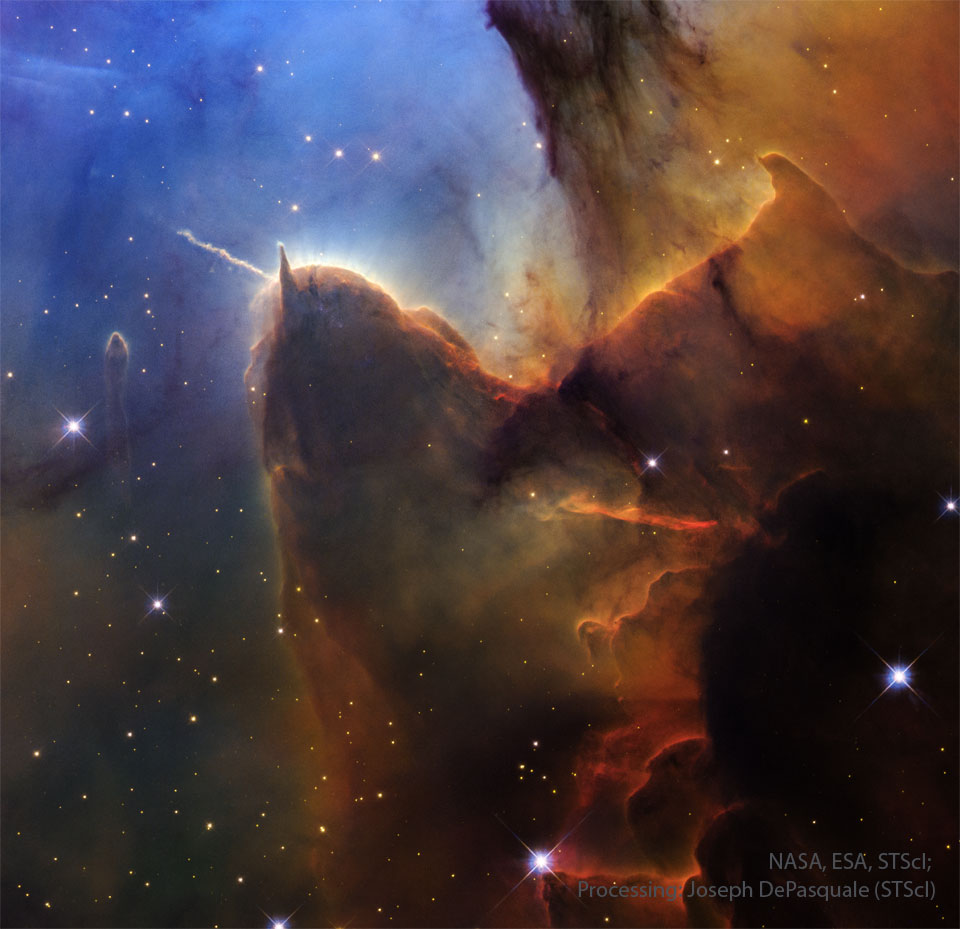
Cosmic Sculptures: Unveiling Secrets in the Trifid Nebula

Disclosure: This post contains affiliate links. As an Amazon Associate, I earn from qualifying purchases.

The Full Story

Peering into the heart of the Trifid Nebula (also known as M20), the Hubble Space Telescope has captured a truly spectacular cosmic scene. What you see are colossal structures known as 'dust pillars,' which are essentially towering mountains of gas and dust existing in the vast emptiness of space. These pillars manage to survive because they're denser than their surroundings, but they're not immune to the harsh environment; they are slowly but surely being chiseled away by powerful radiation and stellar winds from nearby hot, young stars. The featured image brings into sharp focus the dramatic end of one such massive gas and dust pillar. It's not alone; a smaller, finger-like pillar points upwards, while an unusual, long jet of material shoots off to the upper left. Many of the brilliant dots scattered throughout this cosmic canvas are not distant stars, but rather newly formed 'baby' stars, shining brightly as they ignite for the first time. One particularly interesting drama unfolds near the tip of the smaller pillar. Here, a young star is slowly losing its cloak of accreting gas – the very material it's gathering to grow – due to the relentless assault of radiation. This fierce 'cosmic hairdryer' comes from a far brighter and more massive star located just outside the top edge of the image, powerfully influencing its smaller neighbor even from a distance. Adding to the intrigue is the mysterious jet, which stretches for nearly a light-year – a distance so vast that even light takes an entire year to travel it! This jet wouldn't even be visible if it weren't for the external illumination provided by other bright stars in the nebula, much like a car's headlights revealing mist on a dark road. Scientists believe this jet is a powerful outflow from an unseen, very young star hidden deep within the dust. As the surrounding gas and dust continue to evaporate from these cosmic pillars over millennia, the hidden stellar engine driving this impressive jet will eventually be exposed. Astronomers estimate this grand unveiling could happen in approximately 20,000 years. This dynamic interplay between destructive forces and new creation offers invaluable insights into the chaotic and beautiful process of star formation, helping us understand how stars, and ultimately planetary systems like our own, come into being.

Key Takeaways

  • 1 Hubble reveals towering cosmic dust pillars in the Trifid Nebula being eroded by powerful stellar radiation.
  • 2 The image captures new stars forming, a star being stripped by intense radiation, and a mysterious, massive jet.
  • 3 Scientists predict the hidden source of this jet will be uncovered in about 20,000 years, offering insights into star birth.
Hubble Space Telescope Deep Field Poster

Hubble Space Telescope Deep Field Poster

Stunning poster featuring iconic Hubble Space Telescope imagery. Perfect for space enthusiasts.

Check Price on Amazon
*As an Amazon Associate, we earn from qualifying purchases.

💡 Think of it this way:

Imagine giant sandcastles on a beach, slowly eroding away under the relentless spray of ocean waves – but these cosmic sandcastles are light-years tall and carved by the fierce radiation from newborn stars!

How We Know This

The breathtaking image was captured by the Hubble Space Telescope, a remarkable observatory orbiting Earth. By detecting light across different wavelengths, including visible light, Hubble allows astronomers to pierce through thick cosmic dust and gas. This capability reveals intricate details of distant nebulae and the complex processes of star formation that would be completely invisible to telescopes on the ground.

What This Means

Understanding how these massive pillars are shaped and how new stars emerge from them is crucial for comprehending the lifecycle of all stars, including our own Sun. The eventual uncovering of the jet's source will provide direct evidence of an active, unseen young star's powerful outflows. This will shed new light on the early, often violent, stages of stellar evolution and how young stars expel material into space, a process that can profoundly influence the formation of planets around them.

Why It Matters

This offers a breathtaking look at how new stars are born and how their powerful energy shapes the vast interstellar landscapes, giving us clues about our own Sun's violent beginnings and the formation of planetary systems like ours.

Related Topics

#Trifid Nebula #Star Formation #Hubble Space Telescope #Cosmic Pillars #Astrophysics