Peering Through Titan's Haze: Unveiling Saturn's Mysterious Moon
In Brief
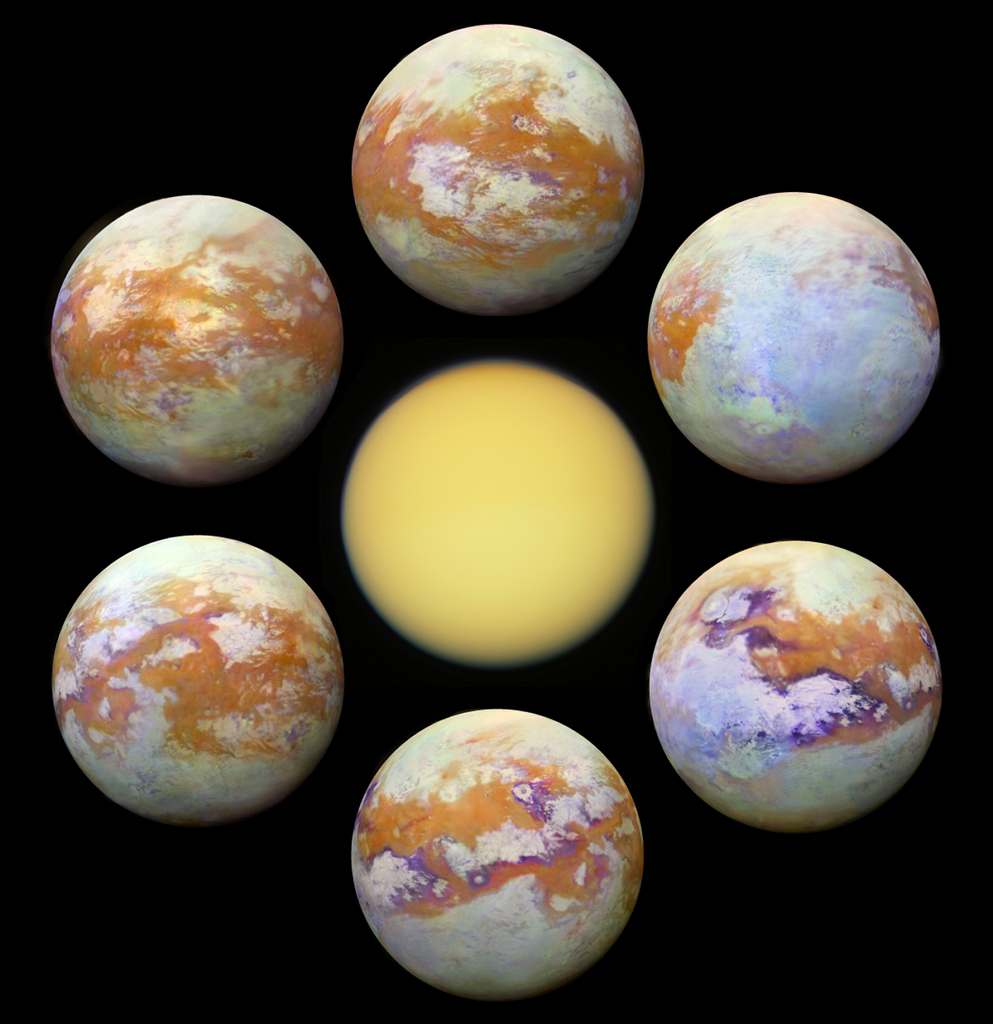
Saturn's largest moon, Titan, is shrouded in a thick, hazy atmosphere that makes its surface almost impossible to see with regular cameras. But using infrared light, the Cassini spacecraft has compiled the clearest-ever global maps, finally revealing the fascinating landscape hidden beneath the orange clouds.
The Full Story
Key Takeaways
- 1 Titan's surface is hidden by a thick, hazy atmosphere that scatters visible light.
- 2 Infrared light can penetrate this haze, revealing surface features previously unseen.
- 3 The Cassini spacecraft's VIMS instrument collected 13 years of infrared data to map Titan.
- 4 These maps show a world with continents, lakes, and seas of liquid methane and ethane.
- 5 Seeing Titan's surface is crucial for understanding planetary evolution and potential for life.
💡 Think of it this way:
Imagine trying to see through a really thick fog or heavily tinted windows – that's what visible light experiences on Titan. Infrared light, however, is like a special camera that can pierce through the murk, revealing the true scenery that lies beneath.
How We Know This
Scientists used the Visual and Infrared Mapping Spectrometer (VIMS) aboard NASA's Cassini spacecraft. This instrument captured images of Titan using infrared light, which can pass through the moon's thick haze more effectively than visible light. By collecting data for 13 years (2004-2017) and carefully processing it, they created detailed global maps of Titan's surface in false color, allowing them to visualize features that were otherwise hidden.
What This Means
These detailed infrared maps fundamentally change our understanding of Titan's geology and climate, offering unprecedented views of its surface features, including methane lakes and ice-rock landmasses. This data is critical for planning future missions, especially NASA's Dragonfly rotorcraft, which will land on Titan. Knowing what's beneath the haze helps scientists select safe and scientifically rich landing sites, paving the way for in-situ exploration of this unique, potentially life-supporting world and furthering our understanding of planetary habitability.
Why It Matters
Understanding Titan helps us explore diverse worlds in our solar system, study potential cradles for unique forms of life, and gain insights into what Earth might have been like in its early history. It's a key to unlocking the universe's many secrets.