Back to Articles Image Of The Day

Moon, Venus, & Pleiades: Our Monthly Cosmic Dance

πŸ“– 3 min read πŸ“Š beginner 🏷️ NASA APOD

In Brief

No, Earth didn't gain new moons! This stunning image from Sicily captured our Moon, brilliant Venus, and the sparkling Pleiades star cluster all together in the twilight sky. It's a recurring celestial show, happening once a month between 2023 and 2029, offering a fantastic viewing opportunity.
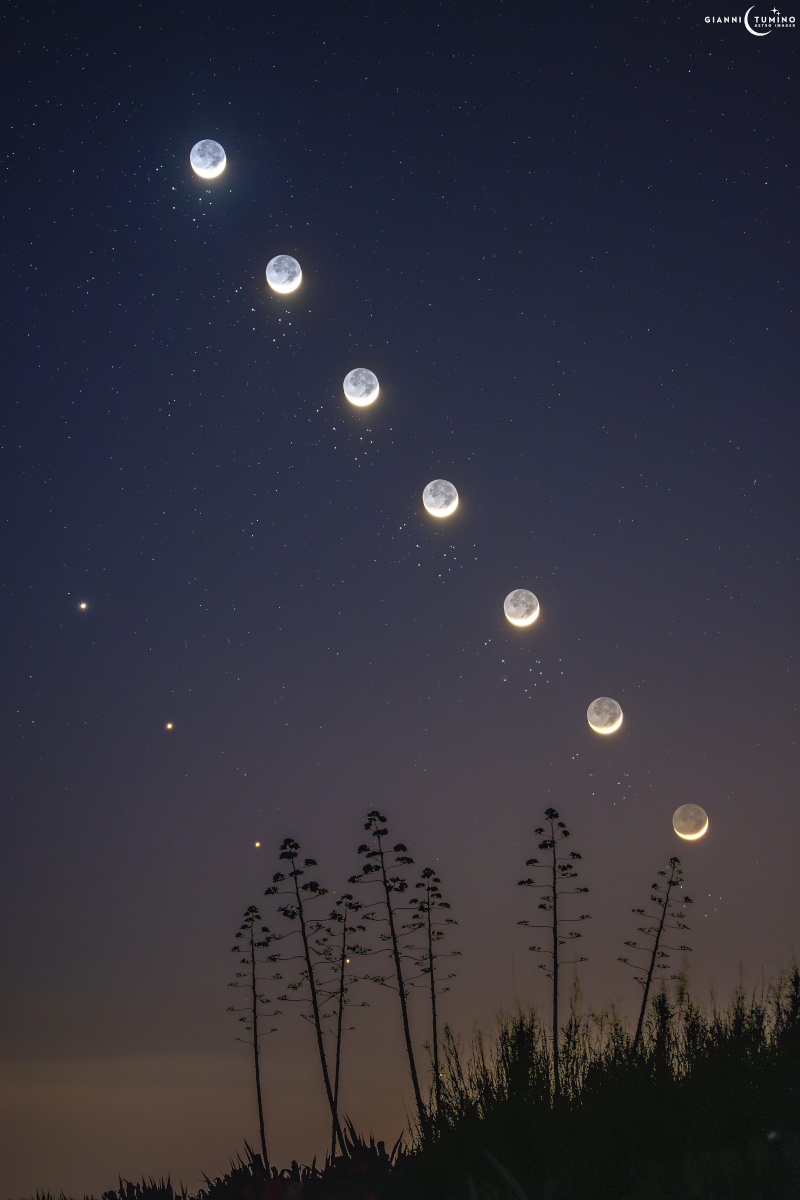
Moon, Venus, & Pleiades: Our Monthly Cosmic Dance

Disclosure: This post contains affiliate links. As an Amazon Associate, I earn from qualifying purchases.

The Full Story

Our celestial neighborhood often treats us to breathtaking sights, and one recent highlight, captured beautifully from a southern Sicilian sky, showcased the dazzling trio of our Moon, the planet Venus, and the shimmering Pleiades star cluster. Far from Earth gaining extra moons, this image is a composite following these brilliant objects as twilight faded into evening on April 19th. It’s a wonderful reminder that some of the most spectacular astronomical events are visible to the naked eye. What makes this particular grouping special is its regularity. Between 2023 and 2029, the Moon and the Pleiades cluster will appear to "visit" each other once every month. This isn't random; it's due to the predictable, clockwork precision of celestial mechanics. The Moon orbits Earth, completing a full circuit in about 27 days. As it traces its path across our sky, it appears to move against the backdrop of distant stars and planets, occasionally passing very close to them from our perspective here on Earth. These close approaches are known as conjunctions or appulses, and they are a predictable part of the Moon's journey. The Pleiades, also known as the Seven Sisters, is a stunning open star cluster, easily visible to the naked eye as a small, sparkling group of stars in the constellation Taurus. Because the Pleiades are located relatively close to the ecliptic β€” the apparent path the Sun, Moon, and planets follow across our sky β€” the Moon frequently passes nearby. The specific six-year window from 2023 to 2029 marks a period when the Moon's orbital path brings it particularly close to the Pleiades each month, offering repeated, dramatic pairings. Witnessing such alignments is more than just a pretty sight; it connects us to the ancient astronomers who used these very movements to track time, seasons, and navigate. Understanding why these events occur demystifies the cosmos, showing us that the universe, while vast and mysterious, operates on understandable, elegant principles. It also highlights the dynamic nature of our solar system, where objects are constantly in motion, creating an ever-changing celestial tableau. So, if you're keen to catch this recurring show, keep an eye on the Moon's journey across the sky. With Venus often accompanying the Moon in these conjunctions due to its proximity to the Sun and the ecliptic, these monthly meet-ups offer fantastic opportunities for stargazers, both novice and experienced, to easily spot and appreciate the beautiful dance of our celestial neighbors. Grab a pair of binoculars for an even more breathtaking view of the sparkling Pleiades as the Moon glides by.

Key Takeaways

  • 1 A stunning photo captured the Moon, Venus, and the Pleiades together in the sky.
  • 2 This cosmic grouping is a monthly event from 2023 to 2029, due to predictable celestial mechanics.
  • 3 It's a fantastic opportunity for everyone to easily observe a beautiful and dynamic part of our night sky.
National Geographic Planisphere Star Finder

National Geographic Planisphere Star Finder

Essential tool for identifying constellations and stars. Perfect for beginners learning the night sky.

Check Price on Amazon
*As an Amazon Associate, we earn from qualifying purchases.

πŸ’‘ Think of it this way:

Think of it like a cosmic dance party! The Moon, Venus, and the Pleiades are special guests who meet up once a month for a few years, performing a beautiful ballet just for us, all choreographed by the universe's precise mechanics.

How We Know This

The breathtaking image was created by a skilled photographer who combined multiple shots taken over time as twilight turned to evening. This technique allows for capturing the subtle changes and movements of celestial objects, creating a single, dramatic composite picture that showcases the celestial alignment from a specific location, in this case, a southern Sicilian sky.

What This Means

This recurring celestial ballet serves as a wonderful invitation for everyone to step outside and reconnect with the night sky. By highlighting predictable and beautiful events like this, we encourage a broader public appreciation for astronomy. For the next few years, skywatchers will have regular opportunities to observe these fascinating conjunctions, fostering curiosity about planetary motion and stellar clusters. It's a perfect springboard for anyone interested in delving deeper into understanding our place in the universe.

Why It Matters

This phenomenon reminds us of the beautiful, dynamic movements in our solar system and encourages us to look up and appreciate the accessible wonders of our night sky. It's a chance for everyone to witness a spectacular cosmic alignment.

Related Topics

#astronomy #stargazing #moon #venus #pleiades #nightsky