Cosmic Tadpoles: Witnessing New Stars Emerge from Interstellar Clouds
In Brief
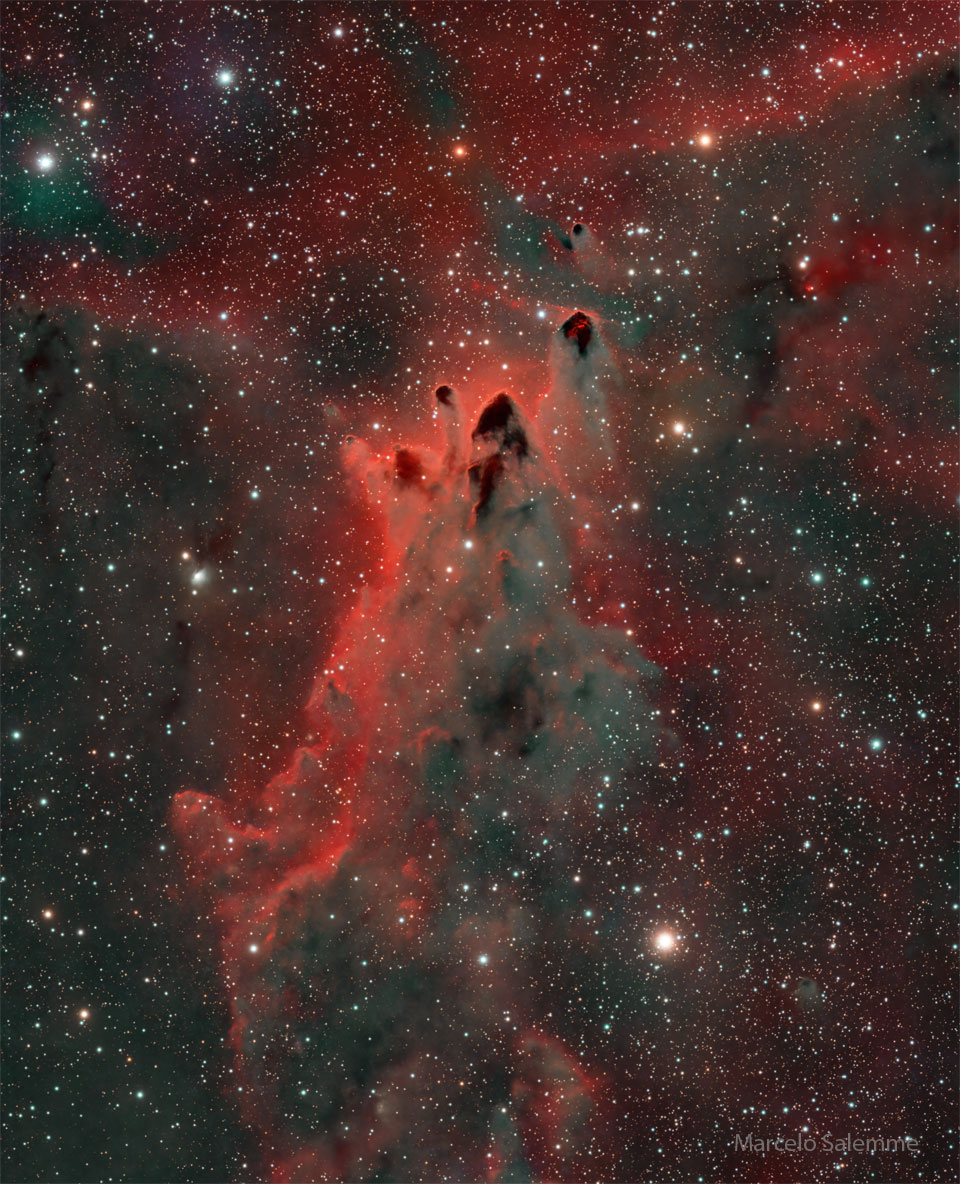
Imagine cosmic 'tadpoles' floating through space – these are called cometary globules, vast clouds of gas and dust. They are stellar nurseries, currently being sculpted by powerful stellar winds and ultraviolet light while simultaneously giving birth to new stars.
The Full Story
Key Takeaways
- 1 Cometary globules are vast, tadpole-shaped clouds of gas and dust that serve as active stellar nurseries.
- 2 Their unique forms are sculpted by intense ultraviolet light from nearby massive stars and the powerful shockwaves from a supernova remnant.
- 3 New low-mass stars are currently forming within the dense, cold cores of these globules, with direct evidence seen as glowing jets from protostars.
💡 Think of it this way:
Imagine giant cosmic tadpoles, swimming through space, with their 'heads' glowing as tiny baby stars begin to spark to life inside them. They're like celestial sculptor's clay, constantly being shaped by powerful cosmic forces while simultaneously shaping the next generation of stars.
How We Know This
Astronomers use powerful telescopes, often operating in visible and infrared light, to capture stunning images of these distant cosmic clouds. By carefully observing the glow of ionized gas, the distribution of dust, and the subtle reddish hues from jets, they can piece together the story of star formation and the powerful forces at play in these interstellar nurseries.
What This Means
Understanding cometary globules provides crucial insights into the diverse environments where stars, including our Sun, are born and how they acquire their initial characteristics. This discovery helps scientists refine models of star formation and how stellar nurseries interact with violent cosmic events like supernova explosions. By studying these 'cosmic tadpoles,' we gain a deeper appreciation for the complex life cycle of stars and the conditions that might lead to the formation of planets and, ultimately, life itself across the galaxy. Future observations will continue to track the evolution of these stellar newborns and their fascinating, ever-changing surroundings.
Why It Matters
This discovery helps us understand how stars, like our Sun, are born from cosmic dust and gas, and how powerful events in space can shape these stellar nurseries, influencing the creation of future solar systems and even our own origins.