Rare Triple Arch: Alpine Photo Reveals Hidden Cosmic Bridge
In Brief
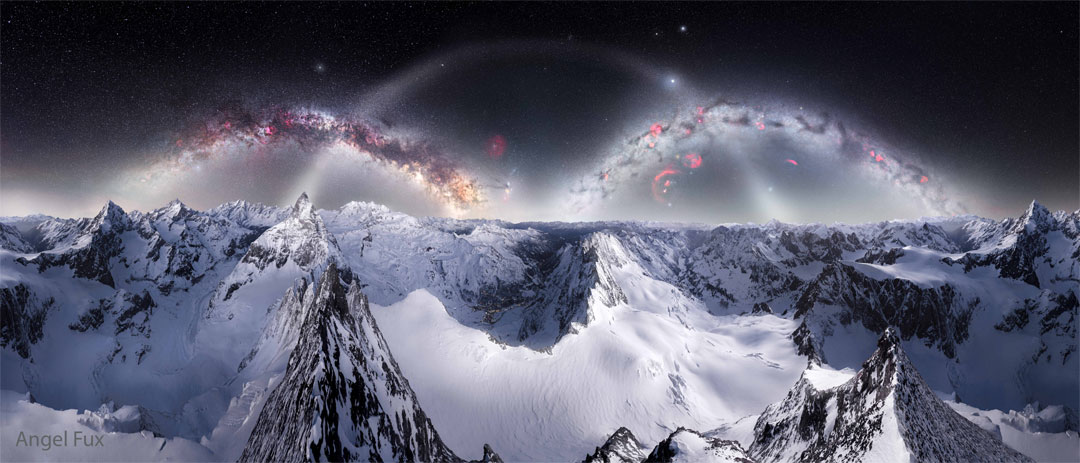
An astrophotographer high in the Alps unexpectedly captured not two, but three magnificent arches of light spanning the night sky. Beyond our familiar Milky Way, a faint glow of scattered sunlight, called zodiacal light, connected the two galactic arms. This created a breathtaking 360-degree panorama, rarely seen due to its incredible subtlety.
The Full Story
💡 Think of it this way:
Imagine thinking you're seeing two distinct rivers flowing across a landscape, only to discover a shimmering, almost invisible bridge of mist connecting them, revealing a much grander and more complete vista.
How We Know This
The discovery was made by an astrophotographer who traveled to a remote, high-altitude mountain peak in the Alps, likely to escape light pollution. Using specialized cameras and equipment, they captured numerous images throughout the night. These individual photographs were then painstakingly processed and combined digitally over 40 hours to create one seamless, wide-angle 360-degree panoramic image, revealing the faint details of the zodiacal light.
What This Means
This stunning image highlights the critical importance of preserving dark skies from light pollution, not just for astronomers but for anyone wishing to experience the full majesty of the night sky. It encourages us to seek out remote, pristine locations to witness subtle celestial phenomena like zodiacal light. Furthermore, it demonstrates the power of dedicated astrophotography to reveal hidden aspects of our universe, spanning from the vastness of our galaxy to the delicate dust clouds within our solar system, inspiring awe and a deeper appreciation for our cosmic surroundings.
Why It Matters
This discovery reminds us of the incredible beauty and hidden wonders our universe holds, even in our own solar system, when we escape light pollution. It highlights the importance of truly dark skies for observing delicate celestial phenomena and encourages us to look up and appreciate the full grandeur of the cosmos.