Back to Articles Image Of The Day

Desert Eye Mirrors the Milky Way

📖 3 min read 📊 beginner 🏷️ NASA APOD

In Brief

A breathtaking mosaic from Chile's Atacama Desert captures a small lagoon reflecting the majestic Milky Way, along with Jupiter and Saturn. This 'cosmic eye' offers a unique perspective on our galaxy and highlights the stunning beauty of Earth's darkest skies.
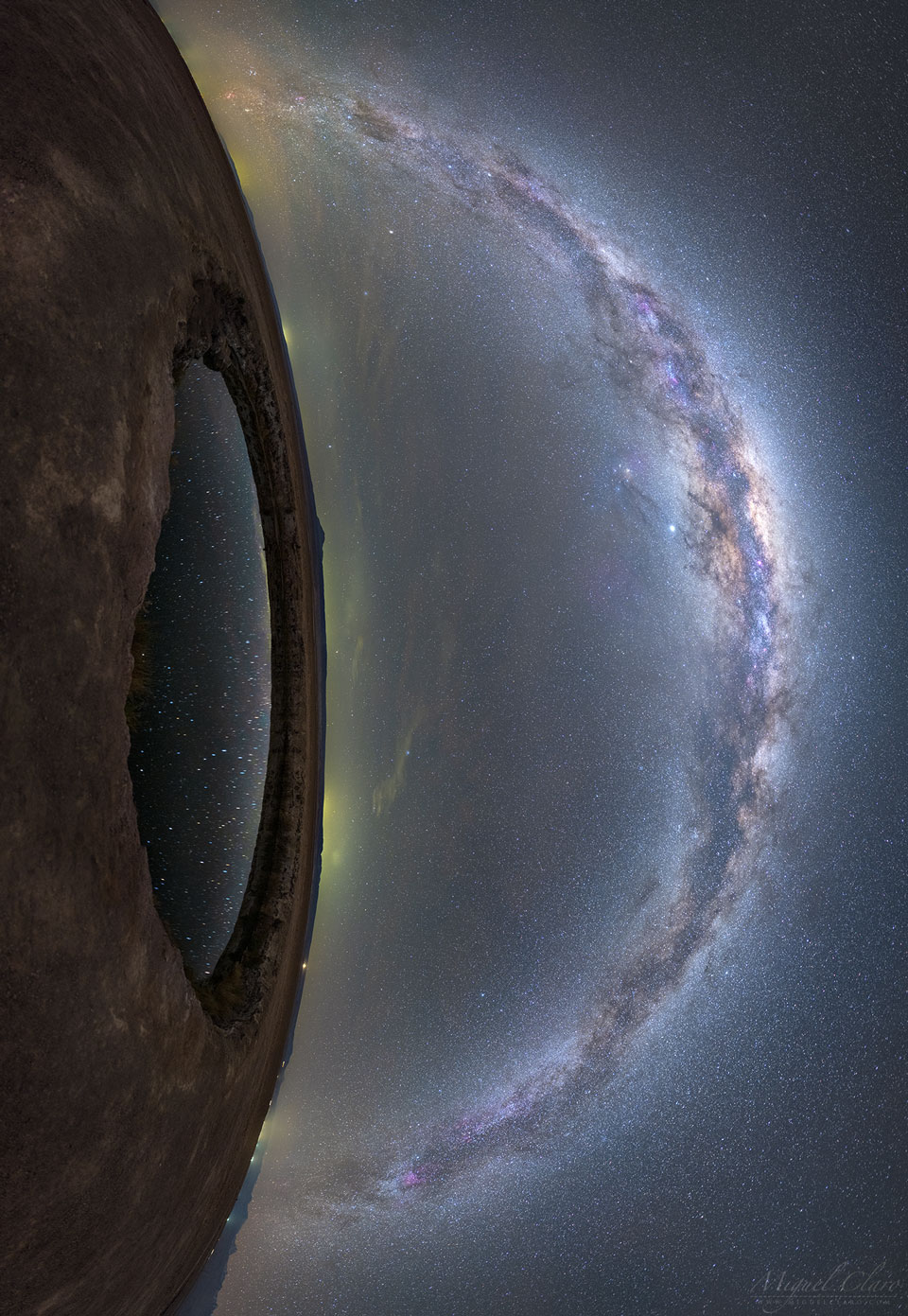
Desert Eye Mirrors the Milky Way

Disclosure: This post contains affiliate links. As an Amazon Associate, I earn from qualifying purchases.

The Full Story

Sometimes, the most profound cosmic views can be found in the most unexpected places right here on Earth. Imagine peering into what looks like a glistening eye, only to find it reflecting the majestic sprawl of our own galaxy. That's precisely the enchanting scene captured in a recent image from Chile's Atacama Desert: a small lagoon, known as Ojas de Salar or 'Salt Eyes,' serving as a perfect, natural mirror for the night sky. This incredible 27-frame mosaic from 2019 showcases the Milky Way Galaxy arching overhead. While it might appear as a smooth, milky band to the naked eye, this vibrant stretch of light is actually composed of billions upon billions of individual stars, too numerous to count individually from our vantage point. Sprinkled throughout are intricate filaments of dark dust, which absorb starlight and create shadowy patterns, alongside glowing red nebulas – massive clouds of gas and dust where new stars are often born, painting vibrant streaks across the cosmic canvas. Adding to this stellar spectacle are two familiar giants from our own solar system. Look closely, and you'll spot Jupiter shining brightly slightly to the left of the galactic arch, with Saturn, its ringed cousin, visible just a bit to the right. This unique alignment of our home galaxy, distant nebulae, and neighboring planets all reflected in a small desert pool creates a truly mesmerizing tableau, connecting us directly to the vastness of space. The terrestrial surroundings of this cosmic reflection are equally captivating. The rocky terrain around the lagoon is so barren and otherworldly that many liken it more to the surface of Mars than our own planet Earth. Yet, amidst this stark landscape, tiny pinpricks of light from distant small towns dot the unusual vertical horizon, reminding us of humanity's small presence beneath the infinite sky. This blending of stark terrestrial beauty with the cosmic grandeur above is what makes this photograph so extraordinary. Such breathtaking images are not just pretty pictures; they serve as powerful reminders of the importance of dark sky preservation. Locations like the Atacama Desert, known for their exceptionally clear and light-pollution-free skies, offer unparalleled views of the universe. They allow us to witness the true splendor of our galaxy, fostering a deeper appreciation for our place within the cosmos and inspiring future generations to look up and wonder.

Key Takeaways

  • 1 A desert lagoon in Chile's Atacama Desert brilliantly reflects the Milky Way galaxy.
  • 2 The image captures Jupiter and Saturn alongside billions of stars, dust lanes, and red nebulas within our galaxy.
  • 3 The unique, Mars-like terrain blends with clear, dark skies for an otherworldly viewing experience.
Hubble Space Telescope Deep Field Poster

Hubble Space Telescope Deep Field Poster

Stunning poster featuring iconic Hubble Space Telescope imagery. Perfect for space enthusiasts.

Check Price on Amazon
*As an Amazon Associate, we earn from qualifying purchases.

💡 Think of it this way:

Imagine looking into a perfectly still, inky black pond, but instead of seeing your own reflection, you see an entire universe, complete with glittering stars and distant planets, mirrored back at you.

How We Know This

This stunning view was captured through a sophisticated astrophotography technique. The final image is a mosaic created from 27 individual frames, meticulously stitched together. This approach allows photographers to create a wider, more detailed panorama of the night sky, capturing both the broad sweep of the Milky Way and intricate details, especially in places with minimal light pollution like Chile's Atacama Desert.

What This Means

These types of images highlight the incredible beauty of our universe that's accessible from Earth's darkest locations. They inspire awe, encourage interest in astronomy, and underscore the critical need to protect our night skies from increasing light pollution. By preserving these dark skies, we ensure that future generations can also witness and connect with such natural wonders, fostering curiosity and scientific exploration.

Why It Matters

This image reminds us of the incredible beauty of our universe visible from Earth, highlighting the magic of dark skies and connecting us to the vast wonders above. It inspires awe and a deeper appreciation for our place in the cosmos.

Related Topics

#Milky Way #Astrophotography #Atacama Desert #Night Sky #Planets