Back to Articles Image Of The Day

Catch Comet PanSTARRS! A Dawn Spectacle is Nearing Its Peak

📖 3 min read 📊 beginner 🏷️ NASA APOD

In Brief

A celestial visitor, Comet PanSTARRS, is brightening in the predawn sky and might soon be visible without binoculars from dark locations. This weekend offers a prime chance for northern stargazers to spot it alongside planets Mars and Mercury.
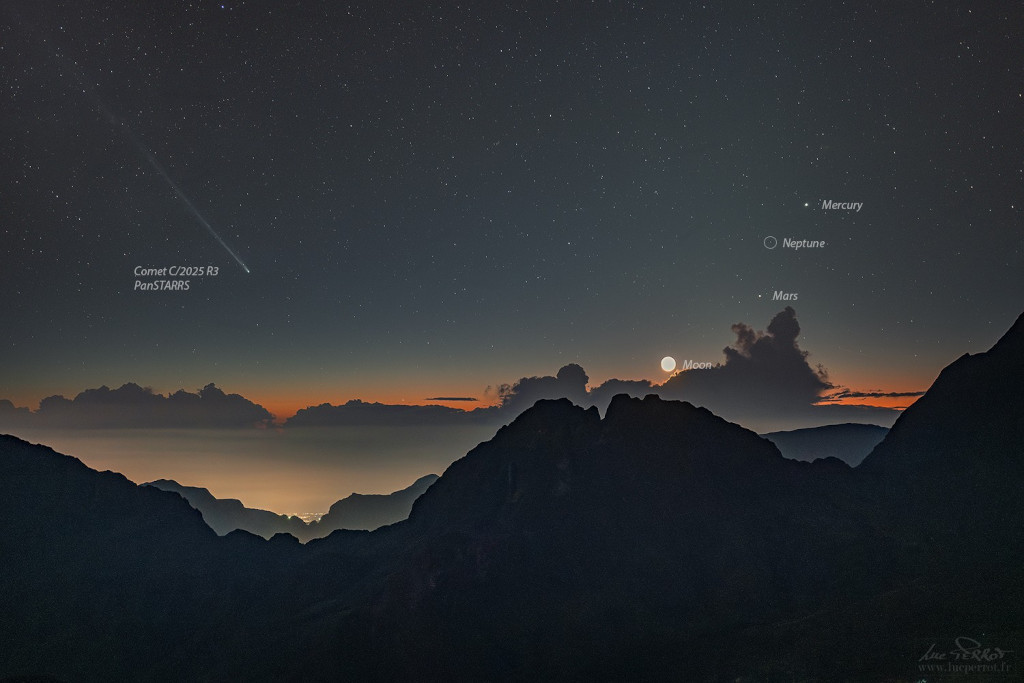
Catch Comet PanSTARRS! A Dawn Spectacle is Nearing Its Peak

Disclosure: This post contains affiliate links. As an Amazon Associate, I earn from qualifying purchases.

The Full Story

Get ready for a celestial treat! Comet C/2025 R3 PanSTARRS is currently putting on a show in the eastern predawn sky, steadily growing brighter. While it might still be a challenge to see with the naked eye from light-polluted areas, those under truly dark skies might just catch a glimpse without binoculars. For everyone else, binoculars or a small telescope will give you a fantastic view of this icy traveler. This captivating image, captured from a volcanic peak overlooking France's Reunion Island, shows just how easy PanSTARRS is to spot with a camera, even if your eyes need a little help. The comet isn't alone in the dawn chorus; it shares the eastern horizon with bright, familiar planets like Mars and Mercury, and even the fainter glow of Neptune. Saturn is just playing hide-and-seek behind a cloud, while an old crescent Moon adds to the celestial tableau. PanSTARRS is currently on a cosmic road trip, rapidly approaching its closest point to the Sun – known as perihelion – which happens on April 19. As it gets nearer to our star, the Sun's heat causes more ice and dust to vaporize, creating that stunning, brightening tail that makes comets so mesmerizing. This is why it's becoming more visible each day, putting on a better show for us! For stargazers in the Northern Hemisphere, this weekend is your golden ticket! Try to catch PanSTARRS an hour or so before sunrise, looking towards the eastern horizon. However, mark your calendars: while the comet makes its closest approach to Earth on April 26, it will by then be significantly harder to see due to the overwhelming glare of the Sun. Don't worry if you miss it; later in April and into early May, the Southern Hemisphere will get the best, clearest views of Comet PanSTARRS. Observing a comet like PanSTARRS isn't just a pretty sight; it's a chance to witness a cosmic time capsule. Comets are icy remnants from the early days of our solar system, carrying clues about its formation billions of years ago. Catching one as it sweeps by offers a fleeting yet profound connection to the universe's ancient past, reminding us of the dynamic dance happening far above our heads.

Key Takeaways

  • 1 Comet PanSTARRS is getting brighter and may soon be naked-eye visible from dark locations.
  • 2 This weekend is ideal for Northern Hemisphere viewers, an hour before sunrise.
  • 3 The comet is approaching its closest point to the Sun (perihelion), making it more luminous.
National Geographic Planisphere Star Finder

National Geographic Planisphere Star Finder

Essential tool for identifying constellations and stars. Perfect for beginners learning the night sky.

Check Price on Amazon
*As an Amazon Associate, we earn from qualifying purchases.

💡 Think of it this way:

Imagine a celebrity guest star making a fleeting but brilliant appearance on the world stage – that's Comet PanSTARRS making its grand entrance in our morning sky!

How We Know This

Astrophotographers and amateur astronomers use specialized cameras, binoculars, and small telescopes to capture and observe comets like PanSTARRS. Long-exposure photography is particularly useful as it allows fainter objects, not easily seen by the naked eye, to be revealed and their features detailed. Professional observatories also play a crucial role in tracking these celestial visitors, using powerful telescopes to predict their paths, brightness, and optimal viewing times for the public.

What This Means

Observing comets provides scientists with invaluable data about the composition of the early solar system. These icy bodies are essentially frozen relics, holding clues to the conditions and materials present when our planets were forming. For the general public, witnessing a comet is a thrilling reminder of the dynamic, ever-changing nature of our cosmos and an accessible entry point into the wonders of astronomy. Such events also play a vital role in fostering public interest in science and space exploration.

Why It Matters

It's a rare and exciting opportunity to witness a comet with your own eyes, offering a direct connection to the vastness of our solar system and a beautiful start to your day.

Related Topics

#Comet #PanSTARRS #Stargazing #Night Sky #Astronomy