Cosmic Superwind: How a 'Cigar Galaxy' is Blasting Gas into Space
In Brief
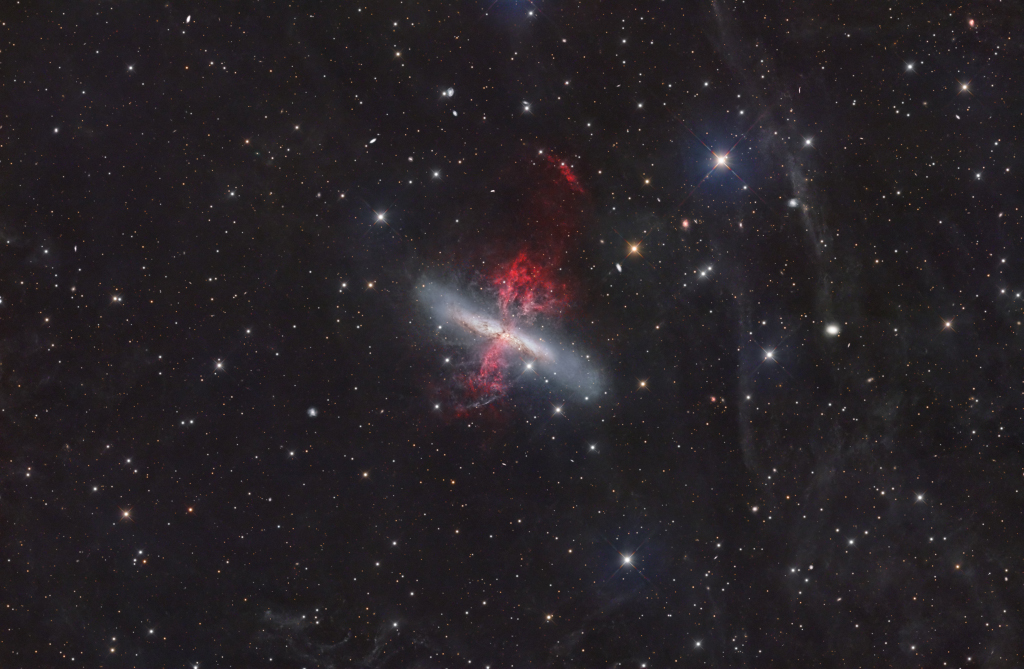
Messier 82, also known as the Cigar Galaxy, is currently undergoing an intense burst of star formation, creating new stars at a furious pace. This stellar frenzy is generating a powerful 'superwind' that's blasting vast amounts of gas and heavy elements out into the surrounding intergalactic space. This dramatic expulsion of material offers a unique look at how galaxies evolve and spread life-giving elements across the cosmos.
The Full Story
Key Takeaways
- 1 M82, the Cigar Galaxy, is undergoing a 'starburst' – an incredibly rapid period of star formation.
- 2 This intense activity generates a powerful 'superwind' that blasts vast amounts of gas out of the galaxy.
- 3 The superwind carries heavy elements, forged in massive stars, into intergalactic space.
- 4 A close encounter with a neighboring galaxy, M81, is believed to have triggered this starburst.
- 5 Studying M82 helps us understand galaxy evolution and the distribution of elements in the universe.
💡 Think of it this way:
Imagine a giant cosmic factory working overtime, churning out stars at an incredible rate. All this intense activity creates a massive 'exhaust' or 'superwind' of gas, blasting out into space like a powerful chimney plume.
How We Know This
Astronomers captured this stunning view using powerful telescopes, combining many hours of observations. To highlight the superwind, they used 'narrowband data' – essentially, specialized filters that only let through light from specific elements, like the faint red glow of atomic hydrogen gas. By gathering this focused light over 33 hours, they were able to create a composite image that clearly reveals the long, fiery filaments of gas being ejected from M82's core, making the invisible visible.
What This Means
Understanding superwinds like the one in M82 is crucial for unraveling the mysteries of galaxy evolution. These powerful outflows don't just clear out gas; they can also regulate how fast galaxies form new stars, essentially sweeping away the fuel. By observing how these winds enrich the intergalactic medium, scientists gain insights into how the elements essential for life are spread across the universe, influencing the potential for star and planet formation in regions far beyond their origin. Future observations will continue to track these outflows, providing a clearer picture of their long-term impact on the cosmic neighborhood.
Why It Matters
This discovery helps us understand how galaxies are shaped, how new stars and planets are formed, and how vital elements (like those found in our own bodies!) are spread throughout the universe. It's a peek into the powerful, dynamic forces that govern the cosmic landscape we live in.