Back to Articles Image Of The Day

Mystery Comet R3 Dazzles & Dares: A Celestial Spectacle Unfolds

📖 3 min read 📊 beginner 🏷️ NASA APOD

In Brief

A newly discovered comet, C/2025 R3 (PanSTARRS), is rapidly brightening and growing a long tail as it makes its closest approach to both the Sun and Earth this April. This "dirty snowball" offers a rare chance to see a celestial visitor put on a dazzling show, potentially even with the naked eye. But there's a cosmic twist: its ultimate fate remains a thrilling mystery.
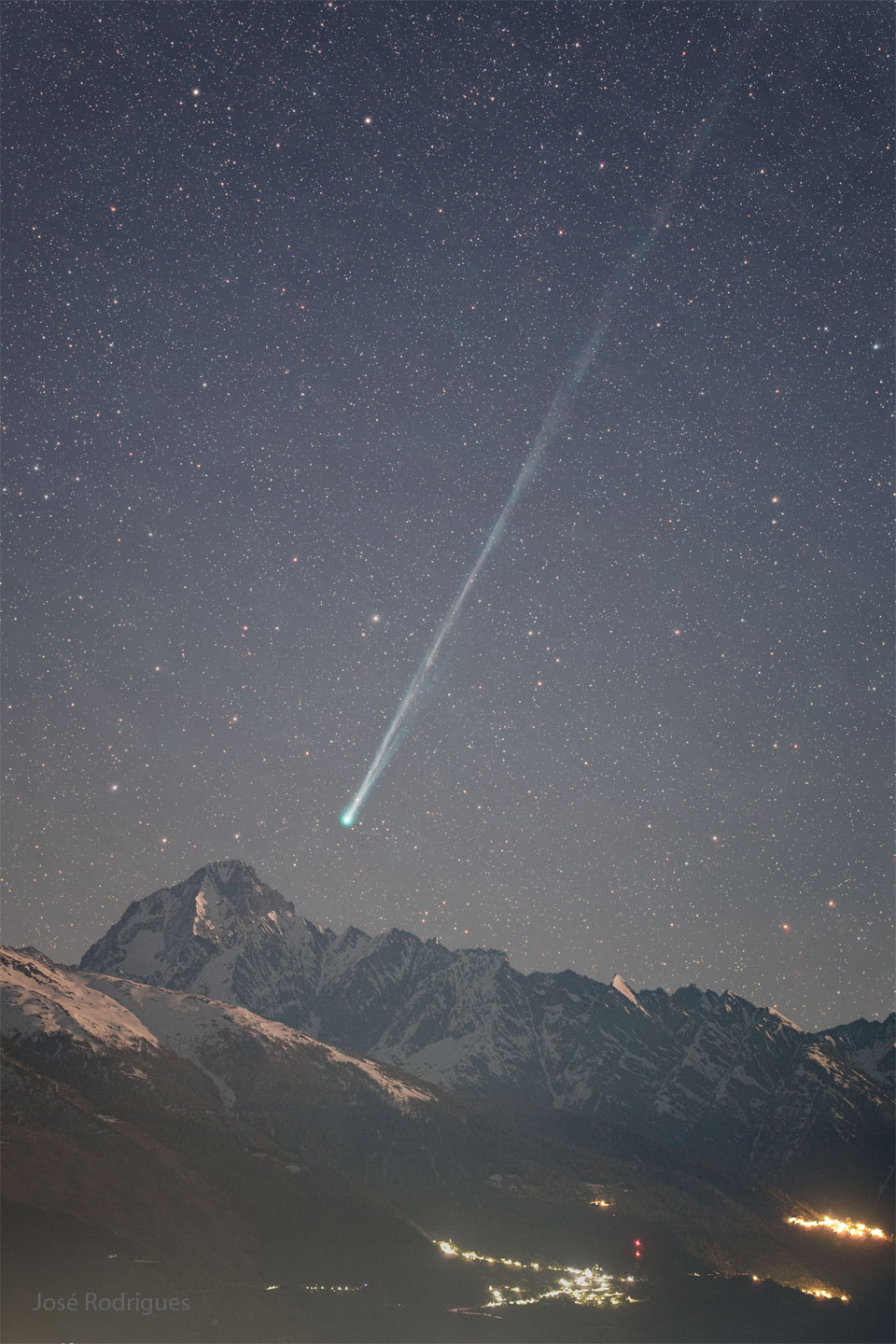
Mystery Comet R3 Dazzles & Dares: A Celestial Spectacle Unfolds

Disclosure: This post contains affiliate links. As an Amazon Associate, I earn from qualifying purchases.

The Full Story

A celestial visitor, officially designated C/2025 R3 (PanSTARRS), is currently staging an unpredictable but potentially spectacular show in our pre-dawn skies. Discovered last year, this cosmic wanderer—essentially a giant, dirty snowball of ice, dust, and rock—has been slowly warming up as it approaches the inner solar system. As it heats, its frozen components vaporize, creating a glowing cloud around its core and stretching out into a magnificent, luminous tail that already spans more than ten degrees across the sky, as captured in recent stunning images from places like Sion, Switzerland. This month is particularly crucial for Comet R3's performance. It will make its closest approach to our Sun on April 19th, receiving its maximum burst of solar energy. Just a few days later, on April 25th, it will swing closest to Earth. These dual close encounters are the reasons for its rapid brightening, offering a rare window of opportunity for skygazers. For those eager to catch a glimpse, R3 is currently best viewed in the hours before sunrise, making early risers the most fortunate spectators of this developing celestial drama. While the ultimate brilliance of any comet is notoriously difficult to forecast, Comet R3 is already proving to be a fantastic subject for photographers, earning the nickname "camera comet." Its impressive, long tail suggests that it's already quite active. The big question on every astronomer's mind, and soon perhaps yours, is whether it will become bright enough to be seen with the unaided eye in the coming week. Current projections suggest this is a very real possibility, adding an extra layer of excitement to its fleeting visit. However, like any good suspense story, Comet R3's tale comes with a dramatic twist: its very survival is uncertain. As it plunges closest to the Sun, the intense heat and gravitational stresses can be overwhelming. We've seen this happen before, notably with Comet A1 (MAPS) earlier this month, which tragically disintegrated under similar pressures. R3 faces the same fiery trial. Should it survive this close encounter, it will either continue its long journey, perhaps leaving our solar system entirely, or settle into a new orbit. Its fate hangs in the balance, making every viewing moment even more special.

Key Takeaways

  • 1 Comet R3 (PanSTARRS) is rapidly brightening and extending a long, visible tail.
  • 2 It will pass closest to the Sun (April 19) and Earth (April 25), making this the best time to observe it.
  • 3 The comet is already a great photographic target and might become visible to the unaided eye soon.
  • 4 Its ultimate fate is a mystery: it could disintegrate under solar stress or survive to journey out of our solar system.
National Geographic Planisphere Star Finder

National Geographic Planisphere Star Finder

Essential tool for identifying constellations and stars. Perfect for beginners learning the night sky.

Check Price on Amazon
*As an Amazon Associate, we earn from qualifying purchases.

💡 Think of it this way:

Think of Comet R3 as a celestial rock star making a grand, unpredictable tour stop. It's warming up, getting brighter, and even growing spectacular "rockstar hair" (its tail) for its big performance, but there's always the chance it might burn out before the encore!

How We Know This

This comet was first spotted by the PanSTARRS survey, a network of powerful telescopes designed to scan the skies for moving objects like asteroids and comets. Once identified, astronomers worldwide use powerful telescopes and even advanced cameras to track its progress, measure its brightness, and capture stunning images like the one featured, showing its magnificent tail as it interacts with solar radiation.

What This Means

Observing comets like R3 gives scientists invaluable data about the early history of our solar system, as these icy relics hold pristine material from its formation. For the general public, it's a thrilling reminder of the dynamic universe we live in and a rare chance to witness cosmic evolution firsthand. If it survives, R3 will continue its journey, potentially offering future generations another spectacle, or perhaps even becoming a "new" object to study if it leaves our solar system entirely.

Why It Matters

This is a fantastic opportunity to witness a dynamic celestial event unfold right before our eyes. Comets are ancient messengers from the far reaches of our solar system, and seeing one brighten and potentially become visible without a telescope offers a magical connection to the vastness of space.

Related Topics

#Comet R3 #PanSTARRS #Astronomy #Stargazing #Space