Cosmic Illusion: Discover the Dazzling Blue Horsehead Nebula
In Brief
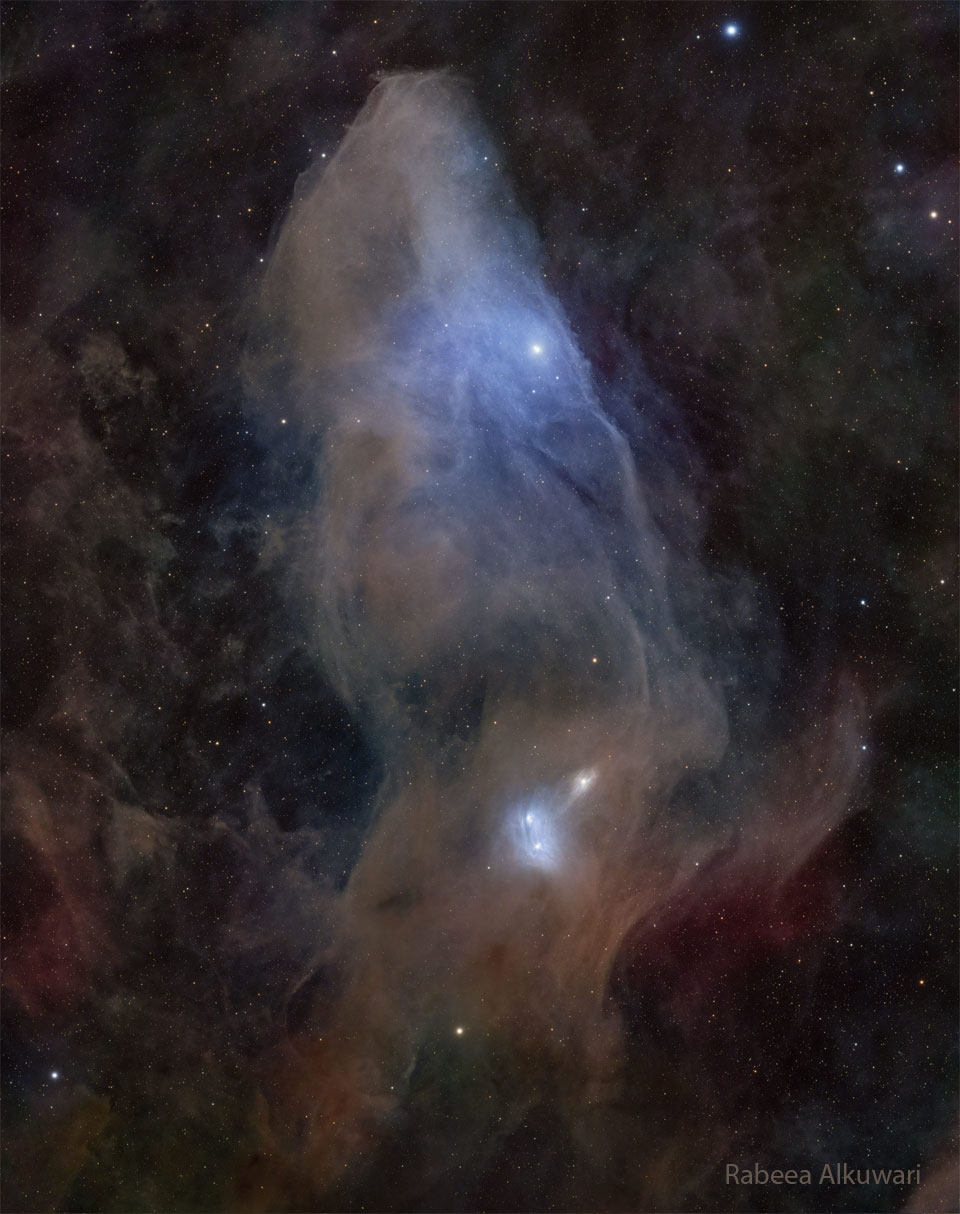
Forget the famous one – a breathtaking 'Blue Horsehead' nebula, known as IC 4592, has been captured reflecting the brilliant light of nearby stars. This cosmic cloud is a 'reflection nebula,' where fine dust scatters starlight, revealing its stunning blue hue and distinctive shape. It's a testament to the universe's hidden beauty, illuminated by a star system in the constellation Scorpius.
The Full Story
Key Takeaways
- 1 IC 4592 is a 'Blue Horsehead' reflection nebula, distinct from the famous Orion nebula.
- 2 Reflection nebulae glow blue by scattering light from nearby energetic stars off fine cosmic dust.
- 3 The star system Nu Scorpii provides the primary illumination for this stunning celestial cloud.
- 4 The image reveals intricate cosmic structures through deep imaging techniques.
💡 Think of it this way:
Imagine a dusty room that looks completely dark until someone shines a flashlight, suddenly illuminating the dust motes dancing in the beam. This 'Blue Horsehead' nebula acts like that cosmic dust, catching and reflecting the light from a powerful nearby star, making it glow blue against the darkness of space.
How We Know This
This stunning cosmic portrait was captured using 'deep imaging,' a technique where specialized cameras gather light over extended periods – often hours or even nights. This allows astronomers to collect enough photons to reveal extremely faint structures, like the Blue Horsehead, that would otherwise be invisible to the human eye or standard photography. It's much like taking a long-exposure photograph in low light, making dim details pop into view.
What This Means
Studying reflection nebulae like the Blue Horsehead provides crucial insights into the composition and distribution of interstellar dust clouds, which are the raw materials for future stars and planets. By understanding how starlight interacts with these clouds, astronomers can better map the 'nurseries' of the galaxy, predict where new stellar systems might form, and unravel the intricate dance between stars and the matter surrounding them.
Why It Matters
This discovery reveals the hidden artistry of the cosmos, showing how light and dust combine to create breathtaking celestial sculptures. It reminds us that even in familiar shapes, the universe holds countless lesser-known wonders waiting to be explored, deepening our understanding of the vast, dynamic environment between stars.