Cosmic Canvas: Unmasking the Mysterious Claw and Bubble Nebulae
In Brief
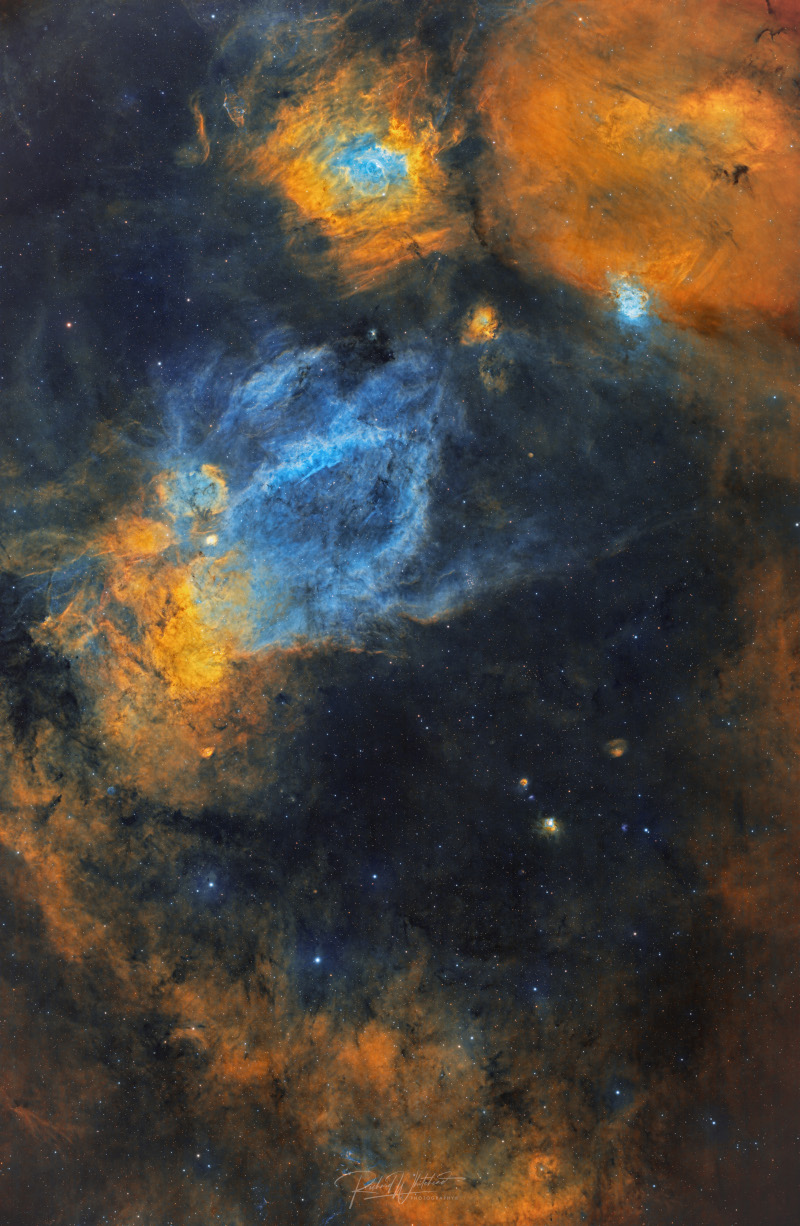
Gaze upon a breathtaking cosmic artwork featuring a 'Claw' reaching for a 'Bubble' in deep space. This vibrant image reveals how vast clouds of gas and dust glow with brilliant colors, thanks to intense starlight from massive stars. It's a stunning reminder that even in the chaos of the cosmos, the universe paints incredible scenes governed by fundamental laws.
The Full Story
Key Takeaways
- 1 The image showcases the beautiful 'Claw' and 'Bubble' nebulae, vast clouds of gas and dust in space.
- 2 The distinct colors (yellow for hydrogen, blue for oxygen) reveal the chemical composition of these cosmic clouds.
- 3 These nebulae glow intensely because massive, hot stars ionize (charge up) the surrounding gas with their powerful light and winds.
- 4 The shapes are not random; they are sculpted by dynamic stellar processes, offering insights into star formation and galactic evolution.
💡 Think of it this way:
Imagine looking at an abstract painting and suddenly seeing familiar shapes emerge, like a 'claw' or a 'bubble.' That's what astronomers experienced with this cosmic masterpiece, where seemingly random colors reveal incredible structures sculpted by cosmic forces.
How We Know This
Astronomers captured this stunning image using powerful telescopes equipped with specialized cameras and filters. These filters are designed to isolate specific wavelengths of light emitted by different elements, like the yellow light from ionized hydrogen and the blue light from ionized oxygen. By combining these filtered images, scientists can create a vibrant, false-color representation that not only highlights the incredible beauty of these nebulae but also provides crucial information about their composition and the physical processes at work.
What This Means
Studying nebulae like the Claw and Bubble helps us understand the life cycles of stars, from their explosive birth in stellar nurseries to how they influence their surroundings. This knowledge is vital for building more accurate models of galaxy formation and evolution, and for understanding how the heavy elements necessary for planets and life are forged and distributed throughout the cosmos. Future observations with advanced telescopes like the James Webb Space Telescope promise even more detailed insights into the complex chemistry and dynamics of these cosmic wonders.
Why It Matters
This image offers a window into the spectacular beauty and ongoing processes of star formation in our galaxy. By studying these nebulae, we learn about the origins of stars and planetary systems, including our own. It also highlights how human perception finds patterns in the universe, bridging the wonder of art with the logic of science.