Back to Articles Image Of The Day

Icy Spectacle: Mysterious Light Pillars Dance with Orion in China's North

📖 3 min read 📊 beginner 🏷️ NASA APOD

In Brief

A breathtaking photograph from Mohe, China, reveals not the aurora, but stunning light pillars rising from the ground, created by ice crystals reflecting city lights. This rare atmospheric phenomenon, often called 'crystal fog,' shared the frigid night sky with the familiar constellation Orion, offering a unique blend of earthly and cosmic beauty.
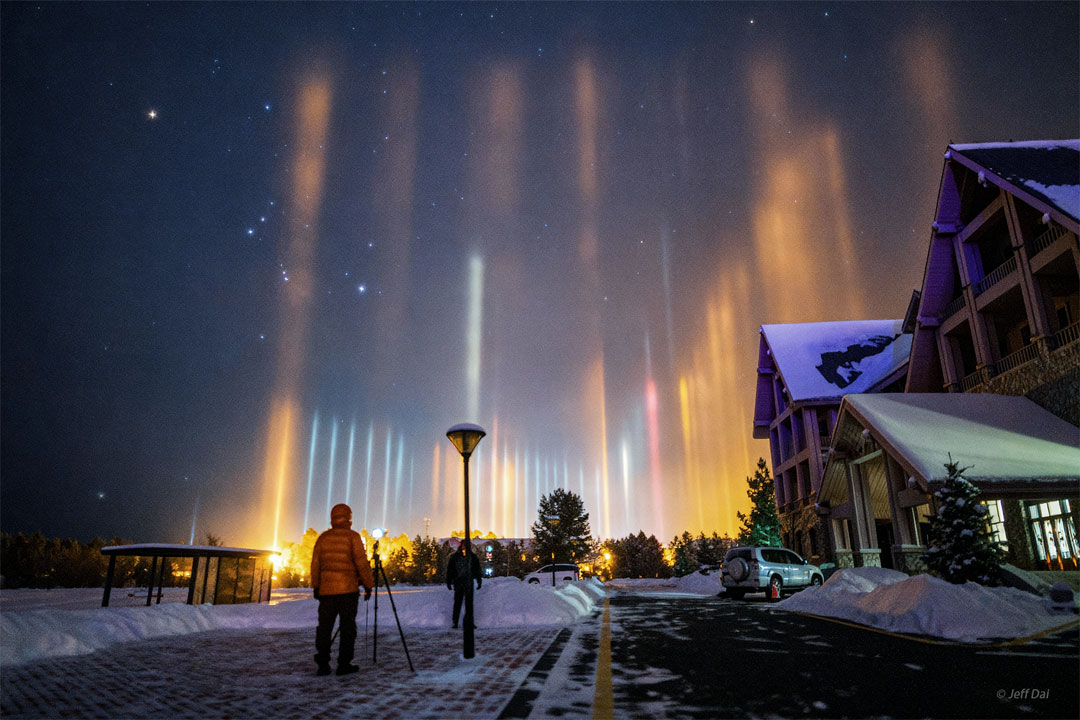
Icy Spectacle: Mysterious Light Pillars Dance with Orion in China's North

Disclosure: This post contains affiliate links. As an Amazon Associate, I earn from qualifying purchases.

The Full Story

Imagine looking down a street in a city, and instead of just seeing streetlights, you see towering columns of light shooting straight up into the night sky, almost touching the stars. That's exactly what was captured in a breathtaking photograph from Mohe, China – the country's northernmost city, known for its bitterly cold winters. What might look like a fantastical aurora borealis is actually a different, yet equally mesmerizing, natural light show: light pillars. So, what exactly are these glowing columns? Light pillars are a fascinating trick of light, not from space like the aurora, but right here in Earth's atmosphere. They form when countless tiny, flat ice crystals are suspended in the air. These crystals act like millions of tiny mirrors. When light from a strong source – like the Sun, Moon, or in this case, ground-based city lights – hits these crystals, they reflect the light upwards or downwards, creating the illusion of a vertical column of light. When the sun causes them, they're called 'sun pillars,' extending from the rising or setting sun. The magic truly happens during extremely cold temperatures. In places like Mohe, where the mercury plummets, these flat ice crystals can form much closer to the ground, creating what scientists sometimes refer to as 'crystal fog' or 'diamond dust.' Instead of reflecting distant sunlight from high in the atmosphere, these ground-level crystals capture and reflect the bright glow from streetlights, cars, or buildings. The result is a surreal display of luminous pillars seemingly rising from the very ground beneath your feet, turning an ordinary street scene into something truly extraordinary. What makes this particular image so special is the combination of this earthly light spectacle with a cosmic giant. Above these icy pillars, the iconic constellation of Orion – with its three bright belt stars and the famous Orion Nebula – stood majestically in the inky blackness. It's a stunning reminder of how our planet's atmosphere can interact with both terrestrial light sources and the ancient starlight from across the galaxy, weaving them into a single, awe-inspiring tapestry visible from our world. It highlights that even common weather phenomena, under the right conditions, can create truly spectacular visual art.

Key Takeaways

  • 1 Light pillars are a unique atmospheric phenomenon caused by ice crystals reflecting light.
  • 2 Unlike auroras, these pillars are formed close to Earth's surface by reflecting ground-based lights in freezing conditions.
  • 3 The photographed event in Mohe, China, showcases both these mesmerizing light pillars and the prominent Orion constellation.
  • 4 This natural light show is a beautiful example of how everyday weather can create stunning visual spectacles.
National Geographic Planisphere Star Finder

National Geographic Planisphere Star Finder

Essential tool for identifying constellations and stars. Perfect for beginners learning the night sky.

Check Price on Amazon
*As an Amazon Associate, we earn from qualifying purchases.

💡 Think of it this way:

Imagine countless tiny, flat mirrors floating in the super cold air, each catching a ray of light from below and bouncing it straight up into the sky, creating shimmering columns of light.

How We Know This

This stunning scene was captured through astrophotography, using a camera to photograph the night sky and the atmospheric effects. The careful timing and long exposure likely helped gather enough light from the faint pillars and distant stars to create such a vivid and detailed image.

What This Means

While not a new scientific discovery, photographs like this continuously inspire public interest in atmospheric optics and astronomy. They encourage us to look up, appreciate the science behind everyday phenomena, and remind us that our planet's atmosphere is a dynamic canvas for natural artistry, often revealing beauty we might otherwise overlook.

Why It Matters

This captivating image reminds us that extraordinary celestial sights aren't always far-off cosmic events; sometimes, stunning beauty forms right in our own atmosphere, connecting our local weather to the vast universe above.

Related Topics

#Light Pillars #Atmospheric Phenomena #Orion Constellation #Astrophotography #Weather Optics