Back to Articles Image Of The Day

SpaceX's 'Space Jellyfish': How a Rocket Launch Painted the Pre-Dawn Sky

📖 3 min read 📊 beginner 🏷️ NASA APOD

In Brief

A recent SpaceX Falcon 9 launch created a breathtaking 'jellyfish' shape in the pre-dawn sky, leaving stargazers and early risers in awe. This stunning visual was caused by the rocket's exhaust plume catching the first rays of the rising sun high above the still-dark ground. It's a natural light show that reveals the hidden beauty of rocket launches.
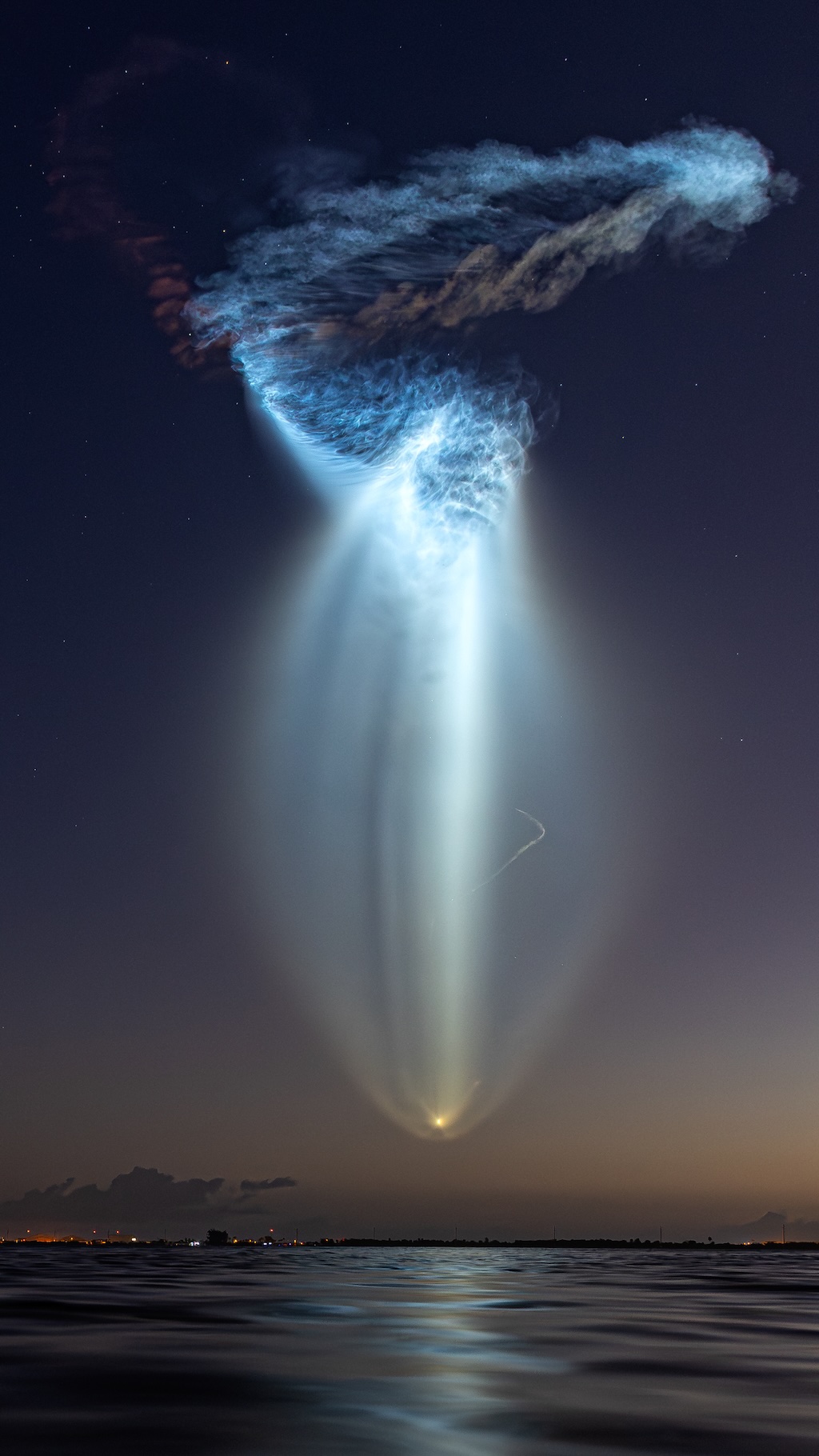
SpaceX's 'Space Jellyfish': How a Rocket Launch Painted the Pre-Dawn Sky

Disclosure: This post contains affiliate links. As an Amazon Associate, I earn from qualifying purchases.

The Full Story

Imagine looking up at the sky just before the sun fully rises, when the world around you is still bathed in shadow. Then, suddenly, a glowing, ethereal shape emerges, reminiscent of a giant jellyfish swimming through the cosmic ocean. This isn't science fiction; it's exactly what many witnessed during a recent SpaceX Falcon 9 rocket launch from Cape Canaveral, Florida. The stunning image, captured on March 4th, shows the rocket's exhaust plume transformed into a breathtaking 'Space Jellyfish' as it ascended towards orbit. The secret to this incredible display lies in perfect timing and atmospheric conditions. The Falcon 9 launched just 52 minutes before sunrise. At this particular moment, the rocket quickly climbed high enough that its exhaust gases entered a region of the atmosphere already kissed by the sun's first rays. Meanwhile, observers on the ground were still firmly in darkness. This unique interplay of light and shadow, often seen at dawn or dusk, is what makes the otherwise invisible exhaust gases 'light up.' What exactly is glowing? The rocket's exhaust plume is primarily made of water vapor and carbon dioxide — essentially, superheated steam and gas. When these particles are illuminated by the sun's direct light in the upper atmosphere, they scatter that light in all directions, making the plume appear as a brilliant, expanding cloud against the dark pre-dawn sky. It's similar to how dust particles become visible when caught in a sunbeam streaming through a window. The vastness of space and the absence of other light sources at that altitude amplify the effect, creating that distinctive, glowing 'jellyfish' silhouette. You might also notice that the 'jellyfish' seems to be moving downwards in the image, but don't be fooled! This is another clever trick of perspective and Earth's curvature. As the rocket soared into space, it wasn't going straight up and then coming back down; it was following a trajectory that curves with our planet's round shape. From an observer's perspective on the ground, this ascent can create the optical illusion of it dipping. This phenomenon is also closely related to what scientists call the 'twilight phenomenon,' which can produce colorful, lingering contrails often mistaken for unidentified flying objects (UFOs) by those unfamiliar with the science. While our 'Space Jellyfish' is a natural atmospheric effect, it's a fun coincidence that real jellyfish have actually ventured into space! In the 1990s, NASA sent thousands of jellyfish polyps to orbit as part of a science experiment to study how gravity affects development and behavior. So, while you won't find actual cephalopods hitching a ride on a Falcon 9, the beauty of science and observation often brings delightful and unexpected connections.

Key Takeaways

  • 1 A SpaceX Falcon 9 launch created a glowing 'jellyfish' shape in the pre-dawn sky.
  • 2 The effect occurs when the rocket's exhaust plume, high above Earth, catches the sunlight while the ground below remains dark.
  • 3 The glowing plume is mostly water vapor and carbon dioxide scattering sunlight.
  • 4 The 'jellyfish' appearing to move downwards is an optical illusion due to Earth's curvature and the rocket's trajectory.
  • 5 This is an example of atmospheric optics, related to the 'twilight phenomenon' sometimes mistaken for UFOs.
LEGO NASA Apollo Saturn V Rocket

LEGO NASA Apollo Saturn V Rocket

Detailed LEGO model of the iconic Saturn V rocket. Perfect for display and space history enthusiasts.

Check Price on Amazon
*As an Amazon Associate, we earn from qualifying purchases.

💡 Think of it this way:

Imagine a spotlight hitting the steam from a kettle in a dimly lit room, making the steam glow. In this case, the sun was the spotlight, and the rocket exhaust was the 'steam' high in Earth's atmosphere.

How We Know This

This spectacular event was captured by photographers who expertly timed their shots of the SpaceX Falcon 9 launch. The unique lighting conditions, observed from the ground, allowed the high-altitude exhaust plume to become visible against the dark sky, creating the stunning 'jellyfish' effect.

What This Means

While this specific 'jellyfish' is a fleeting moment, understanding phenomena like it enhances our appreciation for both rocket science and atmospheric physics. It reminds us that even routine space launches offer opportunities for stunning natural light shows and contribute to our understanding of light's interaction with our planet's upper atmosphere.

Why It Matters

This phenomenon helps us understand how light interacts with our atmosphere, turning a routine rocket launch into an unexpected piece of sky art. It also highlights the intricate physics at play during space missions and offers a glimpse into the wonders of space travel from Earth.

Related Topics

#SpaceX #Rocket Launch #Atmospheric Optics #Falcon 9 #Twilight Phenomenon