Cosmic Tadpoles: Witnessing New Stars Being Born
In Brief
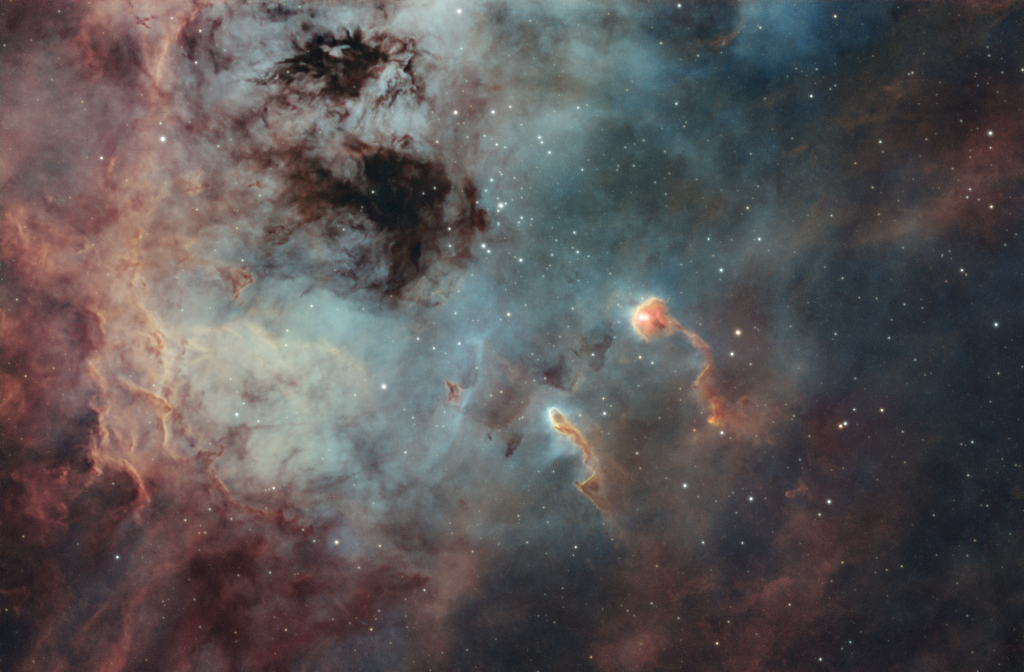
A stunning new image reveals peculiar 'tadpole' shapes within a distant nebula, IC 410. These massive cosmic structures, each spanning 10 light-years, are bustling stellar nurseries where brand new stars are actively forming.
The Full Story
Key Takeaways
- 1 Distant nebula IC 410 contains 'tadpole' shapes.
- 2 These 'tadpoles' are 10-light-year long stellar nurseries, actively forming new stars.
- 3 Their shapes are sculpted by intense radiation and stellar winds from a nearby cluster of young, hot stars.
💡 Think of it this way:
Imagine a giant cosmic daycare center where baby stars are just beginning their journey, much like tiny tadpoles transforming into frogs in a pond.
How We Know This
This stunning image was captured using a powerful telescope, even from a backyard! Scientists combined different types of light data – including visible light and near-infrared light – to create a comprehensive view. Imagine taking pictures with different filters to see various layers and details, much like how specialized cameras can see heat signatures. This technique, often processed with a 'Hubble color palette,' helps reveal structures hidden by cosmic dust and highlights different elements glowing in the nebula.
What This Means
Understanding the birthplaces of stars, like the Tadpoles of IC 410, helps us piece together the cosmic puzzle of how galaxies are built and how planetary systems form around new stars. Future studies of such regions will refine our models of star formation, potentially even offering clues about the conditions under which life might emerge on other worlds by understanding the stellar environments where they originate.
Why It Matters
This discovery offers a direct glimpse into how stars, including our own Sun, come into existence. It helps us understand the fundamental processes that shape galaxies and create the building blocks of life.