The Spanish Dancer Galaxy: A Cosmic Whirlpool Hiding a Monster
In Brief
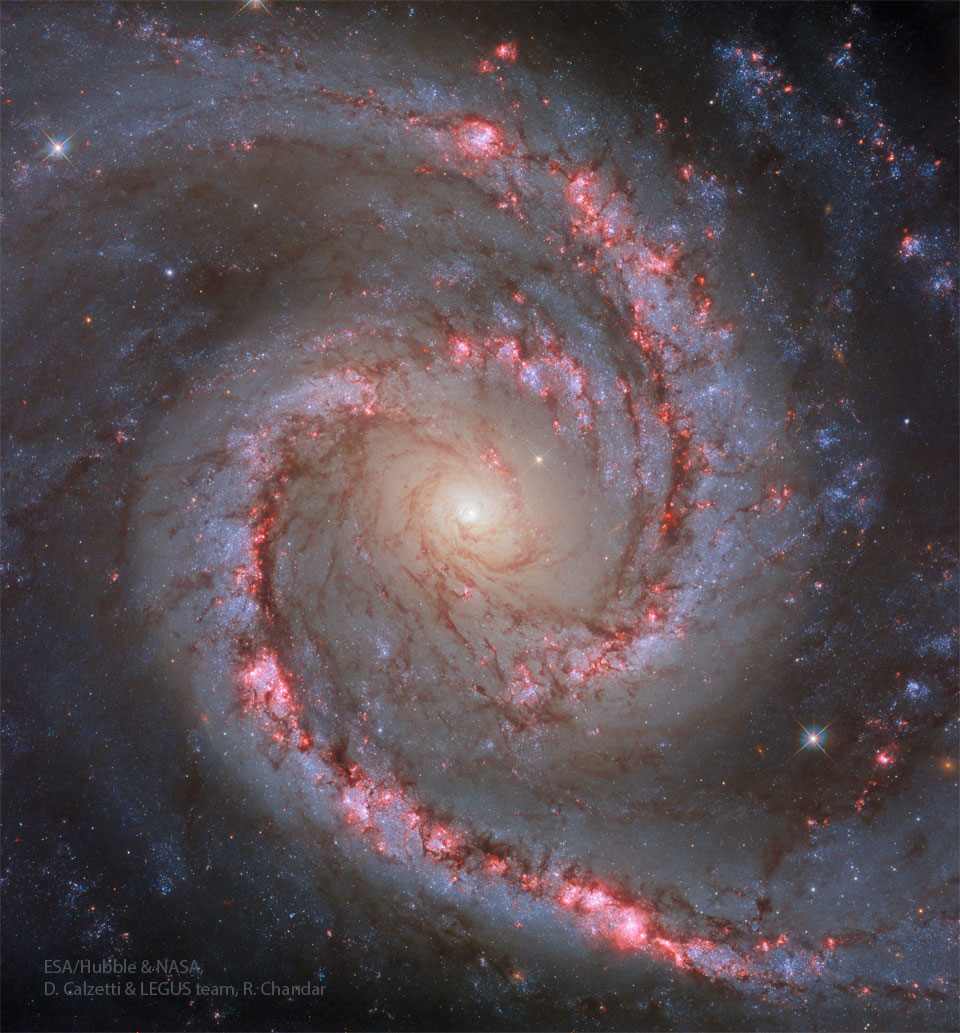
This stunning spiral galaxy, nicknamed the "Spanish Dancer," is located 40 million light-years away and offers a breathtaking face-on view of its graceful arms. While visually magnificent, this cosmic wonder also harbors a fiercely active center, making it one of the closest galaxies with a supermassive black hole aggressively devouring nearby material.
The Full Story
Key Takeaways
- 1 NGC 1566, the 'Spanish Dancer,' is a stunning 'grand design' spiral galaxy 40 million light-years away.
- 2 Its beautiful arms are traced by bright star clusters, glowing nebulas, and dark dust lanes.
- 3 The galaxy harbors an unusually active core powered by a feeding supermassive black hole.
- 4 It's one of the closest and brightest Seyfert galaxies, providing a unique view of black hole activity.
- 5 Studying NGC 1566 helps astronomers understand star formation, supernovas, and galaxy evolution.
💡 Think of it this way:
The galaxy's active center is like a cosmic lighthouse, shining incredibly bright because a huge 'monster' (the black hole) is feasting, sending out powerful beams of light across vast distances.
How We Know This
Astronomers used the incredible vision of the Hubble Space Telescope to capture detailed images of NGC 1566. By observing the galaxy across different wavelengths of light, they could identify the bright young star clusters, glowing gas clouds, and dark dust lanes that trace its spiral arms. The telescope's ability to see fine details and subtle light changes also helped pinpoint the extraordinary brightness and activity coming from the galaxy's very center, confirming the presence of an energetic supermassive black hole at its core.
What This Means
Further studies of NGC 1566 will continue to use advanced telescopes, possibly including the James Webb Space Telescope, to peer even deeper into its active core and unravel the mysteries of its supermassive black hole. Understanding this 'Spanish Dancer' will not only refine our models of galaxy evolution but also help us better comprehend the role of central black holes in shaping the universe around them, shedding light on the destiny of our own galactic home.
Why It Matters
Studying NGC 1566 helps scientists understand how galaxies evolve, how stars are born and die, and how supermassive black holes at galactic centers influence their surroundings, offering crucial clues to our own Milky Way's past and future.