Back to Articles Image Of The Day

Ancient Serpent Awakens: Sunlight's Magic at a Mayan Pyramid

📖 3 min read 📊 beginner 🏷️ NASA APOD

In Brief

Every equinox, a precise interplay of sunlight and shadow creates the stunning illusion of a feathered serpent slithering down the steps of the ancient Mayan pyramid, El Castillo, in Mexico. This captivating event, an homage to the god Kukulkan, reveals the astronomical genius of the pre-Columbian civilization.
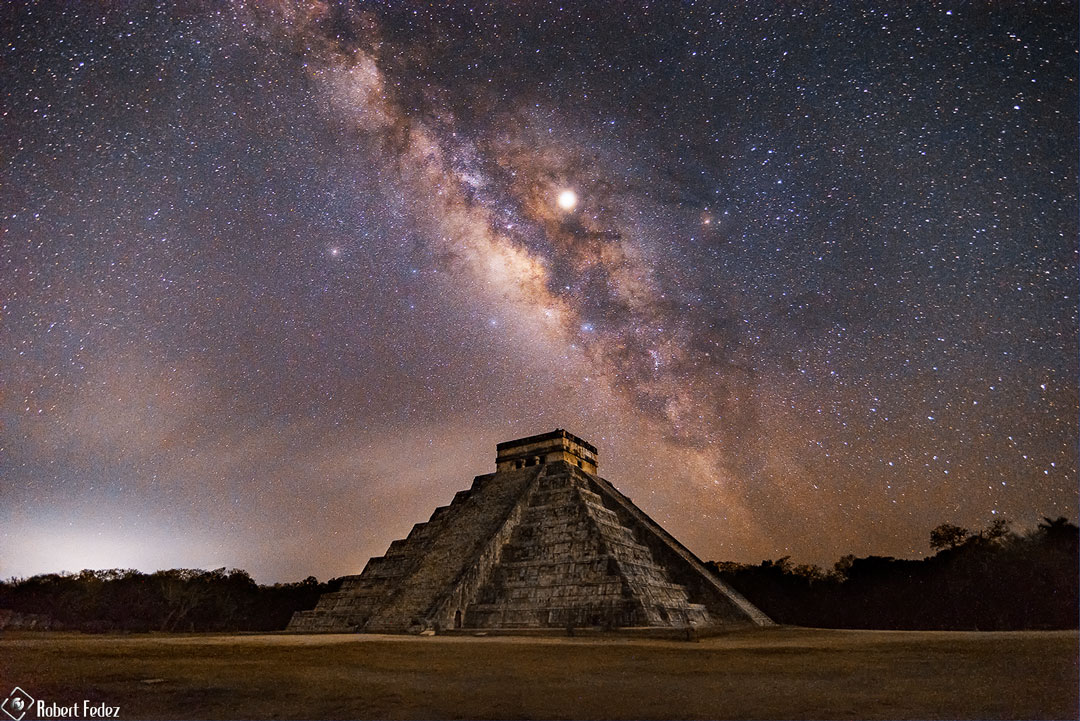
Ancient Serpent Awakens: Sunlight's Magic at a Mayan Pyramid

Disclosure: This post contains affiliate links. As an Amazon Associate, I earn from qualifying purchases.

The Full Story

High in Mexico's Yucatán Peninsula stands El Castillo, also known as the Temple of Kukulkan – a majestic step-pyramid built by the ancient Maya. For centuries, this architectural marvel has hosted a breathtaking celestial spectacle, meticulously designed to unfold twice a year, precisely when our planet experiences an equinox. It's a moment when the Sun crosses the celestial equator, marking a near-equal balance of day and night across the globe. During the late afternoon of these equinox days, if the sky is clear, an astonishing illusion begins. As the sun dips lower, its rays strike the pyramid's northwest staircase at a specific angle. The edges of the structure cast a series of triangular shadows that perfectly align with stone serpent heads carved at the base. One by one, these triangles merge, creating the unmistakable image of Kukulkan, the Feathered Serpent god, appearing to slither down the grand staircase, an ethereal dance of light and shadow. This isn't a happy accident. Standing 30 meters tall and 55 meters wide at its base, El Castillo was constructed by a pre-Columbian civilization between the 9th and 12th centuries. It's a monumental calendar and astronomical observatory, precisely aligned with celestial events. The Maya possessed profound knowledge of astronomy, mathematics, and engineering, which they masterfully embedded into their architecture. This pyramid is a physical embodiment of their cosmology, demonstrating their sophisticated understanding of Earth's movements and the sun's path. The composite image featured alongside this news, captured in 2019, shows the pyramid's illusion framed by a broader cosmic backdrop, with gas giants Jupiter and Saturn gracefully straddling the diagonal central band of our own Milky Way galaxy. This visually emphasizes the deep connection between ancient human observations and the vast universe they sought to understand. In just a few days, another equinox will grace our planet. While the stunning serpent of Chichen Itza is a localized marvel, the equinox itself is a universal phenomenon affecting everyone on Earth. It's a powerful reminder of our planet's elegant orbital dance around the Sun and the cyclical rhythms that have shaped life and cultures for millennia, from the ancient Maya to us today.

Key Takeaways

  • 1 The El Castillo pyramid showcases a stunning illusion of a feathered serpent during the spring and autumn equinoxes.
  • 2 This phenomenon is a result of precise ancient Mayan astronomical knowledge and architectural engineering.
  • 3 The equinox is a global event that highlights Earth's orbital mechanics and its profound influence on ancient civilizations and cultural practices.
Celestron NexStar 130SLT Computerized Telescope

Celestron NexStar 130SLT Computerized Telescope

Computerized telescope perfect for beginners. Features a 130mm aperture and automated tracking to explore the night sky.

Check Price on Amazon
*As an Amazon Associate, we earn from qualifying purchases.

💡 Think of it this way:

Imagine setting up a perfect alarm clock where the sun itself rings the bell at a specific moment, but instead of sound, it paints a magnificent, moving picture on a colossal stone canvas, perfectly timed to the Earth's orbit.

How We Know This

The 'discovery' of this phenomenon was made by the ancient Maya themselves, who meticulously designed and built the El Castillo pyramid with precise astronomical alignments. For us, observing it involves visiting the pyramid in Mexico's Yucatán Peninsula during an equinox, specifically in the late afternoon on a clear day, to witness the interplay of sunlight and the pyramid's carefully designed steps and shadows. The featured image itself was captured by a photographer to document this event.

What This Means

This phenomenon underscores the advanced scientific and artistic capabilities of ancient civilizations like the Maya. It encourages us to appreciate the intricate relationship between human ingenuity, natural celestial cycles, and cultural expression. It also reminds us that observation of the cosmos has been a fundamental part of human existence for millennia, inspiring both scientific inquiry and profound wonder about our place in the universe.

Why It Matters

This isn't just a trick of light; it's a powerful testament to ancient human ingenuity, showing how sophisticated civilizations understood the cosmos and wove that knowledge into their architecture and culture, connecting earth and sky. It reminds us of humanity's long-standing fascination with the universe.

Related Topics

#Mayan Astronomy #Equinox #Ancient Architecture #Kukulkan #Chichen Itza