K2-315b: The Earth-Sized 'Pi Planet' with a Super-Short Year!
In Brief
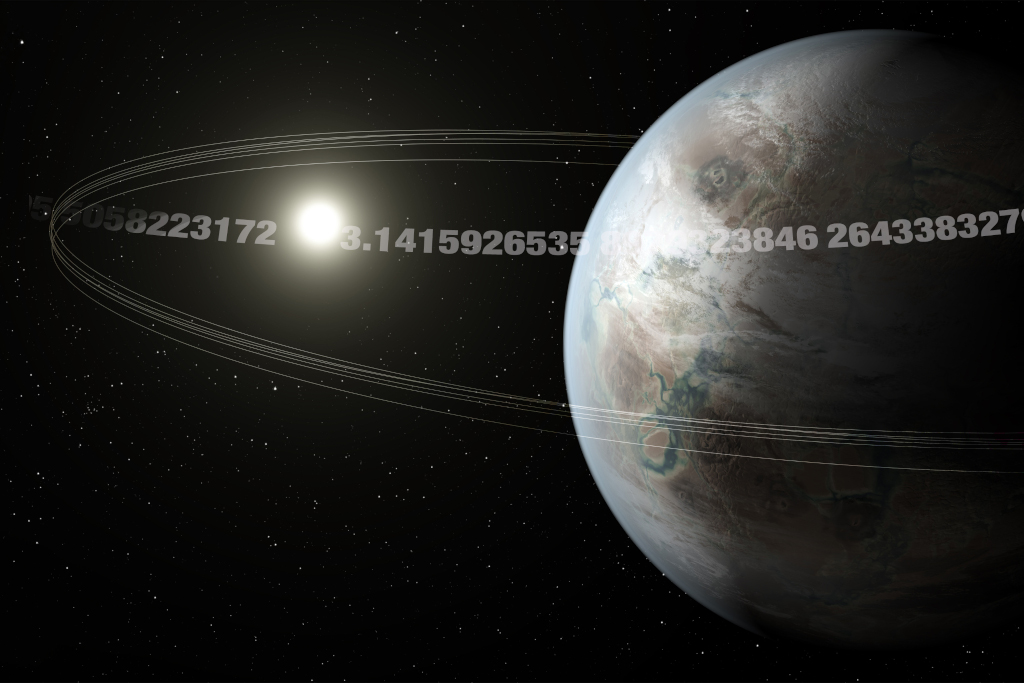
Astronomers have discovered K2-315b, an Earth-sized exoplanet that completes an orbit around its star in just 3.14 days – almost perfectly matching the mathematical constant Pi. While this 'Pi Planet' is far too hot for life and located 185 light-years away, its unique orbital period offers a fun cosmic connection.
The Full Story
Key Takeaways
- 1 K2-315b is an Earth-sized exoplanet discovered using data from the Kepler Space Telescope.
- 2 It orbits its star in just 3.14 days, almost exactly matching the mathematical constant Pi.
- 3 Due to its close orbit, K2-315b is extremely hot and uninhabitable, located 185 light-years away.
💡 Think of it this way:
Imagine your birthday coming every 3.14 days – that's how fast the 'year' flies by on K2-315b! And instead of a birthday cake, you'd get a baking-hot surface, much hotter than any kitchen oven.
How We Know This
Astronomers discovered K2-315b by analyzing publicly available data from the Kepler Space Telescope's K2 mission. They used the 'transit method,' which involves looking for tiny, repeated dips in the brightness of a star. These dips indicate that a planet is passing in front of the star from our perspective, temporarily blocking some of its light. By studying the pattern and depth of these transits, scientists can determine a planet's size and orbital period.
What This Means
The discovery of K2-315b enriches our understanding of the diversity of planetary systems, particularly those orbiting M dwarf stars, which are the most common type of star in our galaxy. Studying planets like K2-315b helps refine our models of planet formation and evolution. While this specific planet isn't habitable, identifying Earth-sized worlds provides valuable targets for future observations with advanced telescopes like the James Webb Space Telescope, which could potentially characterize their atmospheres and search for biosignatures on more temperate worlds.
Why It Matters
This discovery adds another fascinating world to our growing catalog of exoplanets, showing us the incredible diversity of planetary systems out there. It's a fun way to connect astronomy with a familiar concept like Pi, sparking curiosity about the universe and how we find these distant worlds.