Back to Articles Image Of The Day

The Aurora Tree: When the Night Sky Blossomed in Iceland

📖 3 min read 📊 beginner 🏷️ NASA APOD

In Brief

A photographer in Iceland captured a breathtaking visual coincidence: the dark branches of a nearby tree perfectly aligned with a distant, glowing aurora, creating the illusion of a tree with shimmering celestial leaves. This rare moment, where Earth's landscape met the cosmic light show, was a fleeting masterpiece of natural alignment.
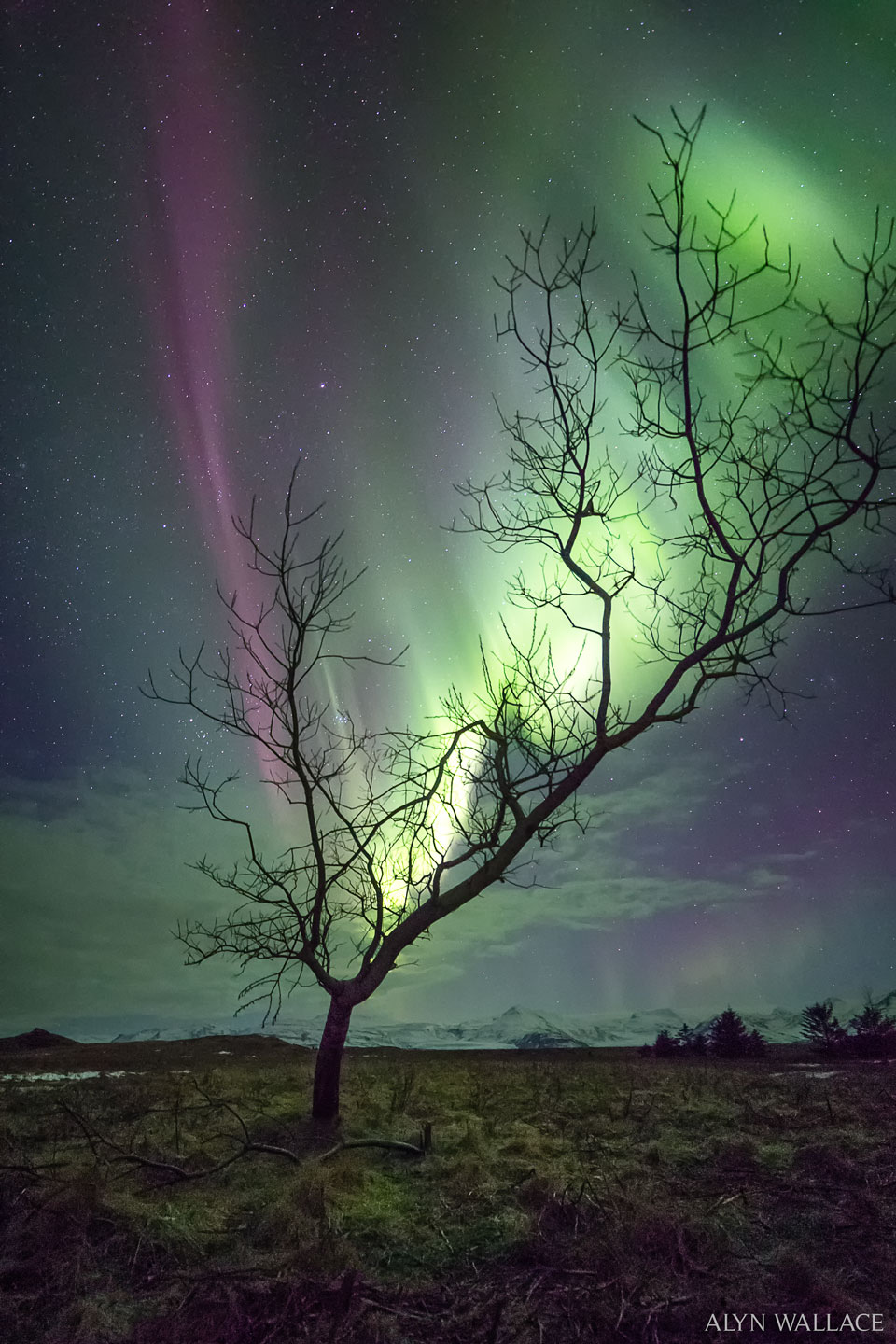
The Aurora Tree: When the Night Sky Blossomed in Iceland

Disclosure: This post contains affiliate links. As an Amazon Associate, I earn from qualifying purchases.

The Full Story

Imagine standing in the quiet, crisp air of Iceland, gazing up at a sky ablaze with the dancing lights of the aurora. Now, picture a dark, silhouetted tree nearby. In a breathtaking moment of perfect alignment, a photographer witnessed the glowing green and purple tendrils of the aurora seem to sprout directly from the tree's branches, creating the illusion of a magnificent "aurora tree." It was as if the night sky itself had decided to grow luminous leaves, shimmering with an otherworldly light right before their eyes. This stunning visual trick was so captivating that the photographer almost forgot to capture the moment. So, what exactly are these celestial "leaves"? Auroras, often called the Northern Lights (Aurora Borealis) or Southern Lights (Aurora Australis), are nature's most spectacular light shows. They aren't actually lights in the traditional sense, but rather a brilliant glow in our planet's upper atmosphere, about 150 kilometers (90 miles) up – much higher than any tree! Think of it like a giant, natural neon sign. This dazzling display begins with the Sun, which occasionally unleashes massive bursts of energy and high-energy particles during events like solar flares or coronal mass ejections (CMEs). These particles, mainly electrons, travel across space and, when they reach Earth, are steered by our planet's magnetic field towards the poles. As they plunge into the upper atmosphere, they collide with atoms and molecules of gases like oxygen and nitrogen. These collisions excite the gas particles, causing them to emit light – much like how electricity makes the gas in a neon sign glow. Oxygen typically produces the common green and sometimes red auroras, while nitrogen can contribute blues and purples. The ever-changing shapes and movements of the aurora are a direct result of these interactions and the dynamic nature of both solar winds and Earth's magnetic field. What made the "Aurora Tree" image truly exceptional wasn't just the aurora itself, but the incredible and fleeting coincidence between the distant atmospheric phenomenon and the nearby terrestrial tree. The photographer was at the exact right angle, at the precise moment, for the branches to perfectly frame the aurora, turning a regular tree into an illuminated, celestial marvel. Such moments of "Earth-sky collaboration" are rare and require a combination of luck, timing, and an eye for beauty. Had the aurora shifted or the photographer moved slightly, the illusion would have been lost. Witnessed in Iceland in March 2017, this stunning event serves as a powerful reminder of the unexpected beauty that awaits those who look up. It highlights how our perception can transform the ordinary into the extraordinary, simply by being in the right place at the right time. For the general public, it's not just a beautiful picture; it's an invitation to marvel at the interconnectedness of our solar system – from the fiery surface of the Sun to the quiet beauty of a tree on Earth – all illuminated by the magic of physics.

Key Takeaways

  • 1 A rare visual coincidence in Iceland captured an aurora appearing as luminous leaves on a tree.
  • 2 Auroras (like the Northern Lights) are caused by high-energy particles from the Sun colliding with gases in Earth's upper atmosphere.
  • 3 The image highlights the stunning and often fleeting beauty of natural phenomena and our planet's connection to space.
National Geographic Planisphere Star Finder

National Geographic Planisphere Star Finder

Essential tool for identifying constellations and stars. Perfect for beginners learning the night sky.

Check Price on Amazon
*As an Amazon Associate, we earn from qualifying purchases.

💡 Think of it this way:

Imagine nature painting a magnificent, glowing masterpiece just for you, using the vast night sky as its canvas and a humble tree as its easel.

How We Know This

The 'Aurora Tree' wasn't discovered with scientific instruments, but by a keen-eyed photographer in Iceland using a camera. This breathtaking visual coincidence, where a nearby tree perfectly aligned with the distant aurora, was captured through patience, timing, and a bit of luck to freeze a fleeting moment of natural artistry.

What This Means

This captivating image serves as a powerful reminder of the beauty that unfolds daily in our skies, encouraging us to look up and appreciate the wonders of both our planet and the cosmos. It inspires astrophotography, promotes public interest in atmospheric science and solar activity, and underscores the dynamic connection between the Sun and Earth, inviting everyone to become citizen observers of the natural world.

Why It Matters

This image reminds us of the profound beauty and unexpected wonders that unfold daily in our universe, encouraging us to look up and appreciate the dynamic connection between our Sun and Earth. It's a testament to how perception can transform the ordinary into the extraordinary.

Related Topics

#Aurora Borealis #Astrophotography #Iceland #Earth-Sun Connection #Natural Phenomena