Meet the Moth: A Young Star Blowing a Giant Space Bubble
In Brief
Astronomers have discovered a young star, nicknamed "The Moth," blowing a massive bubble of energetic wind in space. This star, HD 61005, is much younger than our Sun and creates a protective "astrosphere" by pushing away surrounding gas and dust. This finding offers a unique glimpse into how stars like our Sun develop in their early, very active years.
The Full Story
Key Takeaways
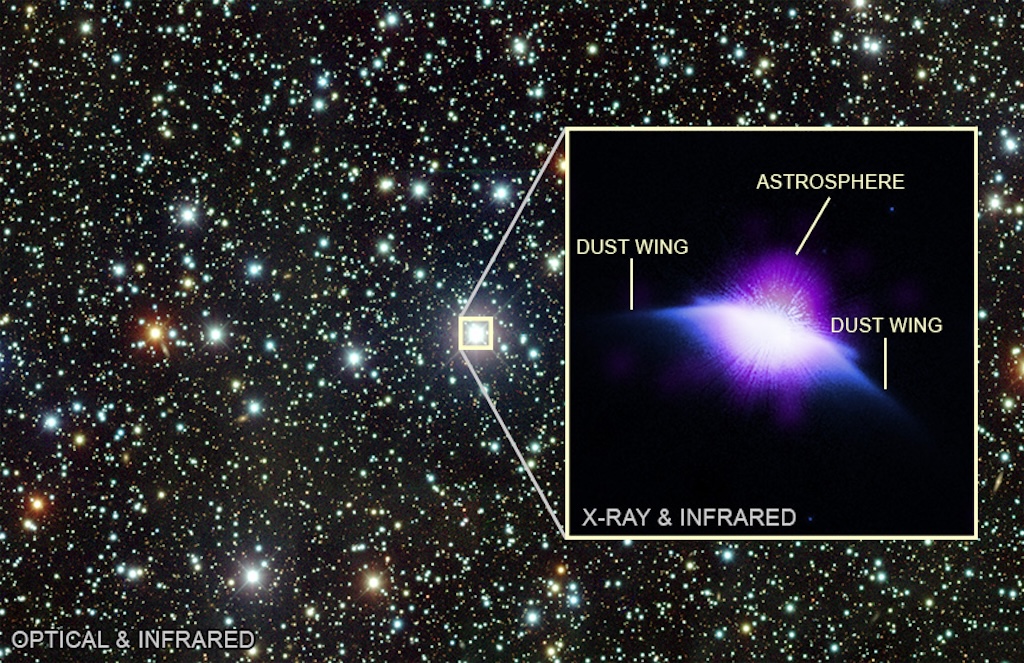
- 1 A young star named HD 61005, nicknamed "The Moth," is blowing a massive X-ray bubble called an astrosphere.
- 2 This astrosphere, generated by the star's powerful stellar wind, is similar to our Sun's protective heliosphere.
- 3 The discovery was made using the Chandra X-ray Observatory, with the Hubble Space Telescope also imaging surrounding debris that gives it the "Moth" nickname.
- 4 Studying HD 61005 helps scientists understand the early, energetic lives of stars like our Sun and how planetary systems form within them.
💡 Think of it this way:
Imagine a giant cosmic leaf blower constantly clearing a huge, dust-free zone around itself. That's essentially what this young star is doing in space, blowing away the gas and dust around it to create a vast bubble.
How We Know This
Astronomers detected The Moth's astrosphere by using the Chandra X-ray Observatory to pinpoint the X-rays emitted from the hot, fast stellar wind. X-rays are invisible to the human eye, but they reveal the intense energy of the bubble. Optical telescopes, like the Cerro Tololo Inter-American Observatory and the Hubble Space Telescope, provided additional images, showing the star's environment and the 'wing-like' debris field that led to its nickname.
What This Means
This discovery provides a unique 'snapshot' of a star's chaotic youth, helping astronomers refine models of how stars clear their birth nurseries and interact with surrounding gas and dust. It sheds light on how planetary systems might form and evolve within these dynamic environments, potentially influencing the conditions for life to emerge. Future studies will likely involve observing more young stars and their astrospheres to further our understanding of stellar evolution and the prerequisites for planetary habitability.
Why It Matters
Understanding these stellar bubbles helps us learn about our own Sun's early life and how it created the protective shield (the heliosphere) that guards Earth from harmful cosmic radiation. It also shows us the dynamic processes shaping planetary systems around young stars.