Back to Articles Image Of The Day

The Cosmic Eye: Shapley 1's Stellar Farewell

📖 3 min read 📊 beginner 🏷️ NASA APOD

In Brief

Astronomers have captured an incredible image of Shapley 1, a stunning, perfectly circular nebula that looks just like a giant cosmic eye. This celestial 'eye' is actually the beautiful remnants of a star similar to our Sun, showcasing its dramatic final act.
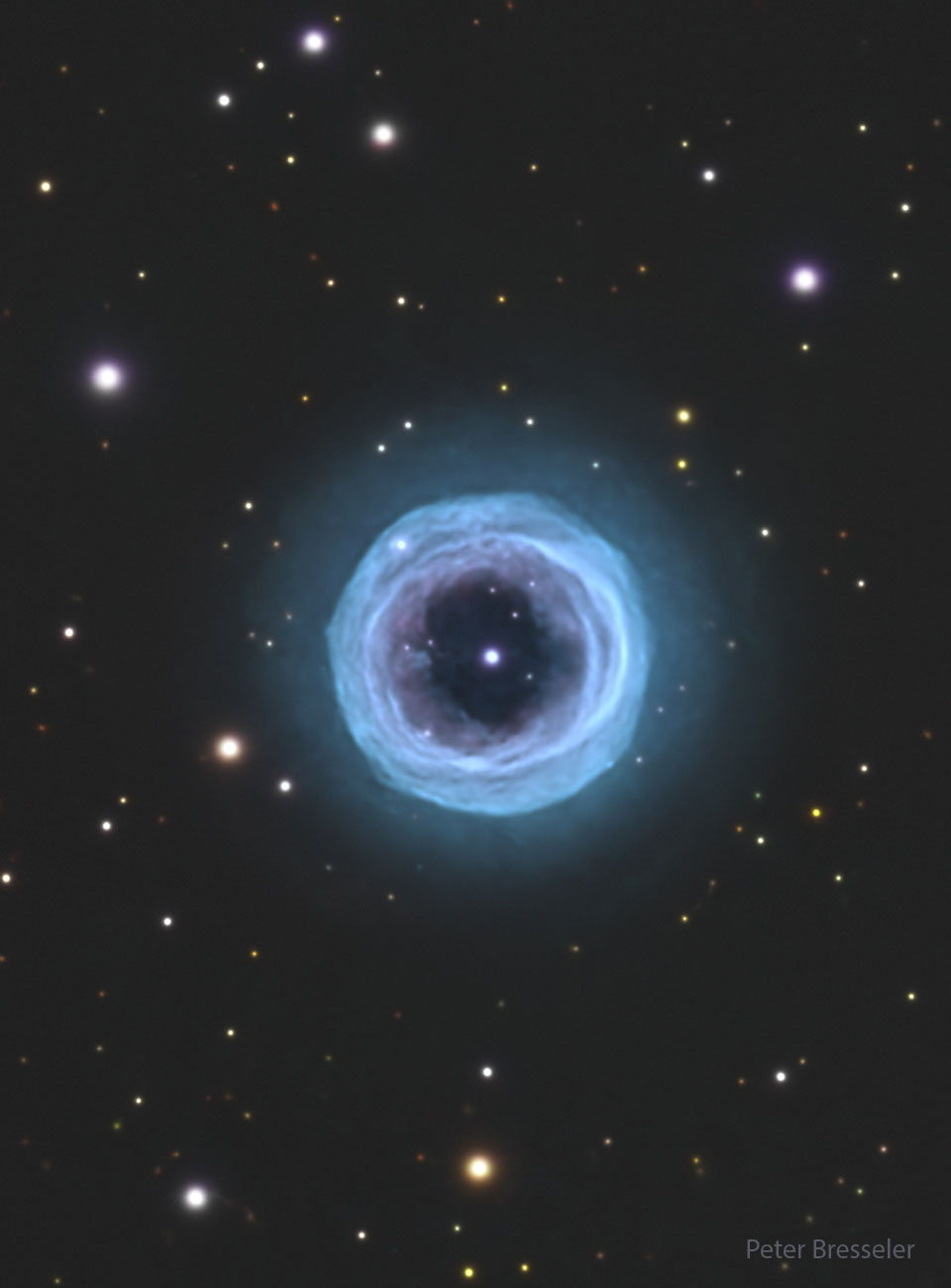
The Cosmic Eye: Shapley 1's Stellar Farewell

Disclosure: This post contains affiliate links. As an Amazon Associate, I earn from qualifying purchases.

The Full Story

What's staring back at you from the depths of space isn't a giant cosmic eye, but Shapley 1, a truly remarkable celestial object. Also known as the Fine Ring Nebula, this beautifully symmetric glowing ring is found in the southern constellation of Norma, the Carpenter's Square. Its striking appearance, with its bright, circular halo and central 'pupil,' makes it one of the most visually captivating sights in our galaxy. Shapley 1 is what astronomers call a 'planetary nebula' – a somewhat misleading name, as it has nothing to do with planets! Instead, it represents the dramatic final act of a star much like our own Sun. When such a star runs out of fuel, it expands into a red giant and then gently sheds its outer layers into space. These expelled layers form an expanding cloud of gas, illuminated by the super-hot stellar core left behind. The brilliant blue-green glow you see in Shapley 1 comes primarily from oxygen atoms within these expelled layers. These atoms are energized by the intense ultraviolet radiation from the central star, causing them to light up like a cosmic neon sign. At the very heart of this cosmic eye, where the pupil would be, lies not one but two stars! One is a white dwarf, the incredibly dense, burnt-out core of the original star. Its companion, another star, orbits this white dwarf in a tight cosmic dance, completing a full revolution every 2.9 days. What makes Shapley 1 particularly fascinating for scientists is its near-perfect annular, or ring, shape. This isn't just a coincidence; it's because we happen to have a unique 'top-down' view of this celestial phenomenon. Imagine looking straight into the opening of a donut or a smoke ring. This special perspective offers astronomers an invaluable opportunity to study how the central stars – especially the dynamics of a binary pair – influence and sculpt the intricate and often bizarre structures that make up planetary nebulae. By observing objects like Shapley 1, scientists gain crucial insights into stellar evolution, helping them understand the complex processes that govern the lives and deaths of stars across the universe. It serves as a natural laboratory, revealing how a star's final moments can create such breathtaking cosmic artistry and providing clues about what awaits our own Sun billions of years from now.

Key Takeaways

  • 1 Shapley 1 is a stunning, perfectly circular planetary nebula, often called the 'Fine Ring Nebula' due to its 'cosmic eye' appearance.
  • 2 It's formed from the dying remnants of a star similar to our Sun, with a white dwarf and a companion star orbiting at its core.
  • 3 Our unique top-down view of its ring shape offers crucial insights into how central stars, especially binary pairs, sculpt these beautiful cosmic structures.
National Geographic Planisphere Star Finder

National Geographic Planisphere Star Finder

Essential tool for identifying constellations and stars. Perfect for beginners learning the night sky.

Check Price on Amazon
*As an Amazon Associate, we earn from qualifying purchases.

💡 Think of it this way:

Imagine looking down into a perfectly formed, glowing smoke ring that is light-years across.

How We Know This

Astronomers use powerful telescopes, both on Earth and in space, to capture breathtaking images of objects like Shapley 1. They also analyze the light emitted by the nebula and its central stars through a process called spectroscopy. This 'cosmic fingerprint' of light helps them identify the glowing elements, like oxygen, and even measure the precise orbits of the binary stars, revealing the hidden dynamics within this celestial wonder.

What This Means

Studying Shapley 1 provides a vital window into the final stages of stars similar to our Sun, helping us predict the future of our own solar system. It also deepens our understanding of how binary star systems can dramatically influence and shape the incredible celestial artistry we observe throughout the universe, offering clues about the complex interplay between stars and their environments.

Why It Matters

Understanding nebulae like Shapley 1 helps us learn about the dramatic lifecycle of stars, including our own Sun, giving us a glimpse into our solar system's distant future.

Related Topics

#Planetary Nebula #Stellar Evolution #White Dwarf #Binary Star #Cosmic Eye