Back to Articles Image Of The Day

The Egg Nebula: A Glimpse Inside a Star's Fiery Farewell

πŸ“– 3 min read πŸ“Š beginner 🏷️ NASA APOD

In Brief

The stunning Egg Nebula reveals a Sun-like star nearing the end of its life, shedding its outer gases to reveal a glowing heart. This spectacular Hubble image helps scientists understand how stars, including our own Sun, dramatically transform as they die. It's a cosmic show of gas and dust, resembling a giant cracked egg.
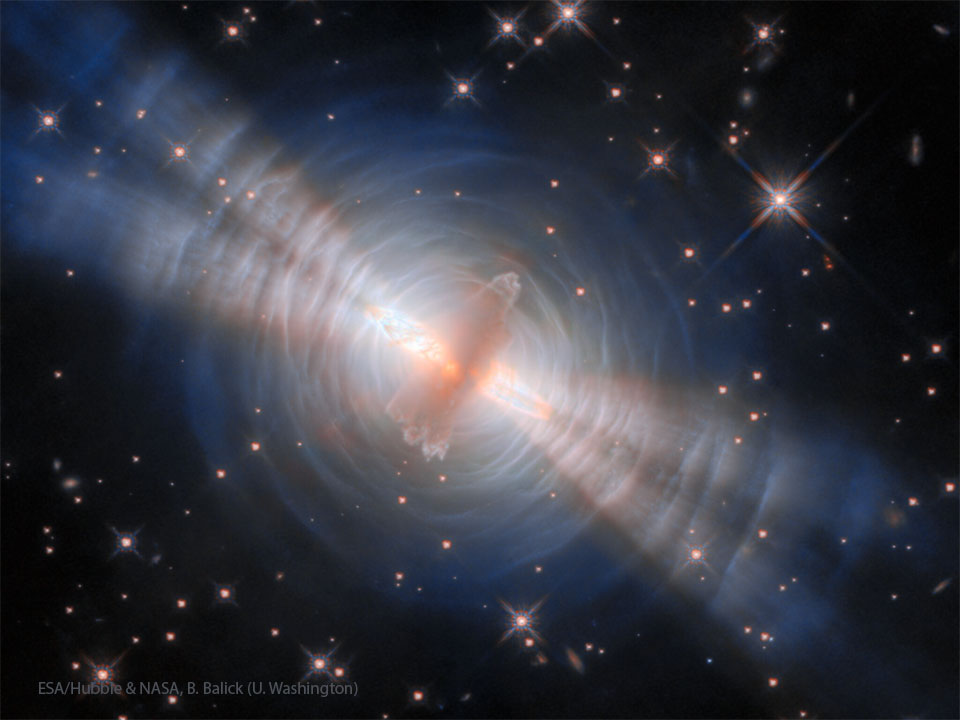
The Egg Nebula: A Glimpse Inside a Star's Fiery Farewell

Disclosure: This post contains affiliate links. As an Amazon Associate, I earn from qualifying purchases.

The Full Story

Imagine a star, much like our very own Sun, reaching the end of its long, luminous life. It’s not a quiet fade-out, but a dramatic, final performance known as the Egg Nebula. This breathtaking image, captured by the sharp eyes of the Hubble Space Telescope, offers us a unique glimpse into this spectacular stellar farewell. It shows a star actively shedding its outer layers, transforming itself into an astonishing cosmic sculpture of gas and dust. The nebula gets its fitting name because, to some, it looks uncannily like a giant cosmic egg. Deep within its core, a bright, hot star – the 'yolk' – is now revealed, illuminating the vast 'egg white' shells of gas and dust it has recently expelled. This material wasn't released all at once; it's a gradual process where the star puffed up and cast off its outer atmosphere, much like an onion peeling back its layers, but on a truly colossal scale. But the Egg Nebula is more than just a simple shell. The Hubble images reveal incredibly intricate structures: central lobes, rings, and powerful jets of material blasting out from the star's poles. Interestingly, the central star itself is hidden from our direct view, shrouded by a dense blanket of dust. However, light from the core manages to escape, beaming through 'holes' or pathways carved into this older, thicker material by newer, faster jets of gas. These jets act like cosmic drills, punching through the opaque dust and letting us see the star's radiant glow. This dramatic phase of a star's life is remarkably brief, lasting only a few thousand years – a blink of an eye in cosmic terms! Astronomers are intensely studying nebulae like the Egg Nebula precisely because this period is so rapid and dynamic. They're still trying to understand what exact mechanisms create these complex disks, lobes, and powerful jets. Pinpointing these causes is key to unlocking the full story of how stars evolve and ultimately die. Why does this matter to us? Because the Egg Nebula offers a powerful preview of our own Sun's distant future. Billions of years from now, our Sun will undergo a similar transformation, expanding into a red giant and then shedding its outer layers to form a planetary nebula. By studying these 'dying' stars today, scientists gain critical insights into the universal processes of stellar evolution, helping us understand not just other stars across the galaxy, but also the eventual fate of our own solar system and how the elements forged in stars are recycled into the universe.

Key Takeaways

  • 1 The Egg Nebula shows a Sun-like star at the end of its life.
  • 2 The star is shedding its outer layers, forming intricate shells of gas and dust.
  • 3 Hubble images reveal complex structures like lobes, rings, and jets, with the central star hidden by dust.
  • 4 This dramatic phase is very short, and scientists are still unraveling how these structures form.
  • 5 It offers a crucial glimpse into the future evolution and ultimate fate of stars like our own Sun.
Hubble Space Telescope Deep Field Poster

Hubble Space Telescope Deep Field Poster

Stunning poster featuring iconic Hubble Space Telescope imagery. Perfect for space enthusiasts.

Check Price on Amazon
*As an Amazon Associate, we earn from qualifying purchases.

πŸ’‘ Think of it this way:

Imagine a cosmic egg, with a bright 'yolk' at its center surrounded by swirling layers of 'egg white' gas and dust. That's essentially what we see as a star cracks open during its final act.

How We Know This

Astronomers used the incredible vision of the Hubble Space Telescope to capture this intricate picture. By combining several images taken in both visible and infrared light, they can peer through some of the dense gas and dust. This multi-wavelength approach reveals details and structures that would otherwise be hidden from our view, offering a more complete picture of this complex cosmic object.

What This Means

Studying the Egg Nebula is vital for refining our understanding of stellar evolution, particularly the often-dramatic death throes of Sun-like stars. Unraveling the mechanisms behind its unique jets, lobes, and rings helps us create more accurate models for predicting the lifespan and transformation of stars across the cosmos. Future observations with advanced telescopes, perhaps even the James Webb Space Telescope, could provide even more detailed insights into the chemical composition and dynamics of these ejected materials, shedding more light on how stars enrich the universe with the building blocks of new stars and planets.

Why It Matters

This isn't just a pretty picture; it's a peek into our own Sun's distant future! By studying dying stars like the Egg Nebula, astronomers learn about the life cycle of stars, including what will eventually happen to our Sun billions of years from now, giving us insights into the ultimate fate of our solar system.

Related Topics

#Egg Nebula #Stellar Evolution #Hubble Space Telescope #Dying Stars #Astronomy