Back to Articles Image Of The Day

Celestial Line-Up: Witness a Rare Six-Planet Parade in the Night Sky!

📖 3 min read 📊 beginner 🏷️ NASA APOD

In Brief

This week, skygazers can experience a stunning 'planet parade' as Mercury, Venus, Saturn, and Jupiter become simultaneously visible to the unaided eye just after sunset. With a telescope, even elusive Uranus and Neptune join this extraordinary cosmic alignment, offering a rare chance to see multiple worlds in one view. It's a cosmic dance party you won't want to miss!
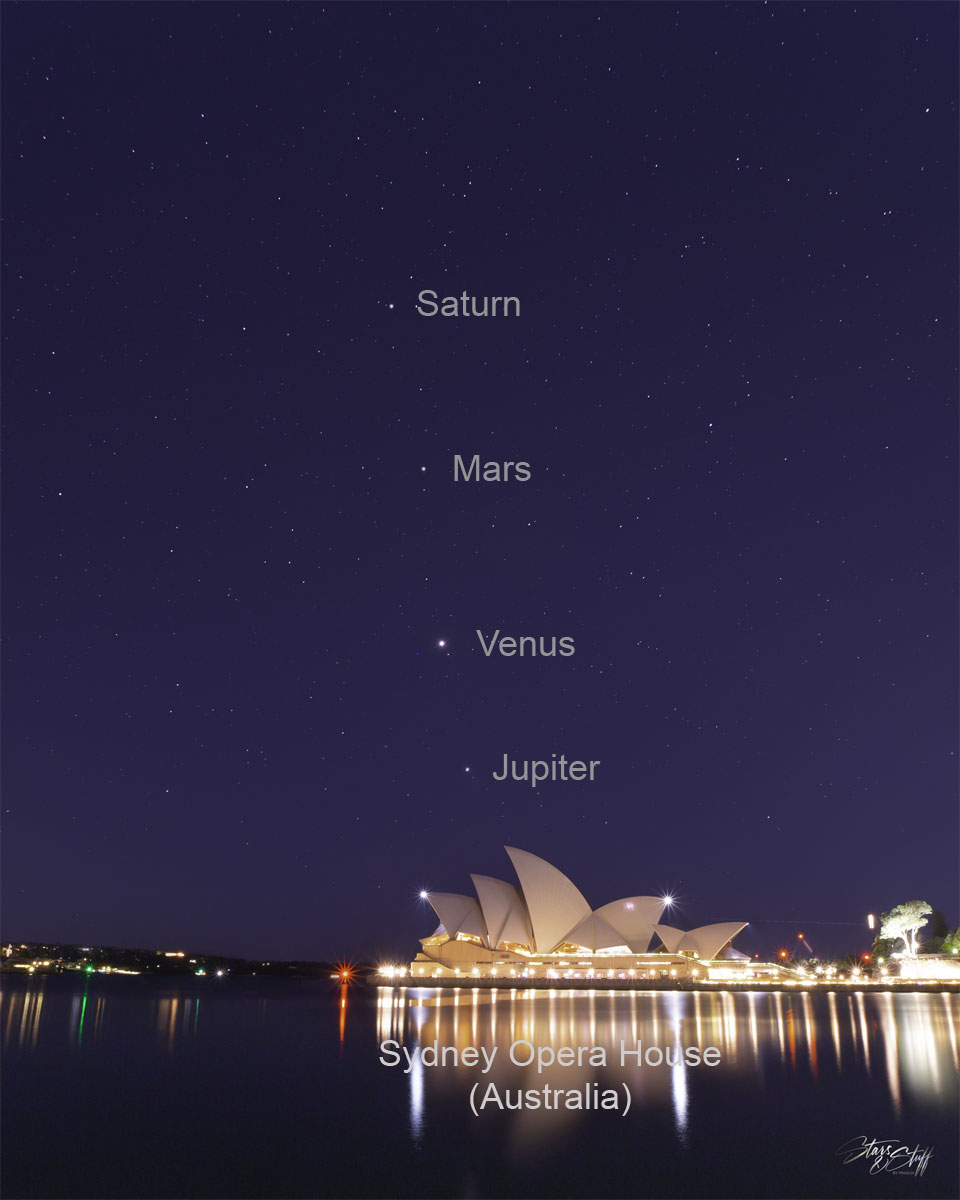
Celestial Line-Up: Witness a Rare Six-Planet Parade in the Night Sky!

Disclosure: This post contains affiliate links. As an Amazon Associate, I earn from qualifying purchases.

The Full Story

Get ready to look up this week, because our solar system is putting on a spectacular show! A rare alignment, dubbed a 'planet parade,' will make several planets visible in the night sky. Just after the sun dips below the horizon, you'll have the incredible opportunity to see four planets – Mercury, Venus, Saturn, and Jupiter – with just your naked eye. This isn't an everyday occurrence, as the planets usually scatter across different parts of the sky, making this a truly special event for stargazers. To catch this amazing display, all you need to do is step outside just after sunset and cast your gaze towards the west. Find a spot with a clear view of the horizon, free from tall buildings or trees, if possible. As the twilight deepens, you'll start to see them appear. Venus, being the brightest, will likely be the first to pop into view, followed by the others. They'll appear strung out in a line, almost like beads on a cosmic string, each a distant world in our shared solar system. While four planets are putting on a dazzling naked-eye performance, the show doesn't stop there for those with a bit of extra equipment. If you have access to a telescope, you can extend your celestial guest list to include two more distant giants: Uranus and Neptune. These icy worlds are much fainter and require magnification to be seen, but they'll also be part of this extended planetary procession. Seeing six planets aligned from our perspective offers a powerful visual reminder of how all these worlds orbit the Sun on roughly the same plane. This 'parade' isn't about the planets physically lining up in a straight line in space (which rarely happens), but rather their apparent alignment from our vantage point here on Earth. Because all the planets orbit the Sun in roughly the same flat disk, they often appear to follow a similar path across our sky, known as the ecliptic. It's a cosmic coincidence of their orbital positions that allows us to see so many of them grouped together so beautifully at this particular time. For those observing, expect to see the planets in a specific order starting from the horizon. Mercury, being closest to the Sun, will be lowest and visible for a short window before it sets. Venus, the 'evening star,' will shine brilliantly above it. Higher still, you'll find the majestic ringed planet Saturn, followed by the gas giant Jupiter, which will be relatively easy to spot due to its brightness. Even without a telescope, each of these visible planets offers a unique sparkle and presence, a testament to the diverse worlds in our solar neighborhood.

Key Takeaways

  • 1 Four planets (Mercury, Venus, Saturn, Jupiter) are visible to the naked eye just after sunset.
  • 2 Two additional planets (Uranus, Neptune) can be seen with a telescope during the alignment.
  • 3 The 'planet parade' is a rare visual alignment of multiple planets from Earth's perspective.
  • 4 Best viewing is just after sunset, looking towards the western horizon.
  • 5 This event provides an excellent opportunity to observe multiple planets simultaneously.
National Geographic Planisphere Star Finder

National Geographic Planisphere Star Finder

Essential tool for identifying constellations and stars. Perfect for beginners learning the night sky.

Check Price on Amazon
*As an Amazon Associate, we earn from qualifying purchases.

💡 Think of it this way:

Imagine all your friends lining up perfectly for a group photo – that's what several of our solar system's planets are doing this week, making it incredibly easy to spot them all in a row!

How We Know This

This 'discovery' isn't a new finding, but rather a predictable celestial event observed by tracking the known orbits of planets. Astronomers use sophisticated mathematical models and orbital mechanics to forecast these alignments with remarkable precision. This allows us to know exactly when and where to look to witness such stunning, though rare, cosmic displays. It's a testament to our understanding of the solar system's movements.

What This Means

This grand planetary alignment is an incredible gateway for public engagement with astronomy, sparking wonder and curiosity about our solar system. It encourages people to step outside, look up, and learn more about planetary orbits and the vastness of space. For many, it will be a memorable first encounter with multiple planets, potentially inspiring future scientists and astronomers. It's a reminder of the dynamic and beautiful clockwork of the cosmos, accessible right from our backyards, fostering a deeper connection to our place in the universe.

Why It Matters

This rare planetary alignment is a fantastic opportunity for everyone, from casual observers to aspiring astronomers, to connect directly with our solar system. It offers a unique, easy-to-access spectacle that reminds us of the grandeur of space and the predictable, beautiful clockwork of our cosmic neighborhood.

Related Topics

#Astronomy #Planet Parade #Skywatching #Solar System #Celestial Event