Pleiades Up Close: Unveiling the Hidden Beauty of the Seven Sisters
In Brief
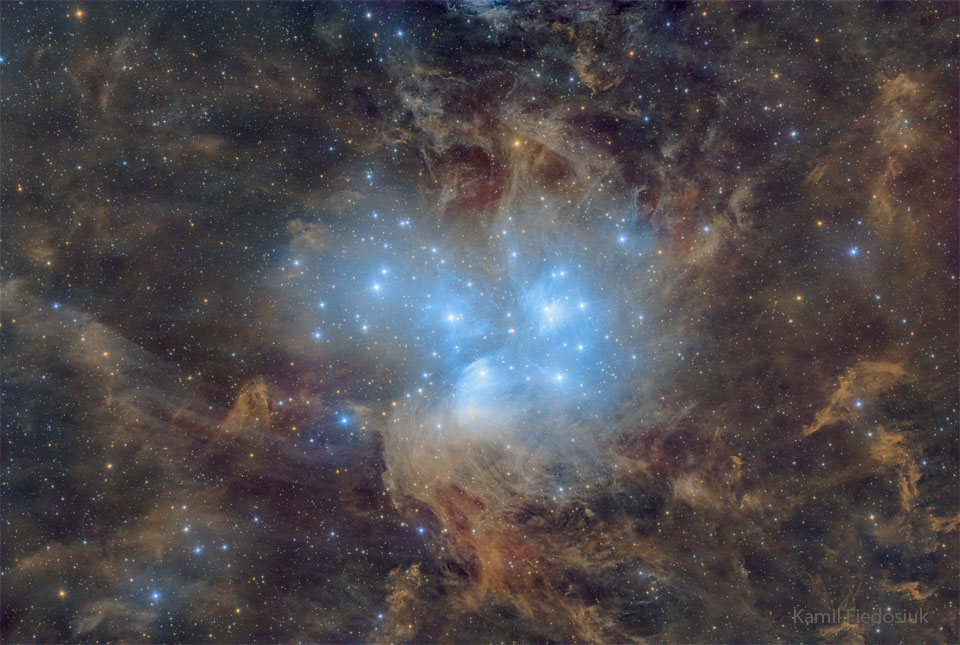
Even if you've admired the famous Pleiades star cluster with your naked eye, a new image offers an unprecedented, detailed view. This stunning photograph reveals intricate clouds of gas and dust that normally remain invisible, transforming a familiar sight into a breathtaking cosmic masterpiece.
The Full Story
Key Takeaways
- 1 The Pleiades, a famous star cluster, is much larger and more detailed than seen with the naked eye.
- 2 Special long-exposure photography reveals faint, intricate clouds of gas and dust surrounding the stars.
- 3 These clouds are remnants of the material that formed the stars, illuminated by their light.
- 4 This new view helps scientists understand star formation and stellar evolution.
💡 Think of it this way:
Imagine looking at a familiar forest from a distance and then suddenly getting a super detailed, close-up photo that reveals individual dewdrops on leaves and tiny insects you never knew were there. This new view of the Pleiades is like that for a familiar starry scene.
How We Know This
The stunning details are captured using long-exposure astrophotography. This involves pointing highly sensitive cameras and telescopes at the Pleiades and letting the shutter stay open for extended periods—sometimes hours or even multiple nights. This allows the faintest light from distant, scattered dust and gas to build up on the sensor, revealing structures that would otherwise be invisible to the human eye or standard photography.
What This Means
This detailed view of the Pleiades not only provides breathtaking visuals for the public but also offers valuable data for astronomers. It helps us better understand the dynamics of young star clusters, how stars interact with their natal gas and dust, and the processes that lead to the formation of new stars. Future observations with even more advanced telescopes will continue to peel back the layers of familiar objects, offering deeper insights into the vast and complex universe.
Why It Matters
This allows everyone to appreciate the universe's beauty on a deeper level, showing how advanced imaging technology can unveil hidden wonders in even the most familiar celestial objects. It connects us to the dynamic processes of star birth and the incredible artistry of the cosmos.